
Medication Angioedema Risk Checker
Medication Safety Check
This tool helps you determine if your medication might be associated with angioedema, a potentially life-threatening swelling condition that can occur with certain medications.
Medication Risk Assessment
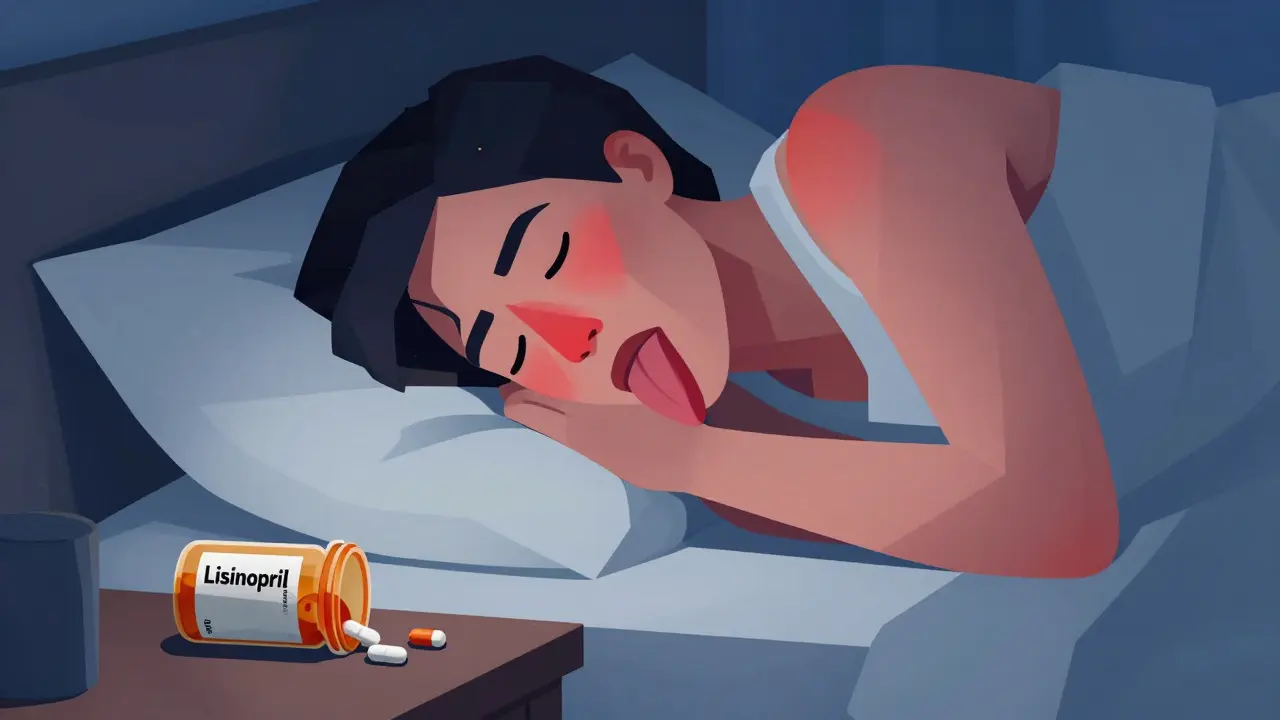
When you take a pill every day for high blood pressure, you don’t expect it to make your lips swell shut. But for some people, common medications like ACE inhibitors can trigger a silent, dangerous reaction called medication-induced angioedema. This isn’t a rash or a mild allergy. It’s deep, rapid swelling beneath the skin - often in the face, tongue, or throat - that can block your airway in minutes. And unlike typical allergic reactions, standard treatments like antihistamines or epinephrine often don’t work. If you or someone you know has ever woken up with a swollen tongue, struggled to swallow, or had sudden throat tightness after starting a new drug, this isn’t just bad luck. It’s a medical emergency that’s more common than most doctors admit.
What Exactly Is Medication-Induced Angioedema?
Angioedema is swelling that happens in the deeper layers of skin and mucous membranes - not the surface like hives, but underneath. Think of it like a balloon filling with fluid in places you can’t see: inside your lips, under your tongue, around your throat, or even in your intestines. When it’s caused by medication, it’s not an immune system overreaction like a peanut allergy. Instead, it’s usually a chemical imbalance triggered by the drug itself.
Two main types exist. The first, histaminergic angioedema, is caused by drugs like penicillin, aspirin, or NSAIDs. These trigger mast cells to release histamine, which causes swelling, itching, and redness. The second, bradykinin-mediated angioedema, is the more dangerous kind. It’s most often caused by ACE inhibitors - drugs like lisinopril, enalapril, and ramipril - and it doesn’t involve histamine at all. Instead, it’s driven by a buildup of bradykinin, a substance that makes blood vessels leak fluid into surrounding tissues. This is why antihistamines and even epinephrine often fail here.
Which Medications Are Most Likely to Cause It?
ACE inhibitors are the #1 culprit. They’re prescribed to over 50 million Americans for high blood pressure and heart failure. About 0.1% to 0.7% of people on these drugs develop angioedema. That sounds small, but given how many people take them, it adds up to tens of thousands of cases every year in the U.S. alone. And it’s not just about the first few weeks. Half of all cases happen after months or even years of safe use. You could take lisinopril for five years without issue - then wake up one morning with a swollen tongue.
Other high-risk drugs include:
- Angiotensin receptor blockers (ARBs) - like losartan or valsartan. If you’ve had angioedema from an ACE inhibitor, you have a 50% chance of getting it again on an ARB.
- NSAIDs - including ibuprofen, naproxen, and celecoxib. These can trigger both histamine and bradykinin pathways.
- Penicillin and other antibiotics - classic triggers for allergic-type swelling.
- Aspirin - especially in people with asthma or nasal polyps.
Some groups are at higher risk. African Americans have up to a 2.2% chance of developing ACE inhibitor angioedema - more than triple the average. Women are also more likely than men to be affected. And if you’ve ever had unexplained swelling before, your risk goes up significantly.
Why Is This So Dangerous?
Swelling in your lips or cheeks is alarming. Swelling in your throat? That’s life-threatening.
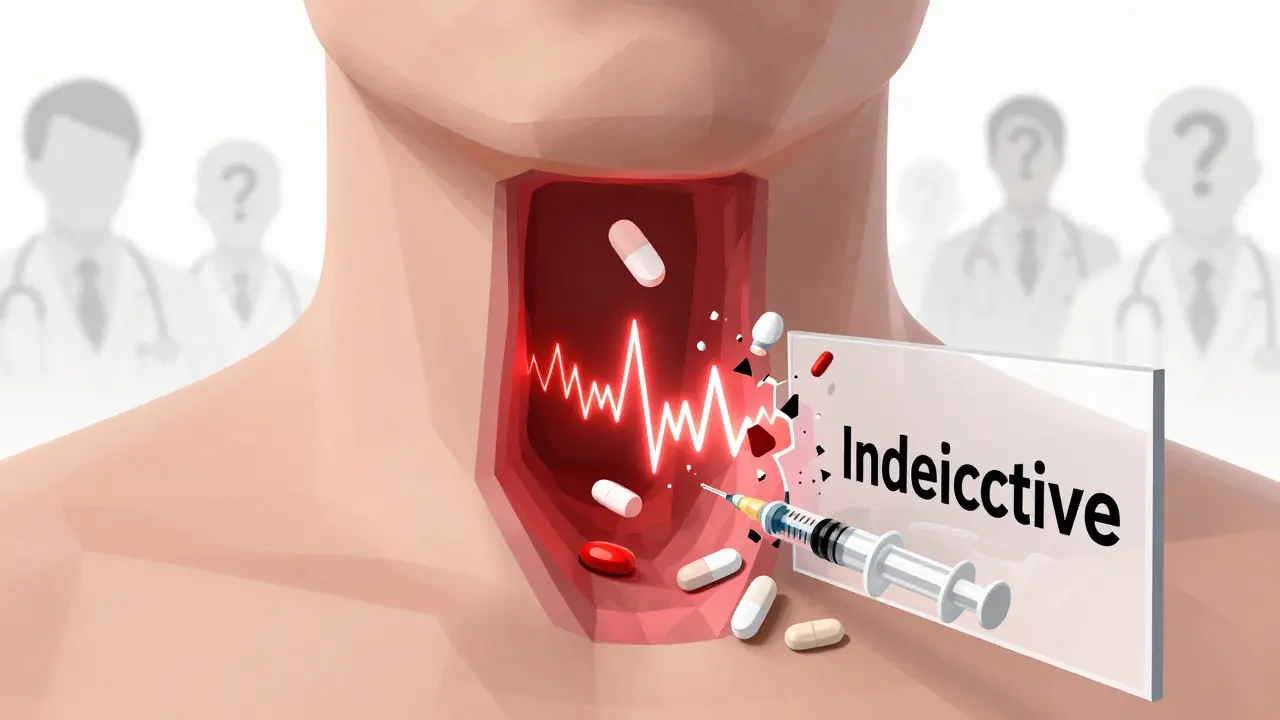
When the larynx (voice box) or tongue swells, it can block airflow. In 1% to 5% of cases, this leads to complete airway obstruction. A 2019 Mayo Clinic study of 1,200 patients found that 68% had at least one emergency room visit because of breathing concerns. Twenty-two percent needed a breathing tube (intubation). And here’s the scary part: 15% to 30% of people who’ve had one episode get it again - even if they’re still taking the same drug.
Dr. Marcus Maurer from Charité Hospital in Berlin says voice changes, stridor (a high-pitched wheeze when breathing), and sudden difficulty swallowing are red flags. Fainting, drooling, or a feeling that your throat is closing? That’s not anxiety. That’s your airway shutting down. And you have 30 to 60 minutes - maybe less - to get help before it’s too late.
Why Do Doctors Keep Missing It?
A 2022 survey by the American College of Physicians found that only 45% of primary care doctors correctly identified ACE inhibitors as the most common cause of drug-induced angioedema. Many assume it’s just an allergy. So they give antihistamines, steroids, or even epinephrine - treatments that work for hives but do nothing for bradykinin-mediated swelling.
Patients report being misdiagnosed for years. One Reddit user, u/AngioWarrior, described how their doctor kept prescribing allergy meds for three years while they were on lisinopril. They lost two teeth from tongue swelling before someone finally connected the dots.
The problem? The symptoms look like allergies. No rash. No itching. Just swelling. And because ACE inhibitors are so widely used, doctors rarely suspect them. Even worse, once someone has one episode, many physicians don’t realize they must avoid all ACE inhibitors - and even ARBs - for life.
What Happens in the Emergency Room?
If you show up with suspected medication-induced angioedema, the first thing they’ll do is stop the suspected drug. No exceptions. No "let’s wait and see." If you’re on lisinopril and your tongue is swelling, you’re off it - permanently.
Then comes the big question: Which type is it?
- For histaminergic (allergic-type): Epinephrine (0.3-0.5 mg in the thigh), diphenhydramine (Benadryl), and IV corticosteroids like methylprednisolone. These work fast. Most patients improve within 15 minutes.
- For bradykinin-mediated (ACE inhibitor-related): None of the above. Epinephrine? Useless. Steroids? Doesn’t help. Antihistamines? Waste of time. The only proven treatments are specific bradykinin blockers like icatibant (a bradykinin receptor antagonist) or C1-inhibitor concentrate. These aren’t in every ER. In fact, many hospitals don’t stock them at all.
That’s why outcomes vary so wildly. In big hospitals with allergy specialists, patients get the right treatment. In rural clinics? They might just get a steroid shot and be sent home - only to return hours later with a blocked airway.
What Should You Do If You Suspect It?
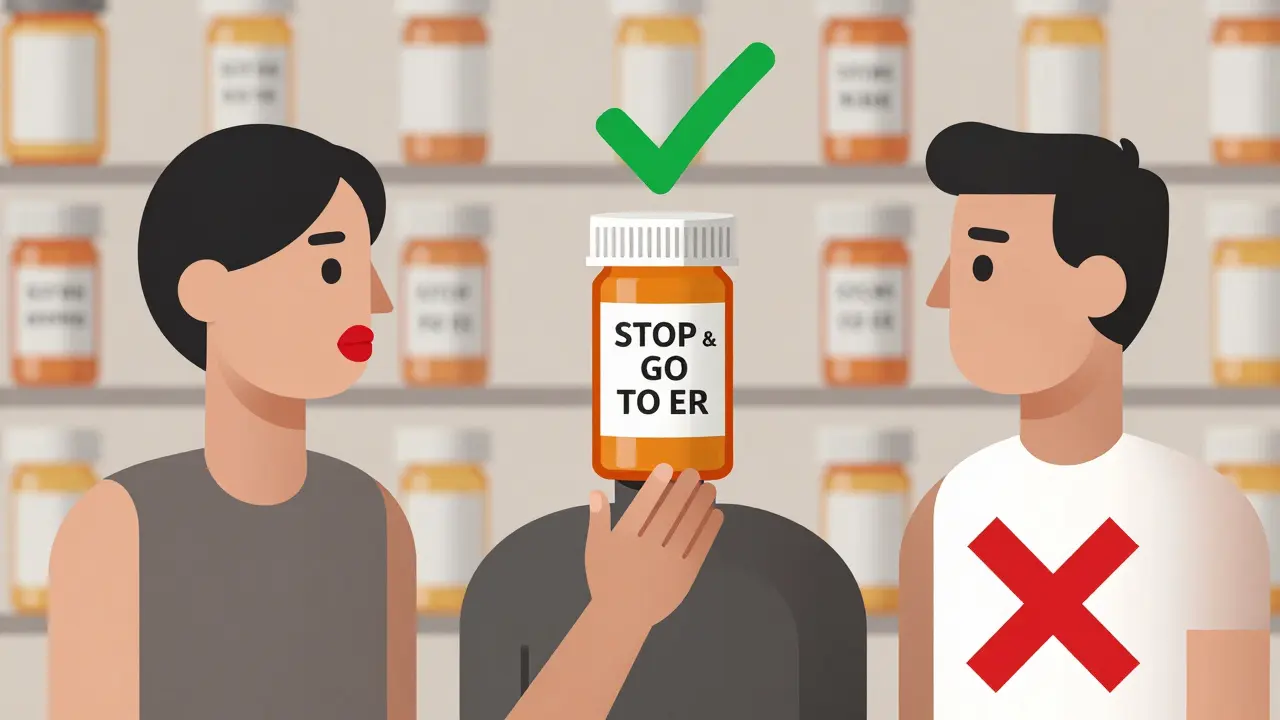
Here’s your action plan:
- Stop the medication immediately. Don’t wait for a doctor’s approval. If you’re on an ACE inhibitor or ARB and notice swelling, stop it now.
- Call 911 or go to the ER. Don’t drive yourself. Swelling can worsen fast. If you’re alone, have someone else take you.
- Tell them it might be drug-induced angioedema. Say: "I’m on [drug name] and my face/tongue/throat is swelling. I think it might be bradykinin-mediated." This cuts through the confusion.
- Get a referral to an allergist or immunologist. They’ll help you identify the trigger and create a safety plan. You’ll need a letter to give to all future doctors.
- Never take ACE inhibitors or ARBs again. Even if you’ve only had one episode. The risk of recurrence is too high.
For people with recurrent allergic-type angioedema (from penicillin or NSAIDs), carrying an epinephrine auto-injector (like an EpiPen) is essential. But for ACE inhibitor-related cases, the best prevention is avoiding the drug entirely.
What’s Being Done to Fix This?
There’s progress. The 2023 International WAO/EAACI guidelines now clearly separate histaminergic from bradykinin-mediated angioedema, helping doctors diagnose correctly. New drugs like sebetralstat (approved in 2023) are showing promise in trials for bradykinin-driven swelling - even if it’s caused by medication.
But awareness is still the biggest gap. Only 1 in 2 primary care doctors knows the truth about ACE inhibitors. The FDA has had a black box warning on these drugs since 1999 - yet millions still take them without knowing the risk.
The real solution isn’t a new drug. It’s education. Every patient prescribed an ACE inhibitor should be told: "This can cause swelling. If your lips, tongue, or throat swell - even if it’s years later - stop the pill and go to the ER. Don’t wait. Don’t assume it’s allergies. This is not a minor reaction."
What’s the Long-Term Outlook?
Most people recover fully if they get the right care. Once you stop the drug and avoid the class, future episodes are rare. But if you’re misdiagnosed, you’re at risk for repeat attacks - and possibly a tracheotomy or death.
The good news? Angioedema from medications is manageable. You don’t need to live in fear. You just need to know the signs, understand the difference between allergy and bradykinin swelling, and speak up. If your doctor dismisses your symptoms as "just allergies," find one who listens. Your life might depend on it.




Sabrina Sanches
I had this happen to me after 3 years on lisinopril. Woke up with my tongue feeling like a balloon. Thought I was having a stroke. ER docs didn't know what was going on until I mentioned the med. They gave me Benadryl. It did NOTHING. I screamed for 20 minutes until a resident finally asked if I was on an ACE inhibitor. That's when they gave me icatibant. Saved my life. Don't wait. Stop the pill. Go to the ER. Period.