

Anticoagulant Reversal Agent Decision Tool
Which Anticoagulant is the Patient Taking?
When someone on blood thinners suffers a serious bleed-like a fall that causes a brain hemorrhage-time isn’t just important, it’s life or death. These drugs, meant to prevent clots, can turn deadly if the body can’t stop the bleeding. That’s where anticoagulant reversal agents come in. They’re not optional extras. They’re emergency tools that can mean the difference between survival and tragedy.
Why Reversal Agents Even Exist
About 4 million Americans take blood thinners every year. Most of them are on newer drugs like apixaban, rivaroxaban, or dabigatran-called DOACs. They’re easier to use than old-school warfarin, but when things go wrong, there’s no simple antidote like there is for other medications. If you take too much Tylenol, you get N-acetylcysteine. If you overdose on insulin, you get glucose. But with blood thinners? Until recently, doctors had to guess, wait, or use messy, slow options. That’s why reversal agents were developed. They’re targeted, fast-acting, and designed to undo the effect of specific drugs. They don’t fix the injury. They fix the blood’s ability to clot so the body can start healing.Vitamin K: The Old-School Fix for Warfarin
Vitamin K is the original reversal agent. It’s been around since the 1940s. It only works on warfarin and similar vitamin K antagonists (VKAs). It doesn’t work on dabigatran, apixaban, or any of the newer drugs. Here’s how it works: warfarin blocks vitamin K from helping the liver make clotting factors. Giving vitamin K (usually 5-10 mg IV) tells the liver to start making those factors again. Sounds simple, right? But here’s the catch-it takes 4 to 6 hours to start working, and 24 hours to fully reverse the effect. That’s way too slow for a brain bleed. So vitamin K is never used alone in emergencies. It’s always paired with something faster-like PCC. Without vitamin K after PCC, the clotting factors you just gave will disappear in a day or two, and the patient could start bleeding again. That’s called rebound anticoagulation. It’s a known risk, and it’s preventable.Prothrombin Complex Concentrate (PCC): The Workhorse
PCC is a concentrated mix of clotting factors-II, VII, IX, X, and sometimes C and S. Modern 4-factor PCC (4F-PCC) is the gold standard for reversing warfarin. It works fast: INR levels drop to safe levels in under 30 minutes in over 90% of cases. Dosing is based on weight and how high the INR is:- INR 2-4: 25-50 units/kg
- INR 4-6: 35-50 units/kg
- INR over 6: 50 units/kg
Idarucizumab: The Dabigatran Killer
Idarucizumab (brand name Praxbind) is a monoclonal antibody fragment. It’s like a molecular sponge that grabs dabigatran and pulls it out of circulation. It doesn’t affect any other drug. Just dabigatran. The dose? Two vials, 2.5 grams each, given as IV push. Total: 5 grams. Done in under a minute. Within 5 minutes, the anticoagulant effect of dabigatran is reversed. The RE-VERSE AD trial showed this works in nearly every patient. And here’s the kicker-mortality was only 11% in patients who got idarucizumab for brain bleeds, compared to 24-26% with other agents. It’s also safe. Thrombotic events? Only 5%. No boxed warning from the FDA. No complex dosing. No infusion pumps needed. That’s why 78% of ERs in a 2022 survey said they’d pick idarucizumab over anything else for dabigatran reversal. Cost? Around $3,500 per dose. Not cheap, but worth it when you’re saving a life.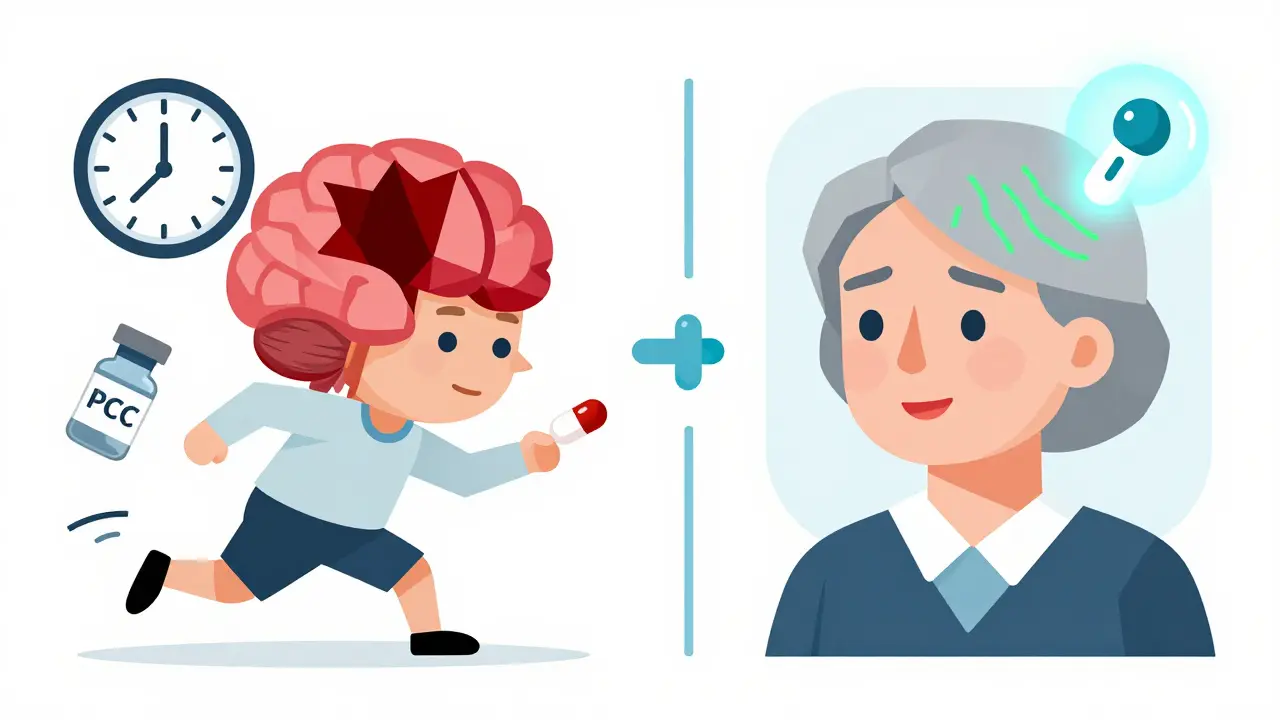
Andexanet Alfa: The Factor Xa Fix
Andexanet alfa (brand name Andexxa) reverses the other big group of DOACs: rivaroxaban, apixaban, and edoxaban. These are factor Xa inhibitors. Andexanet alfa is a modified version of factor Xa itself-so it acts like a decoy. The drug binds to it instead of your natural clotting factors. But here’s the problem: it’s complicated. You need a 400 mg IV bolus, then a 4 mg/min infusion for 120 minutes. That’s a 2-hour drip. You need a pump, trained staff, and monitoring. It’s not something you can grab and go. It works fast-reversal in 2 to 5 minutes. But its half-life is only about an hour. So if the patient’s drug levels are still high, the effect fades. That means you might need to redose. That’s not in the official instructions-it’s based on real-world experience. And the risks? Thromboembolic events hit 14%. That’s nearly double PCC’s rate. The FDA put a boxed warning on it for this reason. In one study, patients on andexanet alfa were more likely to have a stroke or heart attack than those on PCC or idarucizumab. Cost? $13,500 per treatment. Only 65% of U.S. hospitals stock it. Many ERs can’t get it in time. So even though it’s approved and effective, it’s not always practical.Which One Do You Use? It Depends
Let’s say a 78-year-old woman falls and hits her head. She’s on apixaban. Her INR is normal because it doesn’t affect INR. Her CT scan shows a brain bleed. What do you do? If you’re in a big hospital with andexanet alfa on the shelf? Use it. Fast reversal. Good outcomes. If you’re in a rural ER? You might not have it. So you use 4F-PCC. It’s off-label for DOACs, but hundreds of studies show it works. You give 50 units/kg. You give vitamin K. You monitor. You save the life. If it’s dabigatran? Idarucizumab. No debate. It’s the best tool for the job. Warfarin? PCC plus vitamin K. Always. No exceptions. There’s no one-size-fits-all. But there is a best choice for each drug-and knowing that saves lives.Cost, Access, and the Real-World Gap
Here’s the ugly truth: the most effective agents are also the most expensive. Andexanet alfa costs over $13,000. Idarucizumab is $3,500. PCC? $1,200-$2,500. Vitamin K? $10. In the U.S., hospitals with big budgets stock the fancy drugs. Smaller hospitals? They rely on PCC. And that’s okay. Studies show PCC still saves lives. The 2023 ISBT guidelines say: if you don’t have the specific agent, use PCC. Don’t wait. Don’t panic. Do something. The market for these drugs is growing fast. DOAC prescriptions hit 15 million in the U.S. in 2023. But access isn’t equal. In Australia, where I’m based, PCC and vitamin K are standard. Idarucizumab is available in major centers. Andexanet alfa? Rare. You need special approval. The bottom line: availability matters more than perfection. A good, fast, cheap option you can get now beats a perfect one you can’t reach in time.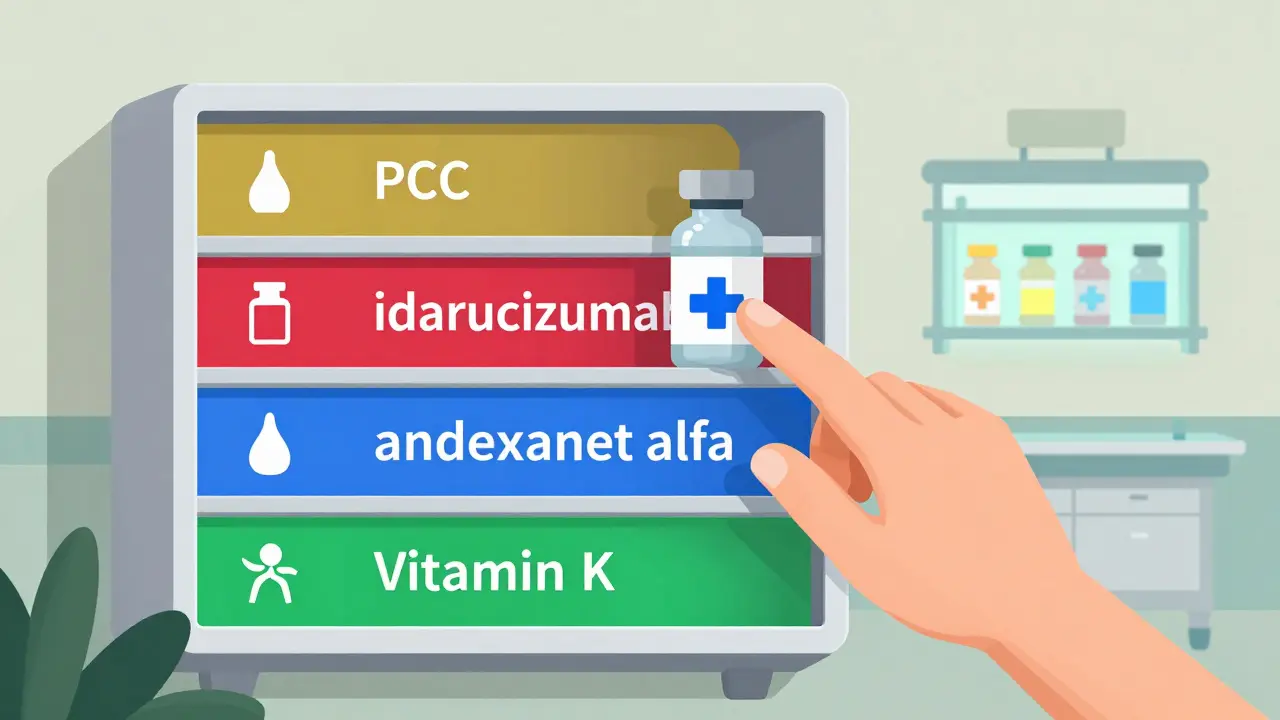
What’s Next? Ciraparantag and Beyond
There’s a new player coming: ciraparantag. It’s a synthetic molecule that can reverse all major anticoagulants-DOACs, heparin, even low-molecular-weight heparin. It’s in Phase III trials. If it works, it could be a game-changer. Imagine one drug for everything. One vial. One dose. No guessing. No delays. That’s the future. It could be approved by late 2025. Until then, we work with what we have. And what we have works-if you know how to use it.What Happens If You Don’t Reverse?
Intracranial hemorrhage in someone on blood thinners kills 30-50% of patients. That’s not a guess. That’s from the American College of Cardiology. And if you don’t reverse the anticoagulant? The bleed keeps expanding. The pressure builds. The brain gets crushed. The chance of survival drops fast. Reversal isn’t about being fancy. It’s about stopping the bleeding before it kills.Key Takeaways
- Vitamin K reverses warfarin but takes 24 hours-always pair it with PCC in emergencies.
- 4F-PCC is fast, cheap, and effective for warfarin and often used off-label for DOACs.
- Idarucizumab is the gold standard for dabigatran reversal-works in 5 minutes, low risk of clots.
- Andexanet alfa reverses apixaban and rivaroxaban but carries a 14% clot risk and costs $13,500.
- Availability matters more than perfection. PCC is a reliable backup when specific agents aren’t on hand.
- Ciraparantag, a universal reversal agent, may be approved by late 2025.
Can you reverse a DOAC with vitamin K?
No. Vitamin K only works on warfarin and other vitamin K antagonists. It has no effect on dabigatran, apixaban, rivaroxaban, or edoxaban. Using vitamin K alone for a DOAC bleed will not help and delays proper treatment.
Is PCC safe for reversing DOACs?
Yes, even though it’s not officially approved for DOACs, multiple studies show 4F-PCC is effective for reversing apixaban, rivaroxaban, and edoxaban. It’s widely used in emergency settings when specific reversal agents aren’t available. The key is giving the right dose-usually 50 units/kg-and following it with vitamin K if the patient is also on warfarin.
Why is andexanet alfa so expensive and hard to get?
Andexanet alfa is complex to manufacture and requires a long infusion, making it costly. Only about 65% of U.S. hospitals stock it due to price and storage needs. Many smaller hospitals can’t justify keeping it on hand, especially since PCC works well in most cases. Its high cost and clot risk limit its use to major trauma centers or when other options fail.
Can you use idarucizumab for apixaban?
No. Idarucizumab only reverses dabigatran. It has no effect on factor Xa inhibitors like apixaban or rivaroxaban. Using it for the wrong drug is ineffective and wastes critical time. Always confirm the patient’s anticoagulant before choosing a reversal agent.
What’s the fastest way to reverse a major bleed?
The fastest option depends on the drug. For dabigatran: idarucizumab (5 minutes). For apixaban or rivaroxaban: andexanet alfa (2-5 minutes) or 4F-PCC (15-30 minutes). For warfarin: 4F-PCC (under 30 minutes). Speed matters, but matching the agent to the drug matters more. Never guess-confirm the anticoagulant first.



Paige Shipe
Let me be clear: if you're using vitamin K alone for warfarin reversal in a brain bleed, you're not a doctor-you're a liability. The 4-6 hour lag is unacceptable when every minute counts. PCC is the only responsible choice in the ER. Period.