| Disaster Type | Impact Frequency | Typical Shortage Duration | Primary Effect |
|---|---|---|---|
| Hurricanes | 47% of disruptions | 6 to 18 months | Massive infrastructure loss |
| Wildfires | 28% of disruptions | Variable | Facility evacuations/smoke damage |
| Floods | 19% of disruptions | Variable | Logistics and transport failure |
| Extreme Heat/Drought | 6% of disruptions | Short-term | Raw material scarcity |
The Dangerous Game of Geographic Concentration
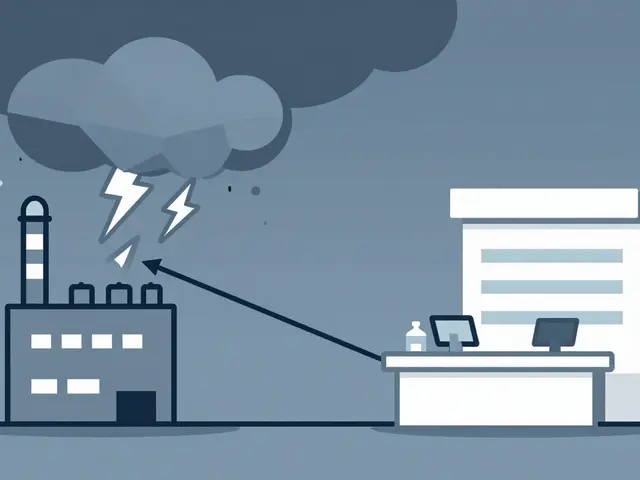
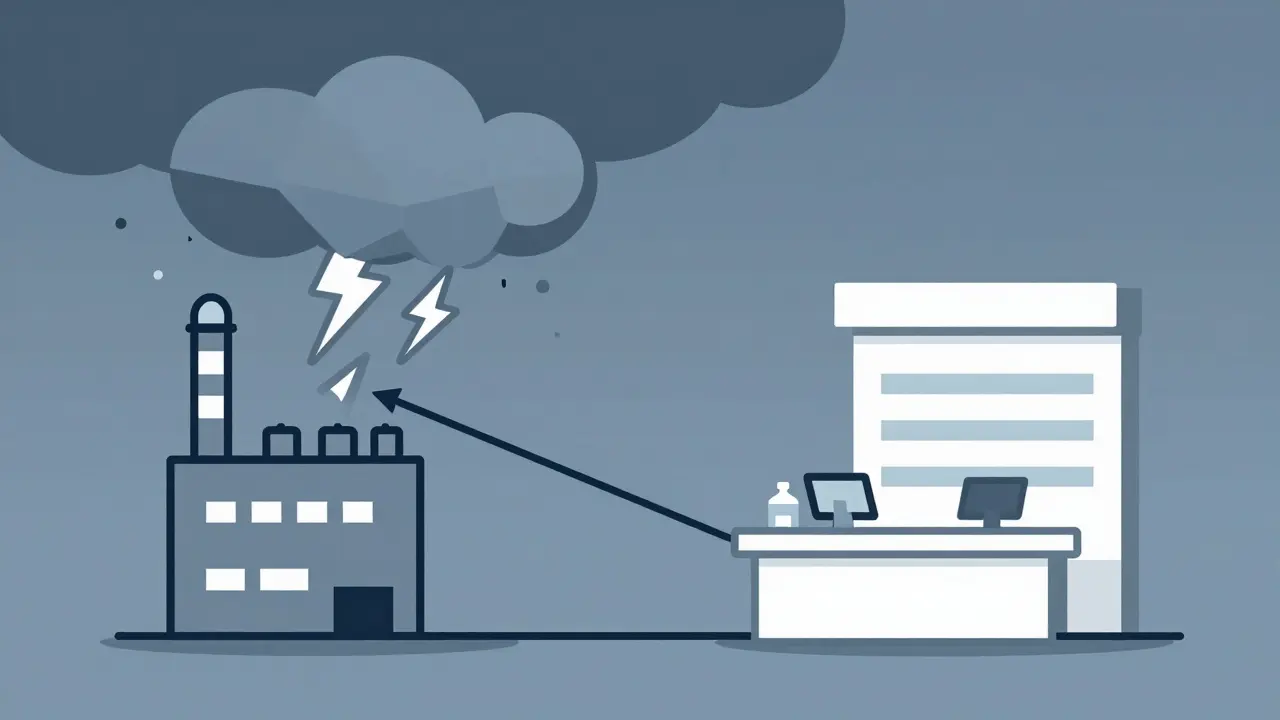
One of the biggest problems is that we put too many eggs in one basket. The pharmaceutical industry loves efficiency, which often means building massive clusters of factories in a few specific areas. While this saves money, it creates "single points of failure." Take Puerto Rico, for example. Before Hurricane Maria, the island was a powerhouse for Pharmaceutical Manufacturing is the large-scale production of medicinal drugs to ensure safety, purity, and consistency. It housed 55 FDA-approved facilities, producing about 10% of all FDA-approved drugs for the U.S. When the hurricane hit in 2017, it didn't just cause a local problem; it disrupted 30% of the U.S. manufacturing capacity. The result? A massive shortage of sterile injectables and insulin that lasted for over a year because the power grid took nearly 11 months to fully recover. We saw this pattern repeat with Hurricane Helene in September 2024. A single facility in North Cove, North Carolina, operated by Baxter International is a global healthcare company specializing in renal and acute care products, including IV fluids, was responsible for 60% of the U.S. supply of intravenous (IV) fluids. When that plant went offline, hospitals across the country had to postpone elective surgeries almost overnight. It's a sobering reminder that your health can depend on the weather in a county you've never visited.Why the System Can't Just "Bounce Back"
You might wonder why companies can't just start a new production line somewhere else when a disaster hits. In the world of medicine, it's not that simple. Pharmaceutical plants aren't like warehouses; they are highly specialized environments that require extreme precision. Bringing a new facility online typically takes 6 to 12 months, and getting the right medical-grade equipment can take up to three years. This creates a "response gap" where patients are left without medicine while the industry waits for hardware to arrive. To make matters worse, about 78% of sterile injectable drugs are produced in only one or two facilities in the U.S. If one of those goes down, there is literally no one else to pick up the slack. This is further complicated by the "just-in-time" inventory model. For decades, the goal was to keep as little stock on hand as possible to reduce costs. But as Dr. Jagpreet Chhatwal from Massachusetts General Hospital pointed out, this model is fundamentally incompatible with a world where Category 4 and 5 hurricanes are becoming more frequent. You can't have a "lean" supply chain when the environment is unpredictable.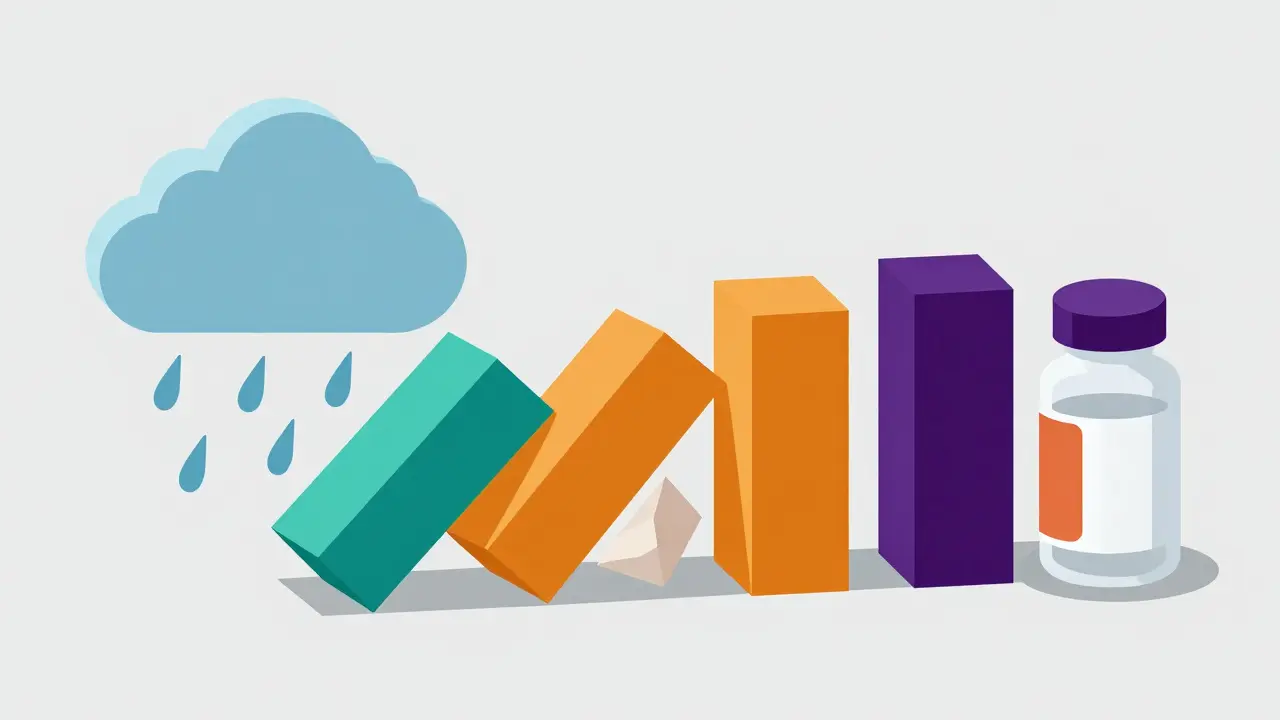
Beyond the Storm: Cascading Failures
It's not always the direct hit that does the damage; sometimes it's the domino effect. A natural disaster can trigger a chain reaction that affects things you wouldn't expect. For instance, the 2022 flooding in Michigan hit an Abbott Nutrition is a division of Abbott Laboratories focused on specialized nutrition and infant formula facility in Sturgis. Because the U.S. was already dealing with a critical infant formula shortage, this flood didn't just cause a local dip-it extended a nationwide crisis by another eight weeks. Then there are the hidden dependencies. In Western North Carolina, the town of Spruce Pine produces 90% of the quartz used in semiconductor production. While that sounds like a tech problem, these semiconductors are essential for the medical devices used to administer drugs. If the quartz mines are flooded, the medical devices stop shipping, which then impacts how drugs are delivered to patients.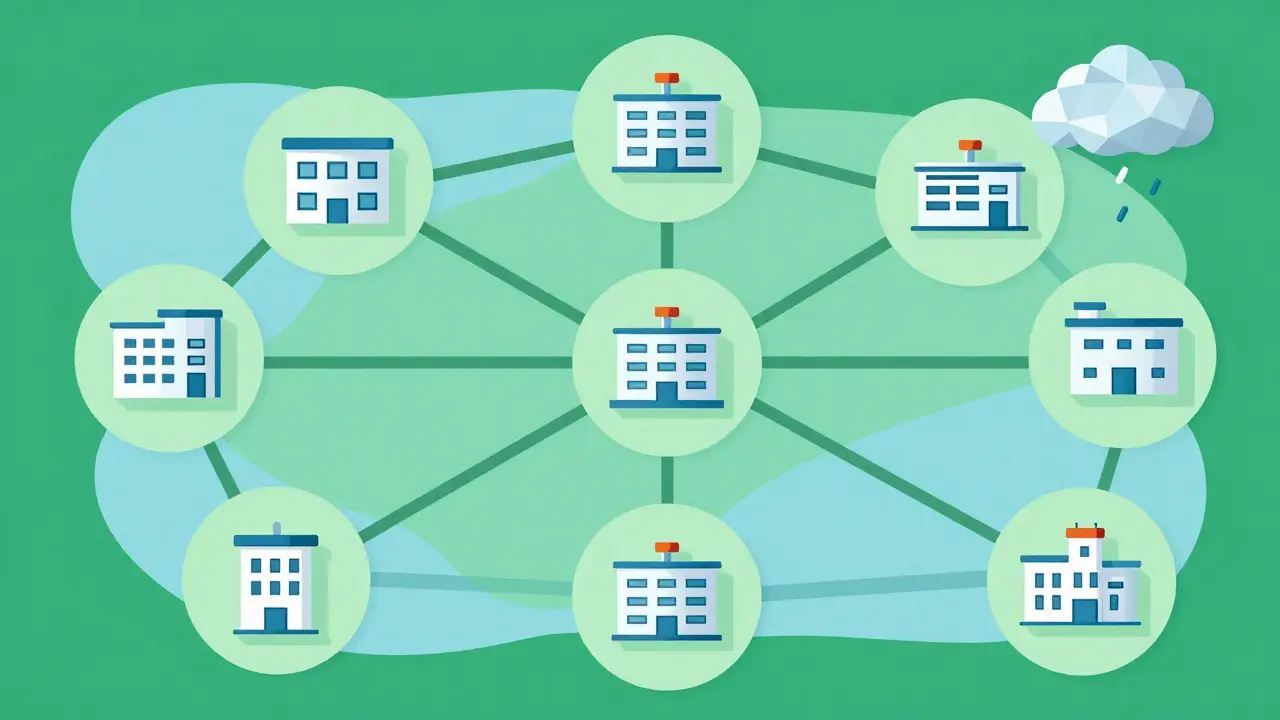
How We Are Trying to Fix the Leak
The good news is that the industry is finally waking up. We are seeing a shift toward "regionalized global supply chains" rather than relying on one massive hub. The FDA is the Food and Drug Administration, the federal agency responsible for protecting public health by ensuring the safety and efficacy of drugs is now proposing rules that would require manufacturers of critical drugs to keep 90-day emergency inventories. While this might raise production costs by a few percentage points, it could prevent up to 60% of climate-related shortages. Technology is also playing a role. Some health systems are using AI-driven predictive analytics to see storms coming and secure 30-day emergency stocks before the roads are blocked. For example, the company Sensos reportedly predicted the impact of Hurricane Helene 14 days in advance, giving some hospitals a critical head start. Other promising steps include:- Diversified Production: The FDA's Critical Drug Resilience Program (launched January 2025) gives fast-track reviews to companies that spread their production across three different climate-resilient zones.
- Collaborative Stockpiling: The Strategic National Stockpile is piloting programs to keep critical injectables in hurricane-prone regions, which has already shown a 40% reduction in shortage duration compared to older models.
- Supply Chain Mapping: Hospitals, like the Mayo Clinic, are spending months documenting every single supplier (Tier 1 through Tier 3) so they know exactly where their medicine comes from and where the vulnerabilities lie.
The Human Cost of Inaction
If we don't move away from this fragile system, the numbers look grim. Experts project that without major intervention, climate-related drug shortages could increase by 150% by 2030. For a cancer patient, this isn't just a statistic-it means delayed chemotherapy or a lack of supportive care during their most vulnerable moments. We have to stop treating pharmaceutical resilience as a corporate cost and start treating it as a national security priority. Whether it's through mandatory domestic manufacturing or better international cooperation, the goal has to be the same: making sure that a storm in one part of the world doesn't leave a patient in another part without their medicine.Why do natural disasters cause drug shortages if the pharmacies have stock?
Pharmacies usually only keep a small amount of stock on hand due to the "just-in-time" inventory model. When a disaster hits a major manufacturing hub, the entire pipeline is cut off. Once the local pharmacy stock runs out, there is no new supply coming in from the manufacturer, leading to a widespread shortage.
Which types of medications are most at risk from climate events?
Sterile injectables, IV fluids, and insulin are particularly vulnerable. This is because they often require specialized manufacturing facilities that are concentrated in a few geographic areas, such as Puerto Rico or North Carolina, and cannot be easily produced in alternative locations.
How long does it take for drug supplies to return to normal after a disaster?
It varies by disaster. Tornadoes might cause shortages for 3 to 9 months. Hurricanes, which cause more extensive infrastructure damage, can lead to shortages lasting 6 to 18 months, depending on how long it takes to restore power and certify the facility for production.
Can't the FDA just import the drugs from other countries?
They can, but it's a slow process. After Hurricane Maria, the FDA used an Emergency Declaration pathway to import saline from Europe, but it took 28 days to implement. In a medical crisis, a month-long delay can be life-threatening.
Will making more drugs domestically solve the problem?
Not necessarily. Some experts argue that mandatory domestic manufacturing could increase drug costs by 15-25% without actually solving the resilience problem if those domestic plants are still located in disaster-prone areas. The real solution is geographic diversification across multiple resilient zones.