
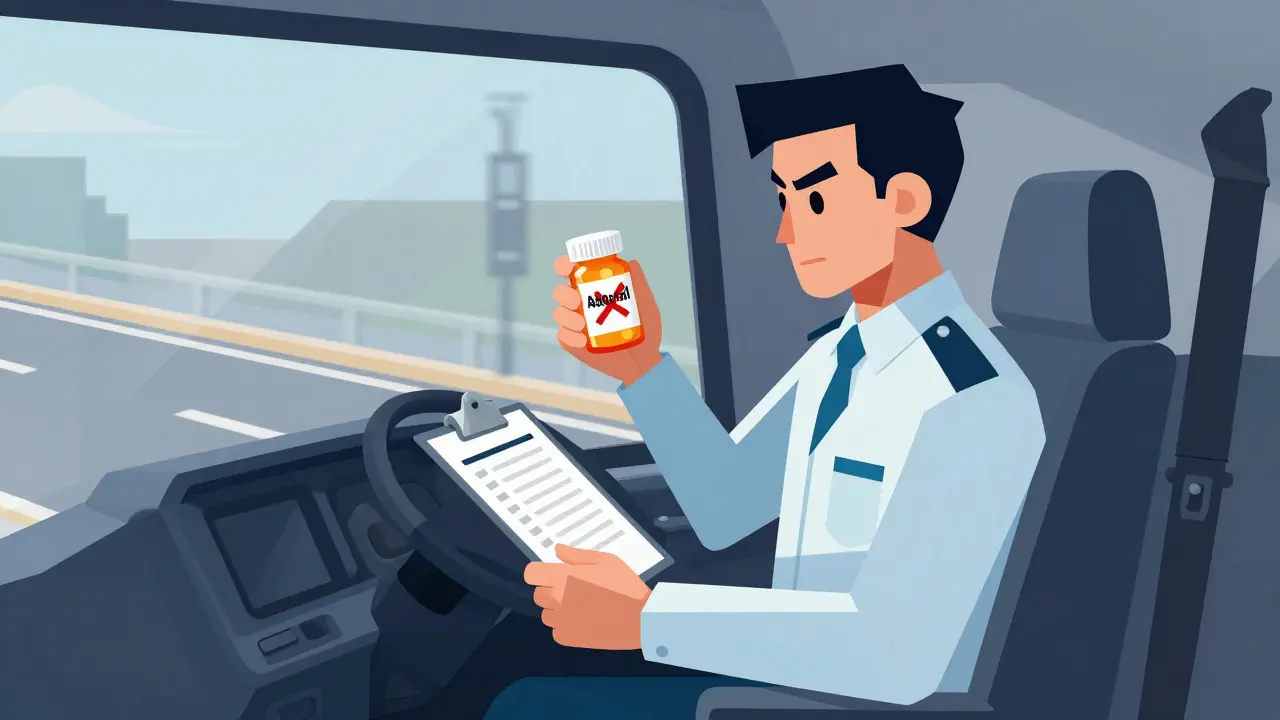
Why Medications Can Ground a Commercial Driver
Driving a truck or bus isn’t just about knowing the road-it’s about being fully in control at all times. For commercial motor vehicle (CMV) drivers, even a common prescription can be a safety risk. The Federal Motor Carrier Safety Administration (FMCSA) doesn’t just ask drivers to avoid illegal drugs. They require complete honesty about every pill, patch, or spray you take-whether it’s prescribed, bought over the counter, or given to you by a friend.
Here’s the hard truth: if a medication makes you drowsy, dizzy, slow to react, or foggy-headed, you can’t legally drive a commercial vehicle. And it doesn’t matter if your doctor says it’s fine. The DOT rules override personal medical advice. In 2020, over 1,200 people died in crashes where the truck driver tested positive for a disqualifying substance. That’s not a statistic-it’s a family broken.
What Medications Are Absolutely Banned?
The FMCSA keeps a strict list of prohibited substances under 49 CFR §391.41 and §382.107. These aren’t suggestions. They’re legal requirements.
- Amphetamines (including Adderall and Vyvanse)-even if prescribed for ADHD
- Opioids like codeine, oxycodone, hydrocodone, and morphine
- Marijuana in any form-even if legal in your state
- Phencyclidine (PCP) and other Schedule I drugs
- Benzodiazepines like Xanax, Valium, and Klonopin (newly added to reportable list as of February 2024)
- Over-the-counter meds with dextromethorphan or pseudoephedrine-yes, those cold pills can trigger a positive drug test
There’s no gray area. If it’s on this list, and you’re driving a commercial vehicle, you’re violating federal law-even if you’re taking it exactly as prescribed.
What About Prescription Drugs That Aren’t on the List?
Not every medication is automatically banned. The FMCSA allows some prescription drugs-but only if three things are true:
- The drug is prescribed by a licensed physician
- The doctor has made a good faith judgment that it won’t impair your driving
- You’re taking it exactly as prescribed-no extra doses, no mixing with alcohol
For example, some drivers safely use non-stimulant ADHD meds like Strattera (atomoxetine) or certain antidepressants like SSRIs (e.g., sertraline or escitalopram). But even these require full disclosure during your DOT physical. A certified Medical Examiner will review your history, dosage, and side effects. They’ll ask: Does this make you sleepy? Do you have trouble focusing? Have you ever passed out behind the wheel?
Dr. Gary Solomon, a DOT medical examiner with over 20 years of experience, says 35% of drivers he examines are on medications that need extra scrutiny. Antidepressants are the most common. But they’re not automatically disqualifying-if the driver is stable, the dose is right, and there are no side effects affecting alertness.
The DOT Physical: What Happens When You Walk In?
Your DOT physical isn’t just a checkup. It’s a legal requirement every 24 months (or more often if you have a condition like high blood pressure or sleep apnea). You’ll be asked to bring:
- A full list of all medications-prescription, OTC, herbal, supplements
- The name of your prescribing doctor and their contact info
- Any medical records or letters explaining why you need the medication
You’ll also fill out FMCSA Form 2015-0180-0017, which asks specifically about drugs that affect your ability to drive. Lying on this form is a federal offense. Many drivers think they can hide their meds, but the Medical Examiner can verify with your pharmacy or doctor. If they find a mismatch, your certification is denied-and your employer will be notified.
Costs vary, but most DOT physicals run between $85 and $150. It’s not a luxury-it’s your license to work.
What If You Need a Disqualifying Medication?
This is where things get tough. Many drivers suffer from chronic pain, ADHD, or anxiety-and their best treatment is a medication the DOT bans. What do they do?
Some switch to alternatives. For example, a driver on oxycodone for back pain might try non-opioid options like gabapentin, physical therapy, or even acupuncture. A driver on Adderall might try Strattera, behavioral therapy, or workplace accommodations like adjusted schedules.
Others apply for a Skill Performance Evaluation (SPE) certificate. This is a special permit that lets drivers with certain physical conditions (like limb impairments or insulin-treated diabetes) continue driving under strict monitoring. As of 2023, 68% of SPE applications were approved. But it’s not easy. You need:
- A letter from your doctor explaining why you need the medication
- Proof you’ve been driving safely with it for at least three months
- Results from a driving performance test
There’s no guarantee. But for some, it’s the only path forward.
The Human Cost: When Rules Clash With Health
Behind every regulation are real people. A 2022 survey by the Owner-Operator Independent Drivers Association found that 63% of CDL drivers had to stop taking effective medications for chronic pain because of DOT rules. Over 40% said their health got worse as a result.
Reddit threads and trucking forums are full of stories:
- A 52-year-old driver with degenerative disc disease stopped using tramadol and now drives in constant pain, risking crashes from distraction.
- A veteran with PTSD was taken off clonazepam and now has panic attacks on the highway.
- A young driver with ADHD lost his license after using Vyvanse-despite having a clean driving record and no side effects.
These aren’t edge cases. They’re systemic failures. The rules were made to protect public safety-but they’re also pushing experienced drivers out of the industry.
What Carriers and Employers Need to Know
It’s not just the driver’s job to stay compliant. Carriers are responsible too. The FMCSA’s 2023 Compliance Review found that 28% of trucking companies failed medication management audits. Fines? Up to $14,200 per violation.
Smart fleets now use electronic medication tracking systems-up from 18% in 2019 to 67% in 2024. These tools flag expired prescriptions, new drug starts, and interactions before a driver hits the road. Some even integrate with the Drug and Alcohol Clearinghouse, which now requires all medication-related restrictions to be reported within 24 hours. Miss that deadline? Automatic $1,250 fine.
Employers who ignore this aren’t just risking fines-they’re risking lives.
What’s Changing in 2025?
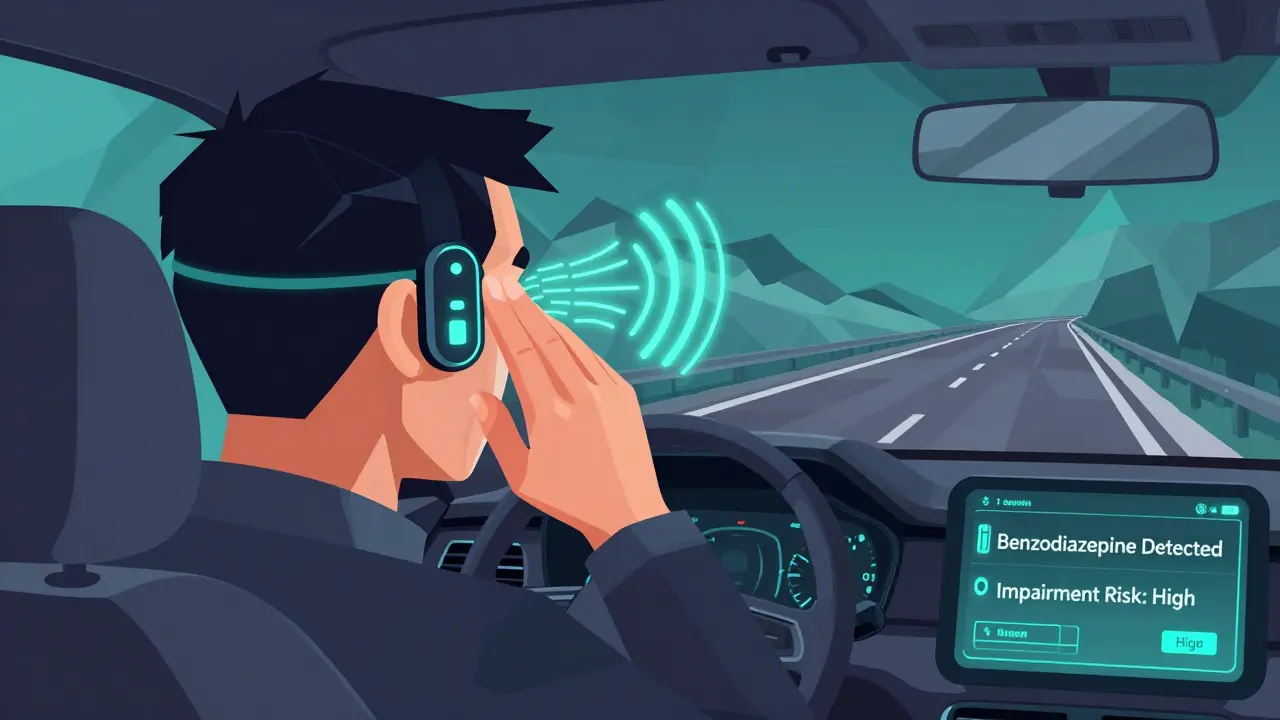
The rules are tightening. In February 2024, the FMCSA proposed adding all benzodiazepines to the list of reportable drugs-even if prescribed. Why? NHTSA data showed a 22% spike in crash-related benzodiazepine positives from 2019 to 2023.
There’s also a pilot program underway. The FMCSA is funding a $4.7 million test with Samsara and KeepTruckin to use wearable biometric sensors that detect real-time impairment-like pupil dilation, heart rate variability, and microsleeps. This could eventually replace the current system of random testing and self-reporting.
But here’s the warning: the Commercial Vehicle Medical Research Foundation predicts a driver shortage of 54,000 by 2027 if medication policies don’t adapt. Why? Because 43% of drivers over 50 are on medications that conflict with DOT rules. Many are choosing retirement over giving up their meds.
What Should You Do Right Now?
If you’re a commercial driver:
- Review every medication you take-even OTC stuff like NyQuil or Sudafed
- Don’t assume your doctor knows DOT rules. Give them your job description. Say: “I drive a truck 10 hours a day. Will this make me unsafe behind the wheel?”
- Keep a Medication Action Plan: write down what you take, why, and how it affects you
- Never skip your DOT physical. It’s not optional.
- If you’re on a banned drug, talk to your doctor about alternatives before your exam
If you’re an employer:
- Train your drivers on medication rules-not just drug testing
- Use electronic tracking systems
- Don’t pressure drivers to hide meds to keep their job
- Support drivers seeking alternatives
Final Thought: Safety Isn’t Just About Rules
The goal isn’t to punish drivers. It’s to keep everyone on the road safe-including the drivers themselves. The current system is blunt. It doesn’t distinguish between a driver on a stable, low-dose antidepressant and someone mixing painkillers with alcohol. But until technology catches up, the rules stay strict.
There’s no perfect answer. But there is a responsible one: honesty, communication, and a willingness to adapt-for the driver, the doctor, and the company. Because the road doesn’t care if your pain is real. It only cares if you’re awake.
Can I drive a commercial vehicle if I take antidepressants?
Yes, but only if they don’t cause drowsiness, dizziness, or impaired focus. Common SSRIs like sertraline or escitalopram are often allowed if you’ve been on a stable dose for at least 3 months with no side effects. You must disclose them during your DOT physical, and the Medical Examiner will decide based on your individual case. Never stop or change your dose without consulting your doctor first.
Is Adderall banned for CDL drivers even with a prescription?
Yes. Adderall (amphetamine salt combination) and Vyvanse (lisdexamfetamine) are both classified as amphetamines and are strictly prohibited under FMCSA rules, regardless of prescription status. Even if your doctor says it helps you focus, the DOT considers these stimulants incompatible with safe commercial driving. Some drivers switch to non-stimulant options like Strattera, which are permitted under certain conditions.
Can I use medical marijuana if it’s legal in my state?
No. Federal law still classifies marijuana as a Schedule I controlled substance, and the FMCSA prohibits its use for all commercial drivers, no matter the state laws. Even trace amounts in your system from past use can result in a failed drug test and immediate disqualification. There are no exceptions.
What happens if I don’t disclose a medication on my DOT physical?
If you lie or hide a medication and it’s later discovered, your Medical Examiner Certificate will be denied or revoked. Your employer will be notified, and you could face disciplinary action-including termination. More importantly, you’re putting yourself and others at risk. The FMCSA can access your pharmacy records and medical history. There’s no safe way to hide it.
Can I get a medical exemption for a banned medication?
You can’t get a blanket exemption, but you may qualify for a Skill Performance Evaluation (SPE) certificate if you’re on a disqualifying medication and can prove you can drive safely. This requires a doctor’s letter, a 3-month safety record, and a driving performance test. Approval rates are around 68%, but it’s a lengthy process. It’s not a loophole-it’s a last-resort option for drivers with no alternatives.
Are over-the-counter cold medicines safe for commercial drivers?
Some are, but many aren’t. Medications containing pseudoephedrine (like Sudafed) or dextromethorphan (like Robitussin DM) can cause drowsiness, jitteriness, or false positives on drug tests. Always check the active ingredients. If you’re unsure, ask your pharmacist: “Is this safe for a commercial driver?” Better yet, use non-drowsy alternatives like saline sprays or acetaminophen for symptoms.
How often do I need to renew my DOT medical certificate?
Every 24 months for most drivers. But if you have a medical condition like high blood pressure, sleep apnea, or diabetes, your Medical Examiner may issue a certificate for 3, 6, or 12 months to monitor your condition. Always check the expiration date on your certificate-driving with an expired one is a violation and can lead to fines or being taken out of service.



dean du plessis
I've been driving 18 years and never had an issue with my meds. The system is too rigid. If you're not impaired, why punish you? Real safety is about performance, not pill counts.