
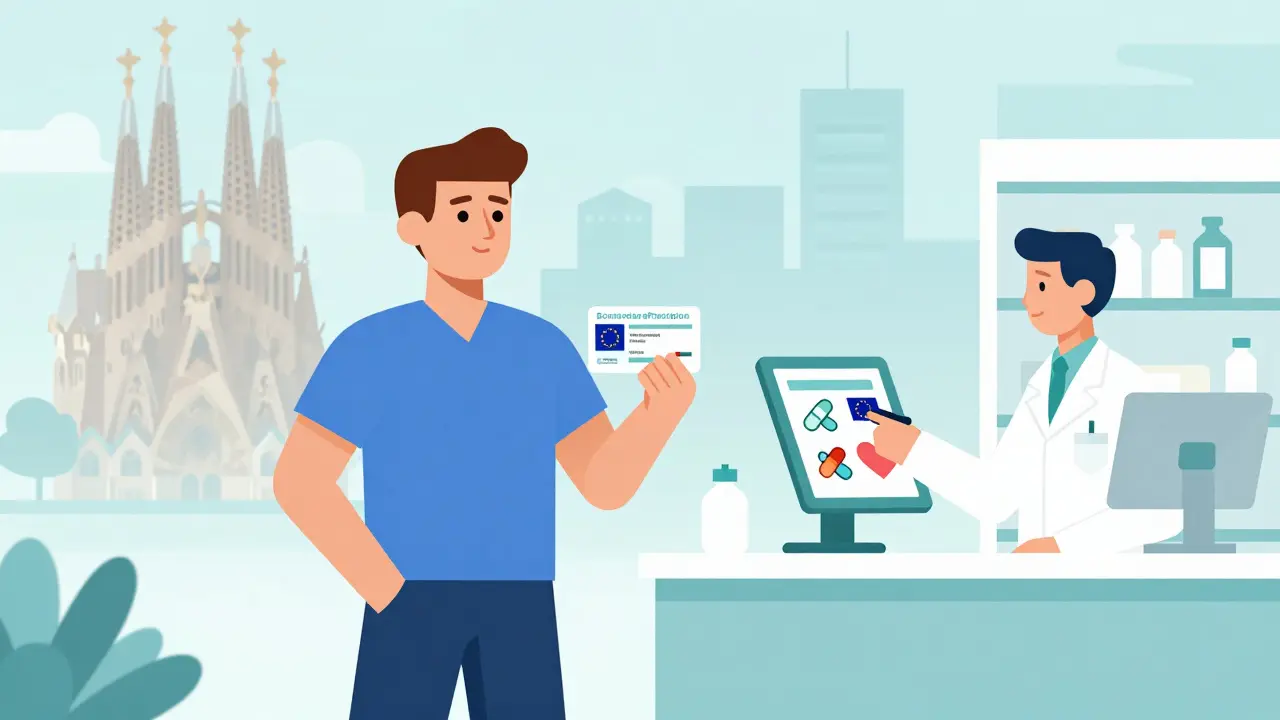
Imagine needing your regular blood pressure medication while on vacation in Spain, but your local pharmacy back home is closed. In 2026, if you’re an EU citizen, you don’t have to panic. Thanks to the ePrescription system, you can walk into a pharmacy in Barcelona, show your ID, and get the exact generic version of your drug - no paper script, no delays, no hassle. This isn’t science fiction. It’s real, and it’s changing how millions of Europeans manage their health.
How Cross-Border Pharmacy Services Actually Work
The EU’s cross-border pharmacy system isn’t just about letting people buy drugs from another country. It’s built on two core tools: ePrescription and Patient Summaries. Both are part of the eHDSI infrastructure, which connects national health systems across 27 EU and EEA countries. When your doctor in Germany sends your prescription electronically, it doesn’t just sit in a digital drawer. It’s securely routed through the EU’s health network to a pharmacy in France, Italy, or Poland - wherever you are. You don’t need to carry physical prescriptions. Just log into your national health portal - like island.is in Iceland or MyHealth@EU in Austria - and authorize the pharmacy abroad to access your prescription. The system checks your identity, confirms your consent, and sends the data. The pharmacist in the foreign country sees your name, medication, dosage, and instructions - all in their language thanks to automated translation in the Patient Summary. This isn’t optional. It’s a legal right under Directive 2011/24/EU. But here’s the catch: not everyone knows it exists. Only 38% of EU citizens are aware they can use this system. That number jumps to 72% in border regions like the Netherlands-Germany line, where people have been doing it for years. In places like northern Italy or southern Sweden, it’s become routine. Elsewhere? Still a mystery.Why Generic Drugs Are the Backbone of This System
The whole system works best with generic drugs. Why? Because generics are chemically identical to brand-name versions but cost 30-80% less. In countries like Romania or Bulgaria, where out-of-pocket costs for medication are high, cross-border access to generics can mean the difference between taking your pills or skipping doses. The EU’s regulatory framework ensures that a generic drug approved in Germany is the same as one approved in Portugal. The European Medicines Agency (EMA) oversees quality standards, so pharmacists can trust the product - no matter where it’s made. That’s why pharmacies across the bloc are encouraged to stock generics for cross-border patients. It’s not just about convenience. It’s about equity. A 2025 IQVIA report found that patients using cross-border generic drugs saved an average of €147 per year on chronic conditions like diabetes or hypertension. For retirees living on fixed incomes, that’s significant. And with Europe’s population aging, this savings isn’t just personal - it’s a strain-reliever for national health budgets.The Tech Behind the Scenes: eHDSI and MyHealth@EU
The magic happens behind the scenes. The eHDSI (eHealth Digital Service Infrastructure) is a secure digital highway for health data. It doesn’t store your medical records. It just moves encrypted signals between national systems. Think of it like a secure postal service for prescriptions. When you authorize a pharmacy abroad, the system checks three things: your identity (via national e-ID), your prescription validity, and whether the medication is allowed in that country. Some countries restrict certain generics due to local pricing rules or supply shortages. But those exceptions are rare and must be clearly communicated. Iceland completed its integration into eHDSI in August 2025, making it the 28th country fully connected. That means a patient from Reykjavik can now get their asthma inhaler in Dublin or Lisbon without a single piece of paper. The system also supports Patient Summaries - a condensed version of your medical history, including allergies, current meds, and past conditions. It’s translated automatically into the pharmacist’s language. No more fumbling with Google Translate or hoping the pharmacist speaks English.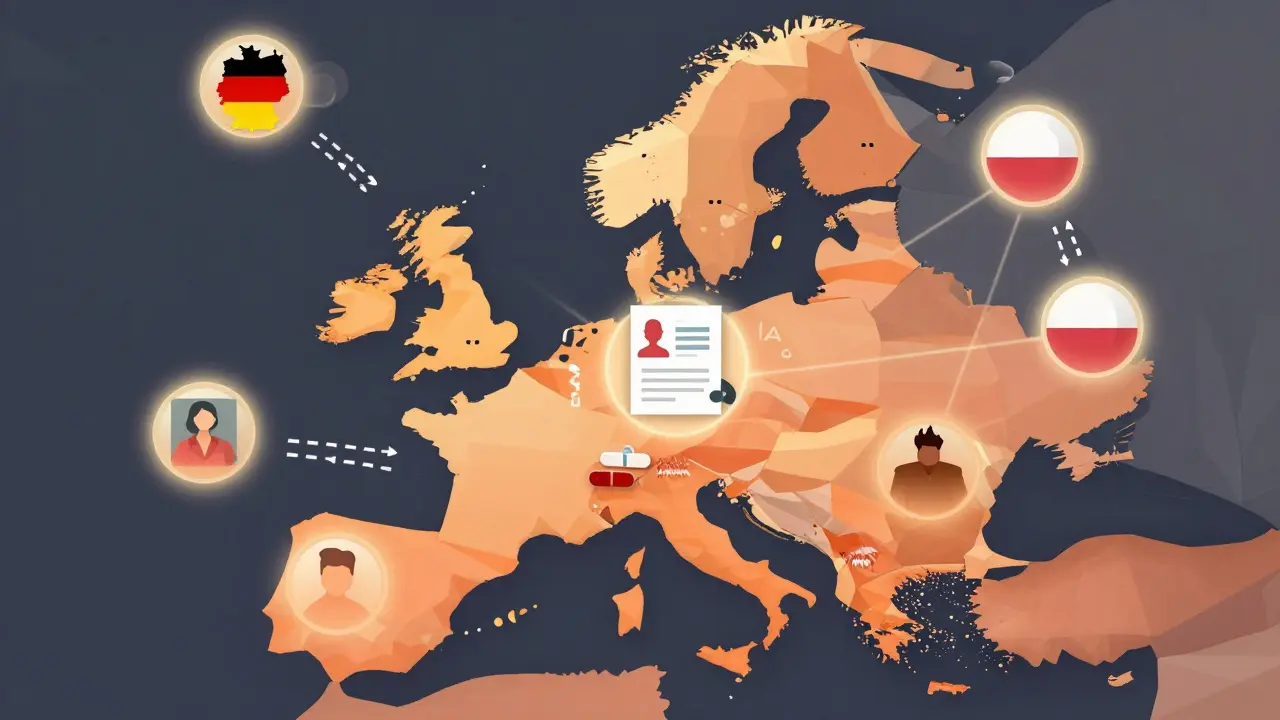
Where It Still Falls Short
Despite the tech, the system isn’t seamless. The biggest problem? Fragmentation. Only 8 EU countries have clear rules for how pharmacists should handle e-prescriptions from abroad. In Ireland, prescriptions from UK-based telehealth services are outright rejected - even if they’re from licensed doctors. Why? Because the UK is no longer in the EU, and Irish law doesn’t recognize digital prescriptions from non-EU sources unless they meet very specific formatting rules. Then there’s the issue of medicine shortages. A patient in Sweden might need a generic version of a drug that’s in short supply in their own country. They try to get it in Denmark - but Denmark’s stock is also low. The EU’s new Critical Medicines Act (2025) tries to fix this by forcing drugmakers to report supply issues in real time. But it’s still early. Many pharmacies don’t have the tools to check the European Shortages Medicines Platform (ESMP) before filling a cross-border order. Language barriers still trip people up. Even with automated translations, some drug names or dosages vary by country. A pill called “Metformin 500mg” in Germany might be labeled “Glucophage 500” in Italy. Pharmacists need training to spot these differences. A 2025 EAEP study found that pharmacists need about 40 hours of specialized training to handle cross-border prescriptions safely. Many haven’t received it yet.Real Stories: What Patients Are Experiencing
On Reddit, users in r/EUHealthcare share stories every week. One woman from Poland traveled to Lithuania for her daughter’s diabetes meds because the specific generic brand wasn’t available back home. She got it without issue - thanks to ePrescription. Another man from Ireland tried to fill a UK telehealth prescription in Belfast. The pharmacist refused. He had no idea the system didn’t recognize UK digital prescriptions anymore. He ended up driving 90 minutes to a pharmacy in Dublin that could help. In border towns like Aachen (Germany) and Maastricht (Netherlands), people don’t think twice about crossing for cheaper meds. A pack of generic statins costs €8 in the Netherlands but €22 in Germany. Locals have turned it into a weekly routine. But in non-border areas? Most people don’t even know they can.What’s Changing in 2026
The EU is pushing hard to fix these gaps. Italy replaced paper prescription stickers with scannable GS1 DataMatrix codes in February 2025. That means pharmacists can scan a code and instantly pull up the full prescription details - no manual entry, no errors. Spain and Portugal are rolling out similar systems. By 2027, the eHDSI will expand to include lab results, hospital discharge summaries, and even medical images. That’s huge. Imagine getting emergency care in Austria and the doctor instantly sees your full history - including which generics you’ve taken and how you reacted. The European Commission is also cracking down on compliance. Under Regulation (EU) 2025/327, countries that don’t meet data security standards risk having their systems suspended. That’s a big incentive for nations to upgrade.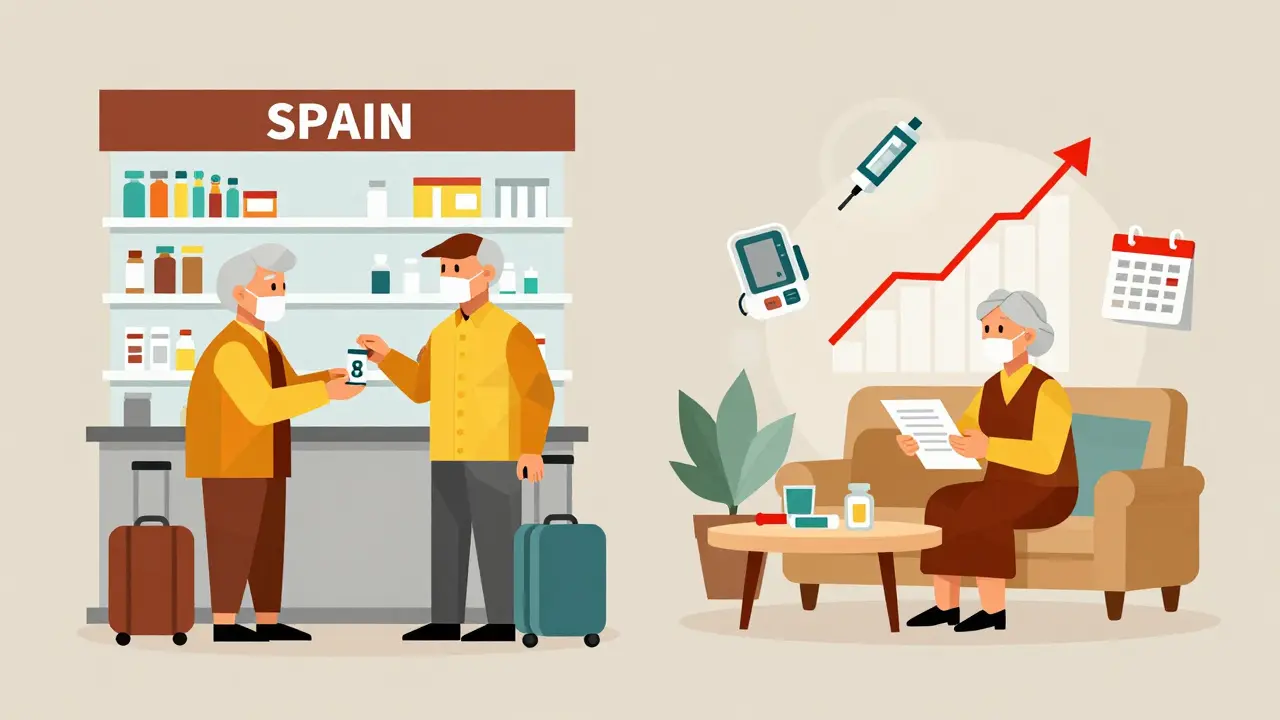
What You Need to Do to Use This Service
If you’re an EU citizen and want to use cross-border pharmacy services, here’s how:- Make sure your doctor sends your prescription electronically. Ask if they use the national ePrescription system.
- Log into your country’s health portal (like MyHealth@EU) and enable cross-border access for your prescriptions.
- When traveling, find a pharmacy that displays the EU cross-border pharmacy logo. Not all do - ask if they accept ePrescriptions from other EU countries.
- Bring your national ID card or e-ID. You’ll need it to authenticate your identity.
- Ask for a Patient Summary if you’re on multiple medications. It helps the pharmacist avoid dangerous interactions.
Who Benefits the Most?
This system doesn’t just help tourists. It helps:- Retirees who split time between countries - like someone who winters in Spain but gets their meds from Belgium.
- Chronic illness patients in low-income countries who can’t afford local brand-name drugs.
- Students studying abroad who need ongoing prescriptions.
- Workers who commute across borders daily.
The Big Picture: More Than Just Pills
Cross-border pharmacy services aren’t just about saving money or avoiding a trip home. They’re about building a true European health space - where your right to medication doesn’t stop at a border. It’s about dignity, access, and fairness. But it won’t work unless people know about it. And unless governments make sure every pharmacist is trained, every system is connected, and every patient can trust it. The tech is ready. The laws are there. Now it’s about execution. The EU’s goal is clear: reduce medication access gaps by 35% by 2030. That’s ambitious. But with 14.3% annual growth in this sector, and rising demand from aging populations, it’s not just possible - it’s necessary.Can I use my EU ePrescription in the UK after Brexit?
No. The UK is no longer part of the EU’s ePrescription system. Pharmacies in the UK cannot fill EU-issued ePrescriptions, and EU pharmacies cannot fill UK-issued ones - unless they’re manually verified as paper prescriptions with full prescriber details. This applies even if the UK doctor is licensed and the medication is identical.
Do I need to pay extra for cross-border prescriptions?
No. You pay the same price as a local patient in the country where you’re filling the prescription. If generics are cheaper there, you pay less. If they’re more expensive, you pay more. Your home country’s insurance doesn’t cover the cost - you’re treated as a local patient in the foreign country.
What if the pharmacy abroad doesn’t have my generic drug in stock?
The pharmacist can substitute it with another approved generic version of the same active ingredient - as long as it’s therapeutically equivalent. They must inform you of the change. If no equivalent is available, they can contact your home pharmacy or doctor for guidance. You’re not stuck.
Is my personal data safe when using ePrescription?
Yes. The system uses end-to-end encryption and requires your explicit consent before any data is shared. Your health information is never stored on a central EU server. It stays in your home country’s system. Only the prescription data you authorize is sent - and only for the duration needed to fill the order.
Can I use this system for controlled substances like opioids or strong painkillers?
Most EU countries restrict cross-border access to controlled substances. Even if your prescription is electronic, pharmacies abroad may refuse to fill it for drugs like oxycodone or benzodiazepines. Each country has its own rules - and many treat these as high-risk. Always check with your doctor and the destination country’s health authority before traveling with these medications.



Angela Fisher
This is all a scam to get you to hand over your medical data to Big Pharma and the EU surveillance state. 😈 They say 'ePrescription' but really they're building a biometric ID database to track your every pill intake. Next thing you know, your insulin dose gets 'adjusted' by an algorithm because you ate carbs. 🤖💊 I saw a guy in Germany get flagged for 'medication non-compliance' after he bought generics in Poland. He lost his disability benefits. They're coming for us all. 😭