
Dofetilide & Cimetidine Interaction Checker
Medication Checker
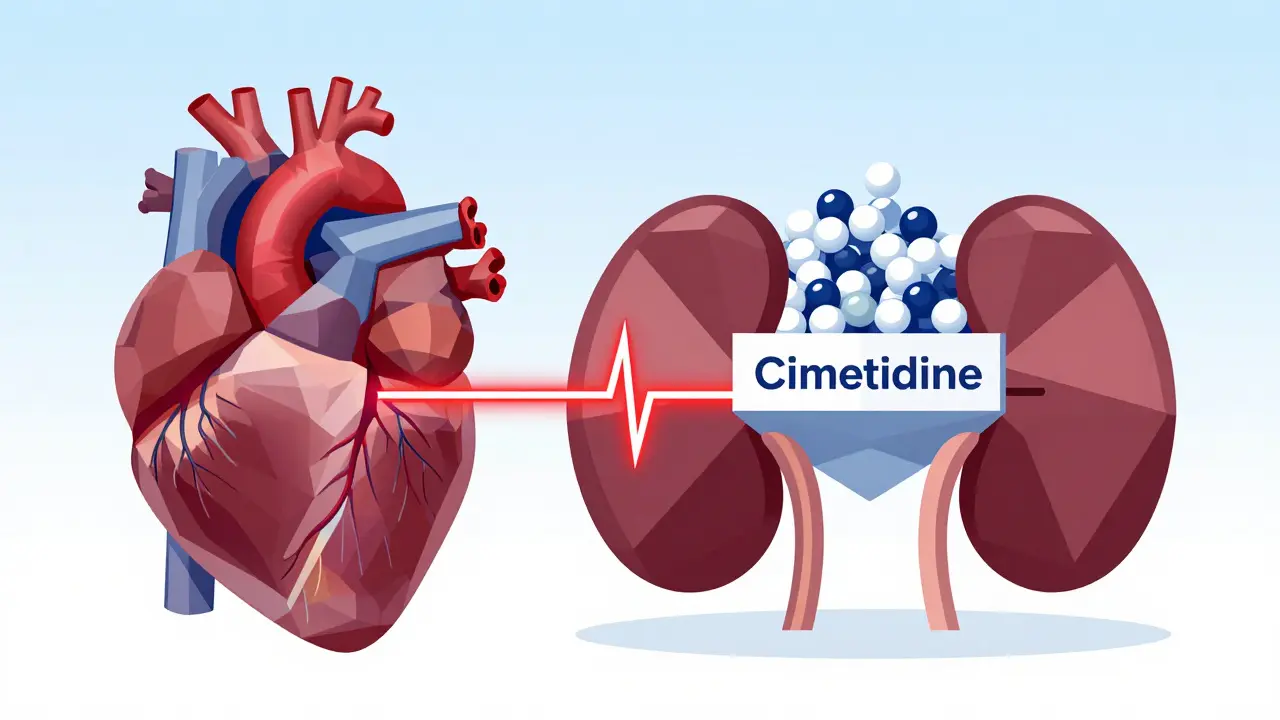
This tool checks for the dangerous interaction between dofetilide (Tikosyn) and cimetidine (Tagamet) as explained in the article. This combination can cause life-threatening heart rhythm problems.
When you take a medication like dofetilide is a Class III antiarrhythmic drug used to restore and maintain normal heart rhythm in patients with atrial fibrillation or flutter. Also known as Tikosyn, it was approved by the FDA in 1999 and works by blocking potassium channels in heart cells to stabilize electrical activity.
Now imagine adding a common over-the-counter heartburn pill-cimetidine is an H2-receptor antagonist once widely used to treat ulcers and acid reflux, marketed as Tagamet. First approved in 1977, it reduces stomach acid by blocking histamine receptors in the stomach lining.
At first glance, these two drugs seem unrelated. One fixes heart rhythm. The other settles stomach upset. But together? They create a perfect storm. And it’s not just a theoretical risk. This combination has killed people. Not because of bad luck. Not because of rare side effects. But because of a well-documented, predictable, and entirely preventable drug interaction.
How Cimetidine Turns Dofetilide Into a Time Bomb
Dofetilide doesn’t get broken down by the liver like most drugs. Instead, about 80% of it leaves your body through your kidneys-via a specific transport system called the renal cation exchange pathway. Think of it like a specialized tunnel that only lets certain molecules pass through.
Cimetidine doesn’t just pass through that tunnel. It blocks it. Completely.
Unlike other H2 blockers like famotidine or ranitidine, cimetidine is a powerful inhibitor of this kidney transport system. When you take cimetidine, even at the standard dose of 400 mg twice daily, it shuts down the main exit route for dofetilide. The result? Dofetilide builds up in your bloodstream.
Studies show that cimetidine can raise dofetilide levels by 50% to 100% within just 24 hours. That’s not a small change. That’s doubling the amount of a drug designed to work within a razor-thin safety window.
What Happens When Dofetilide Levels Spike
Dofetilide’s job is to prolong the heart’s electrical cycle slightly-long enough to stop abnormal rhythms. But too much prolongation? That’s when things go wrong.
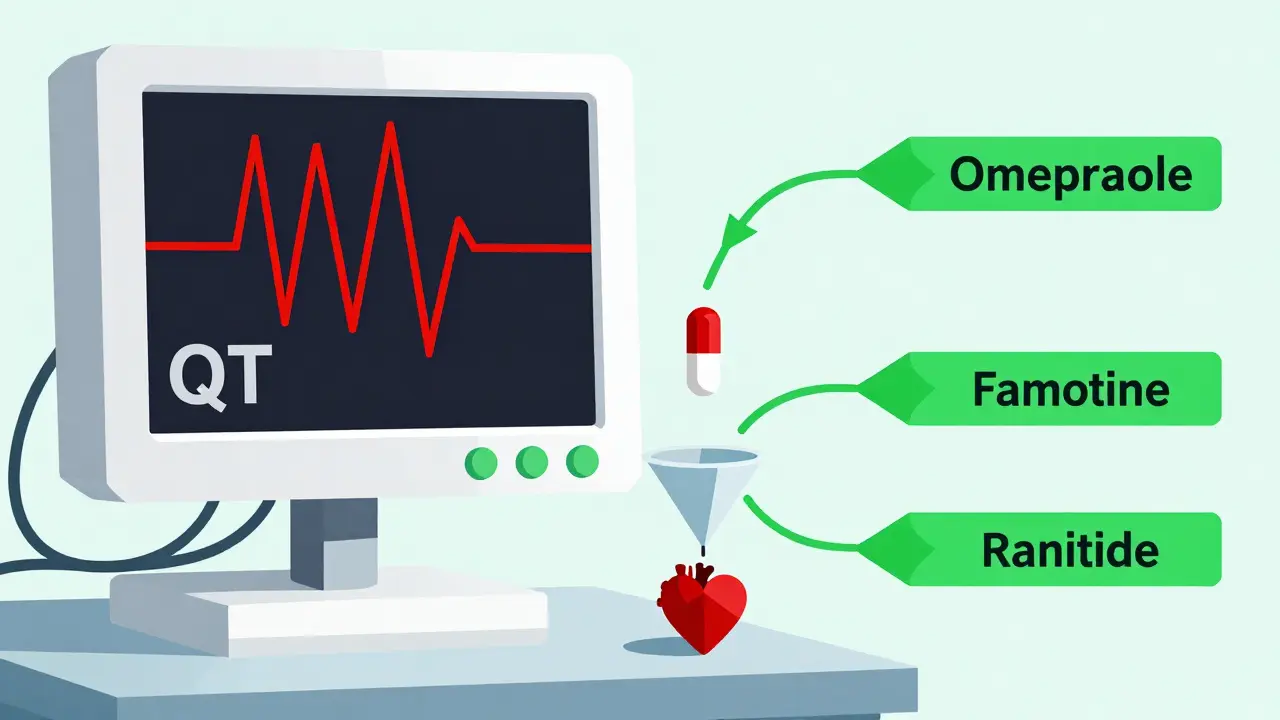
The heart’s electrical signal gets stretched out, visible on an ECG as a prolonged QT interval. When that interval gets too long, it creates the perfect conditions for a deadly arrhythmia called torsades de pointes is a specific form of polymorphic ventricular tachycardia that can degenerate into ventricular fibrillation and sudden cardiac death.
This isn’t a rare event. According to the original Tikosyn prescribing information, about 3-5% of patients on dofetilide alone develop dangerous QT prolongation. But when cimetidine is added? That number jumps to 12-18%. That’s a 3- to 6-fold increase in risk.
And torsades de pointes doesn’t come with warning signs. No chest pain. No dizziness before it hits. One moment, you’re fine. The next, you collapse. Some patients go into cardiac arrest. Others require emergency cardioversion and ICU stays. Case reports from 2020 and 2021 describe otherwise stable patients-72-year-old men, 65-year-old women-suddenly developing life-threatening arrhythmias after just one or two doses of cimetidine.
The Evidence Is Overwhelming
This isn’t just a theory. It’s been proven again and again.
- A 2021 study in Circulation: Arrhythmia and Electrophysiology analyzed over 12,450 patients and found the risk of QT prolongation was 4.2 times higher with cimetidine than without.
- The FDA’s Adverse Event Reporting System logged 87 cases of QT prolongation and 23 cases of torsades de pointes directly tied to this interaction between 2010 and 2022.
- Cardiologists at 47 academic centers reported that 12-15% of unexpected torsades cases in dofetilide patients were linked to unrecognized cimetidine use.
- Dr. Jonathan Piccini of Duke University called this one of the “clearest contraindications in clinical cardiology.”
- The American College of Cardiology rates this combination as “rarely appropriate” with Level A evidence-the highest level of proof.
Even the European Heart Rhythm Association says: “Patients on dofetilide should have all cimetidine prescriptions automatically flagged and converted to safer alternatives.”
Why Other H2 Blockers Are Safe
This is where it gets important. Not all acid-reducing drugs are dangerous with dofetilide.
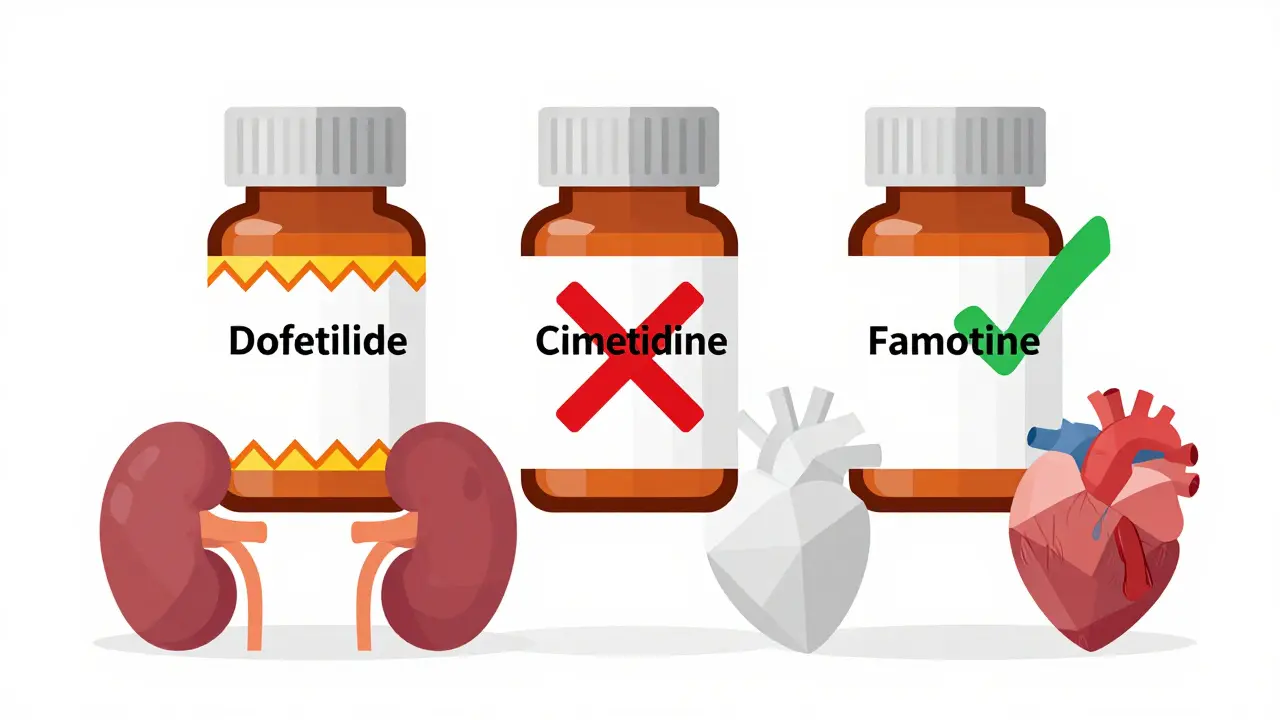
Famotidine (Pepcid) and ranitidine (Zantac) don’t interfere with the renal cation transport system. Studies show they don’t raise dofetilide levels at all. In fact, Pfizer’s own clinical trials (DOF-30001 and DOF-30002) confirmed this: cimetidine increased exposure by 40-50%, while famotidine showed no change.
That’s why guidelines are crystal clear: if you need acid suppression while on dofetilide, use famotidine up to 40 mg twice daily-or switch to a proton pump inhibitor like omeprazole. These are safe alternatives. Cimetidine is not.
What Doctors Do to Prevent This
Modern medicine doesn’t leave this to chance.
Before starting dofetilide, clinicians must:
- Check for any current or recent cimetidine use.
- Measure the corrected QT interval (QTc). If it’s above 440 ms (or 500 ms with conduction issues), dofetilide is absolutely contraindicated.
- Verify kidney function-dofetilide is not used if creatinine clearance is below 20 mL/min.
- Ensure potassium levels are between 4.0 and 5.0 mmol/L. Low potassium makes QT prolongation even worse.
Electronic health records now have mandatory alerts. If a doctor tries to prescribe cimetidine to someone on dofetilide, the system blocks it. The patient must be manually overridden by a cardiologist. This reduced inappropriate co-prescribing from 8.7% in 2015 to just 1.2% by 2022.
AI tools are now predicting this interaction 72 hours before it happens-flagging patients who are about to start cimetidine and are already on dofetilide. These aren’t futuristic ideas. They’re standard practice today.
What Patients Need to Know
If you’re on dofetilide:
- Never take cimetidine (Tagamet) without checking with your cardiologist.
- Even one dose can be dangerous. Don’t assume “just this once” is safe.
- Check all OTC meds. Some combination products for colds or stomach upset contain cimetidine.
- If you’ve taken cimetidine recently, tell your doctor before any heart rhythm test or dose change.
- Ask for famotidine instead. It works just as well for heartburn and won’t put you at risk.
If you’re a caregiver or family member: review all medications. Ask pharmacists to flag interactions. Don’t assume “it’s just for heartburn” means it’s harmless.
The Bigger Picture
This isn’t just about two drugs. It’s about how complex modern medicine has become.
Average patients with atrial fibrillation take nearly 7 different prescription medications. Each one adds risk. Each one can interact. The dofetilide-cimetidine interaction is a textbook example of why polypharmacy is so dangerous-and why we need systems, not just warnings, to protect patients.
It also shows how outdated drugs linger. Cimetidine prescriptions have dropped from 28 million in 1990 to just 1.2 million in 2022. But it’s still out there-in nursing homes, in ERs, in old prescriptions. And for someone on dofetilide, it’s a ticking time bomb.
The American Heart Association estimates each avoided interaction saves about $47,500 in hospital costs. But money isn’t the point. The point is: people don’t have to die from this. Not anymore.
Can I take cimetidine if I stop dofetilide first?
No-not without strict medical supervision. Dofetilide has a long half-life (about 10 hours). Even after stopping it, it can take 5 half-lives (roughly 50 hours) to clear from your system. But because of how it affects kidney transport, doctors recommend waiting at least 10 days before starting cimetidine. And even then, you’d need to be monitored closely. The safest approach is to avoid cimetidine entirely if you’ve ever taken dofetilide.
Is famotidine completely safe with dofetilide?
Yes. Multiple studies confirm that famotidine does not interfere with dofetilide’s kidney clearance. It’s the preferred H2 blocker for patients on dofetilide. Doses up to 40 mg twice daily are considered safe. Always confirm with your doctor, but famotidine is the standard replacement.
What if I accidentally took cimetidine while on dofetilide?
Call your doctor or go to the ER immediately. Even a single dose can be dangerous. You may need an ECG to check your QT interval, blood tests for potassium, and possibly hospital monitoring. Do not wait for symptoms. Torsades de pointes can strike without warning.
Are there any other drugs that interact with dofetilide like cimetidine does?
Yes. Dofetilide has several dangerous interactions. Verapamil, trimethoprim, ketoconazole, and certain antibiotics like erythromycin can also raise dofetilide levels by blocking its kidney clearance. Always review all medications with your cardiologist before starting dofetilide. Even common supplements like magnesium or potassium can affect risk if levels are too high or too low.
Why isn’t cimetidine banned if it’s so dangerous?
Cimetidine isn’t banned because it still has legitimate uses-for example, in short-term treatment of upper GI bleeding or in patients who can’t tolerate other H2 blockers. But its use is now extremely limited. The danger isn’t the drug itself. It’s the combination. Modern safety systems now prevent the combination. That’s why deaths from this interaction have dropped sharply since 2015.



Dominic Punch
This is why I hate when people think OTC means harmless. Cimetidine is basically a silent killer when paired with dofetilide. I’ve seen two patients in my unit go into torsades because they took Tagamet for 'just one day' after a bad stomach bug. One didn’t make it. The other had to be defibrillated three times. It’s not a theory - it’s a funeral. Don’t let your grandma think 'it’s just heartburn medicine' - it’s a death sentence with this combo.