
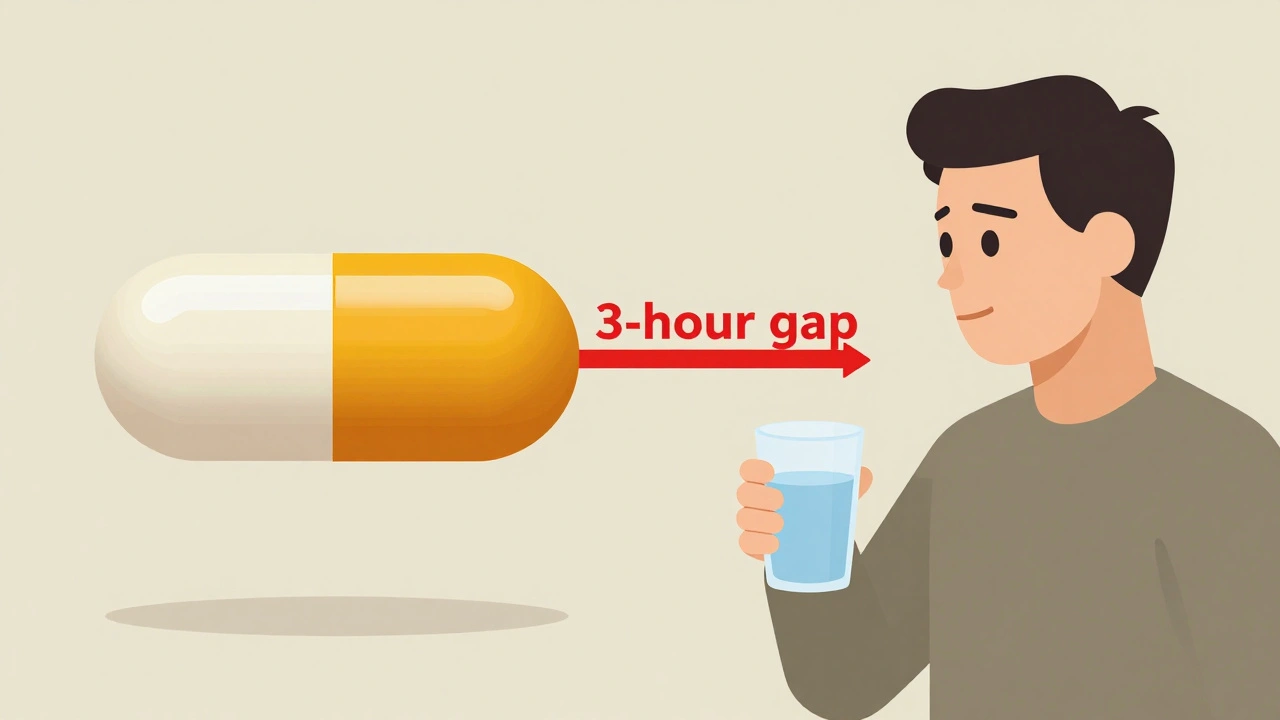
If you’re taking fiber supplements like Metamucil, Benefiber, or psyllium husk, and you’re also on daily medication, you might be wondering: is this safe? The answer isn’t simple. Fiber supplements can interfere with how your body absorbs certain drugs-sometimes significantly. But that doesn’t mean you need to stop taking fiber. It just means you need to time things right.
Why Fiber Supplements Interfere with Medications
Fiber doesn’t get digested. That’s why it helps with digestion-it moves through your gut mostly unchanged. But that same property is what makes it a problem for some medications. When you swallow a fiber supplement, it swells up in your stomach and intestines, forming a gel-like mass. This mass can trap or bind to certain drugs, keeping them from being absorbed into your bloodstream. It can also speed up how fast everything moves through your digestive tract, giving your body less time to absorb the medicine. This isn’t just theory. Studies show real effects. One study found that when people took levothyroxine (a thyroid hormone) at the same time as ispaghula husk (a type of psyllium), the amount of drug absorbed dropped by about 9%. That might sound small, but for thyroid patients, even a tiny change in hormone levels can cause fatigue, weight gain, or heart issues. Another study showed that pectin fiber raised LDL cholesterol levels in people taking lovastatin, likely because the fiber bound to the drug and kept it from working properly. But not all fiber supplements affect all drugs. Some studies found no interaction between psyllium and calcium, or between cellulose and theophylline. That’s why blanket rules don’t work. You need to know which medications are at risk-and which aren’t.Medications That Definitely Need Space from Fiber
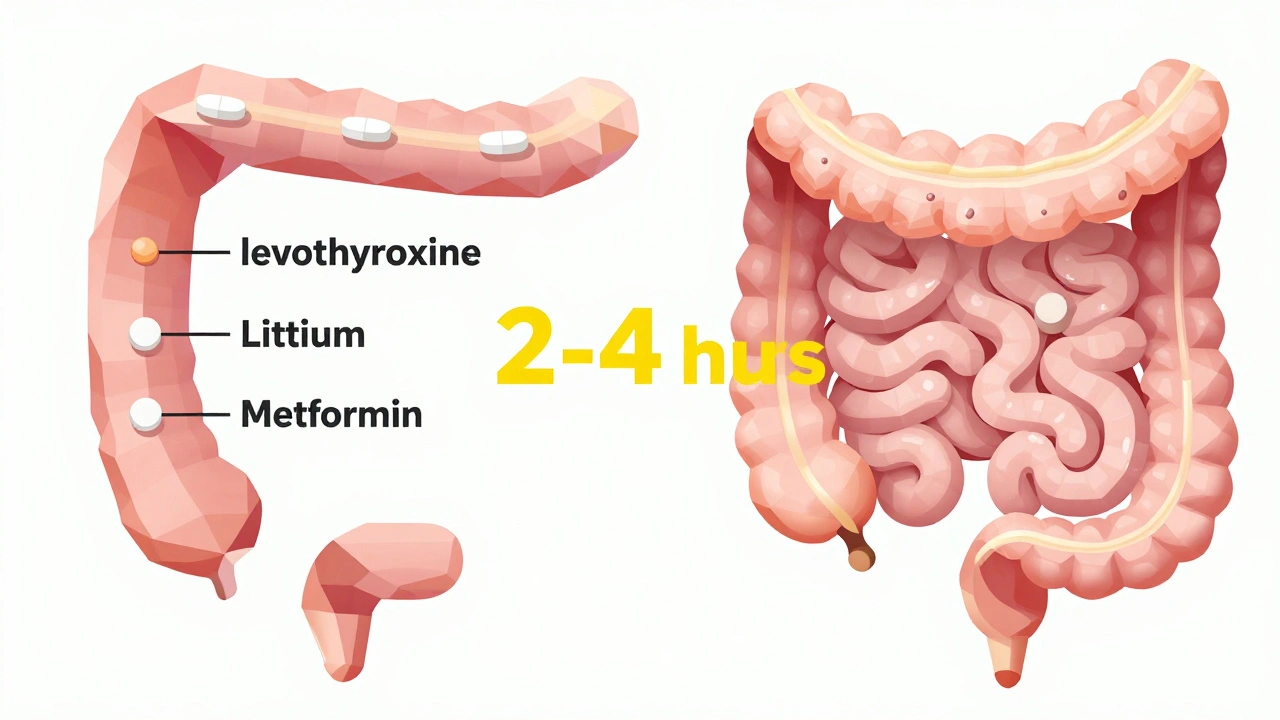
Some drugs are especially sensitive. If you’re taking any of these, you must separate them from fiber supplements by several hours:- Levothyroxine (Synthroid, Levoxyl): Used for hypothyroidism. Even small drops in absorption can throw off your hormone balance.
- Metformin: A common diabetes drug. Fiber can slow its absorption, which might make it less effective at controlling blood sugar.
- Lithium: Used for bipolar disorder. Changes in absorption can lead to toxicity or loss of effect.
- Olanzapine (Zyprexa): An antipsychotic. Fiber can reduce how much reaches your brain.
- Carbamazepine (Tegretol): Used for seizures and nerve pain. Fiber can lower its blood levels.
When to Take Fiber Supplements
The most consistent advice across all major medical sources is this: take fiber supplements at least two to three hours before or after your medication. Some experts, like those at FreeRX, suggest up to four hours for drugs like metformin, lithium, and olanzapine. Here’s a simple way to plan it:- If you take your medication in the morning (like levothyroxine on an empty stomach), wait at least three hours before taking your fiber supplement. That means take fiber at lunch or early afternoon.
- If you take your meds at night, take fiber in the morning or at least four hours before bedtime. Don’t take fiber right before sleep-it can cause bloating, gas, or cramps that disrupt your rest.
- If you take multiple medications at different times, map out your schedule. Use a notebook or phone reminder. Consistency matters more than perfection.
What About Fiber from Food?
Good news: eating fiber-rich foods like oats, apples, beans, or broccoli is much less likely to interfere with your meds. Why? Because the fiber is spread out, not concentrated. A bowl of oatmeal won’t bind your thyroid pill the way a tablespoon of powdered psyllium will. That said, if you’re eating a huge high-fiber meal right before or after your medication, it’s still safer to wait. For example, if you take levothyroxine and then eat a big bran muffin and a smoothie with chia seeds, you’re still at risk. Stick to the two- to three-hour window even with food.How to Take Fiber Supplements Safely
Fiber supplements aren’t harmless just because they’re natural. You need to use them right:- Always take them with at least 8 ounces (240 ml) of water. Without enough liquid, fiber can swell in your throat and cause choking.
- Start slow. If you’ve never taken fiber supplements before, begin with half a dose. Go up slowly to avoid bloating and gas.
- Don’t mix fiber with other supplements or vitamins unless you’ve checked the interactions. Some minerals like iron or zinc can also bind to fiber.
- Choose your fiber wisely. Psyllium is the most studied and most likely to interfere. Inulin or methylcellulose may be gentler, but there’s still not enough data to say they’re safe with all meds.

What If You Forgot to Separate Them?
Accidents happen. You took your fiber with your pill by mistake. What now? Don’t panic. One mistake won’t ruin your treatment. But if it happens often, it could lower your drug levels over time. If you realize right away-within 30 minutes-drink a glass of water and wait. Don’t take another dose of your medication. Your body might still absorb enough. If it’s been more than an hour, skip the next dose and go back to your normal schedule. Don’t double up. That could be dangerous. Talk to your doctor or pharmacist. They can check your blood levels (like TSH for thyroid meds or lithium levels) to make sure you’re still in range.Why This Matters More Than You Think
Most people don’t get enough fiber. In the U.S., the average adult eats only 15 grams a day. Experts recommend 21-30 grams, depending on age and gender. Low fiber is linked to higher risks of heart disease, stroke, type 2 diabetes, and colon cancer. So don’t stop taking fiber because you’re worried about your meds. Just be smart about it. Fiber supplements help fill the gap when your diet falls short. But they’re not a replacement for whole foods. A banana, a handful of almonds, or a cup of lentils gives you more than just fiber-they give you vitamins, antioxidants, and phytonutrients that powders don’t.Final Tip: Talk to Your Pharmacist
Your pharmacist has access to drug interaction databases that your doctor might not check daily. Bring your full list of meds and supplements to your next visit. Ask: "Which of these need to be separated from fiber?" Most pharmacists will give you a printed list or a note to stick on your pill organizer. It’s a small step that can prevent big problems.Can I take fiber supplements with my morning coffee?
Yes, as long as your coffee isn’t your medication. Fiber supplements can be taken with water, juice, or coffee. But if you take your thyroid medication with coffee, avoid fiber for at least three hours after. Coffee can also interfere with levothyroxine absorption, so don’t combine two potential disruptors.
Is it safe to take fiber at night?
It’s not recommended if you’re on medications that need separation. Taking fiber before bed can cause bloating and gas that disrupt sleep. Plus, if you take your meds at night, you’ll need to wait four hours after fiber-which means taking it at 8 p.m. and meds at midnight. That’s hard to stick to. Morning or afternoon is easier and safer.
Do all fiber supplements work the same way?
No. Psyllium (Metamucil) is the most likely to interfere with meds because it forms a thick gel. Inulin and methylcellulose are less sticky and may have fewer interactions, but there’s not enough research to say they’re safe with all drugs. Stick to the two- to four-hour rule regardless of the type.
Can fiber supplements lower blood pressure meds?
There’s no strong evidence that fiber interferes with common blood pressure drugs like lisinopril or amlodipine. But fiber can help lower blood pressure naturally over time. That’s a good thing. Just keep your timing separate from any other meds you take, just to be safe.
What if I take fiber with my multivitamin?
Fiber can bind to minerals like iron, zinc, calcium, and magnesium in multivitamins, reducing their absorption. Take your multivitamin at least two hours before or after your fiber supplement. Better yet, get your vitamins from food-leafy greens, nuts, and dairy have fiber too, but they’re less likely to cause issues.




Ashley Farmer
I’ve been taking psyllium for years and levothyroxine since my thyroid surgery. I used to take them together out of convenience-big mistake. My TSH went haywire. After switching to taking fiber at lunch, everything stabilized. Seriously, don’t ignore this. Your body notices even tiny shifts.
And yes, coffee messes with levothyroxine too. I switched to water only in the morning. Small changes, huge difference.