
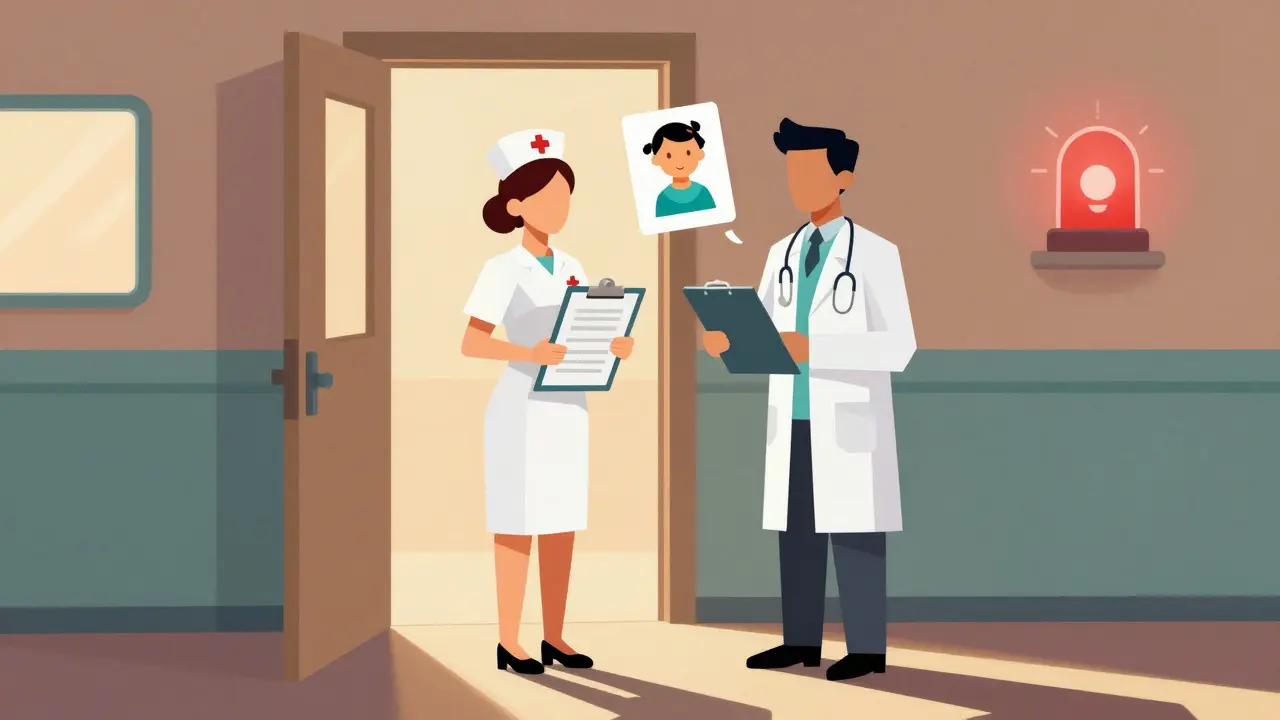
Every day, doctors and nurses make decisions that go beyond diagnosis and treatment. One of the most critical, yet often misunderstood, parts of their job is healthcare provider reporting. It’s not about gossip or bureaucracy-it’s about protecting people who can’t protect themselves. Whether it’s a child showing signs of abuse, an elderly patient with unexplained bruises, or a colleague making dangerous mistakes, reporting isn’t optional. It’s the law. And getting it wrong can cost lives-or your license.
What You Must Report (And When)
There are four main categories of mandatory reporting for healthcare workers in the U.S.: child abuse, elder and vulnerable adult abuse, public health threats, and professional misconduct. Each has different rules depending on where you work.
Child abuse reporting is required in all 50 states. You don’t need proof-just reasonable suspicion. That means if a child comes in with unexplained burns, seems fearful around a parent, or tells you something alarming, you report it. Some states like California and Texas require reports within 24 to 48 hours. Others, like Minnesota, demand immediate reporting. Delaying can lead to license suspension or criminal charges.
Elder abuse reporting is trickier. Only 14 states require all healthcare workers to report suspected abuse of older adults. In 26 states, only staff in nursing homes or hospitals must report. And 10 states have no law at all. That means if you’re working in Florida and see an elderly patient with a broken hip from a fall that doesn’t add up, you might not be legally required to report it. But in New York, you are. Always check your state’s rules-even if you’re just covering a shift.
Public health reporting covers 57 notifiable diseases. For diseases like anthrax or botulism, you have one hour to report. For Lyme disease or hepatitis, you have up to seven days. Most hospitals now use automated systems that send reports directly to state health departments. But if you’re in a small clinic or doing telehealth, you might still need to file manually. Missing a report during an outbreak can have serious consequences-for the patient and for you.
Professional misconduct is the least understood. If a nurse is giving the wrong meds, a doctor is drunk on shift, or someone is falsifying records, you have to report it. In Minnesota, the Chief Nursing Officer must report nurse misconduct within 30 days. In Nebraska, any provider who witnesses misconduct must report it. And in Utah, the law protects you from retaliation-even if your report turns out to be wrong. But in other states, reporting a colleague can feel like a career risk. That’s why many stay quiet.
Why Reporting Feels So Hard
Most doctors and nurses didn’t go into medicine to be cops or investigators. They went to help people. But mandatory reporting forces them into a role they’re not trained for.
One pediatrician in Michigan told me she filed 17 reports last year. Fifteen led to child protective services stepping in. But two families stopped bringing their kids to her clinic because they were afraid she’d report them for using opioids. She lost patients she’d cared for since birth. That’s the emotional toll.
Nurses face similar dilemmas. A nurse in Utah reported unsafe staffing levels at her facility. She was demoted two weeks later-even though state law says retaliation is illegal. She didn’t quit. But she stopped speaking up. That’s the silent cost.
Then there’s the confusion. What counts as “reasonable suspicion”? Is a child’s bruise from a fall-or abuse? Is an elderly patient’s weight loss due to dementia-or neglect? Different states define it differently. One nurse in California told me she once reported a case that was later dismissed because the state thought it wasn’t severe enough. She felt guilty for months.
And then there’s HIPAA. You’re trained to protect patient privacy. But mandatory reporting creates an exception. You’re allowed-sometimes required-to break confidentiality. That tension eats at people. A 2020 survey found 68% of physicians said mandatory reporting made patients less likely to be honest with them.

How to Get It Right
You don’t have to guess. Most hospitals and clinics have protocols. Use them.
- Know your state’s laws. Don’t rely on memory. Bookmark your state’s health department website. Keep a printed copy of reporting requirements in your locker.
- Document everything. Write down dates, times, what you saw, what the patient said, and who else was present. If you’re unsure, write it anyway. Documentation protects you.
- Use the right channel. Some states have online portals. Others require phone calls. Some need both. California uses the Child Abuse Reporting System. Minnesota has a dedicated nurse misconduct hotline. Don’t email a report unless it’s allowed.
- Ask for help. If you’re stuck, call your hospital’s compliance officer. In Washington State, there’s a 24/7 hotline: 1-800-252-0230. Other states? Not so much. But if you’re unsure, err on the side of reporting.
- Train annually. Most states require it. If your hospital doesn’t offer training, demand it. The Accreditation Council for Graduate Medical Education says residency programs should spend 8-12 hours on this topic. You deserve that preparation.
What Happens After You Report
After you file a report, you’re done. The system takes over. But you should still care.
Child abuse reports go to child protective services. They investigate. Sometimes the child is removed. Sometimes the family gets help. Either way, your report started the process. In Michigan, one nurse’s report led to the rescue of a 4-year-old who was being starved. That child is alive today because she spoke up.
Elder abuse reports go to adult protective services. In one Minnesota case, a nurse reported neglect at a nursing home. Investigators found 27 other victims. That’s not rare. A 2019 JAMA study showed states with mandatory reporting identified 37% more abuse cases than states without.
Public health reports trigger contact tracing, outbreaks alerts, and sometimes quarantines. In 2023, an automated system in California flagged 12 cases of a rare bacterial infection within hours. That allowed health officials to stop a potential outbreak before it spread.
Professional misconduct reports go to the state medical or nursing board. If a nurse was giving wrong doses, they might lose their license. If a doctor is impaired, they might be forced into rehab. It’s not punishment-it’s prevention. One doctor in Minnesota reported a colleague who was mixing up insulin doses. A patient nearly died. The colleague got help. No one died.

The Bigger Picture
Mandatory reporting isn’t perfect. It’s messy, inconsistent, and sometimes feels like a burden. But it works.
Between 2019 and 2022, 18 states added human trafficking as a reportable condition. That’s progress. California now requires all licensed providers to report elder abuse-not just hospital staff. That’s a big step. And AI tools are starting to help. A pilot at Massachusetts General Hospital used software to flag possible abuse cases in patient notes. It cut reporting errors by 38%.
The real problem isn’t the law. It’s the patchwork. A telehealth doctor in Oregon treats a patient in Texas. Which state’s rules apply? Right now, nobody knows for sure. That’s why 42% of telehealth providers say they’re confused about their reporting duties.
Experts agree: we need national standards. The Uniform Law Commission proposed a model law in 2021. The Department of Health and Human Services is pushing for standardized electronic reporting by 2025. But until then, you’re on your own.
Final Advice: Report Anyway
You will never be punished for reporting too early. You will be punished for reporting too late.
When in doubt, report. When scared, report. When tired, report.
The system isn’t flawless. But it’s the only thing standing between a child and harm. Between an elderly person and starvation. Between a patient and a dangerous provider.
You’re not just a doctor or a nurse. You’re a guardian. And sometimes, the most important thing you do isn’t on the chart. It’s the report you file after hours, when no one’s watching.
Do I need to tell the patient I’m going to report them?
No, you don’t have to. In fact, telling them might put the victim at greater risk. For example, if you suspect child abuse and warn the parent, they might hide evidence or flee. The law allows you to report without notice. Your priority is safety, not consent.
Can I be sued for reporting someone?
Generally, no. Most states give you legal immunity if you report in good faith-even if the investigation finds no abuse. The key is “good faith.” If you report just to get back at a colleague or out of anger, you could be liable. But if you genuinely believe someone is in danger, you’re protected.
What if I report and nothing happens?
That’s normal. Not every report leads to intervention. Many cases are dismissed because evidence is insufficient, or the family refuses cooperation. But your report still matters. It goes into a database. It helps track patterns. It alerts authorities to recurring problems. One report might not change a life-but 10 reports might change a system.
I’m a nurse. Do I have to report my own boss?
Yes. If your supervisor is breaking rules-skipping safety checks, falsifying records, or working while impaired-you are legally and ethically required to report them. Many nurses fear retaliation. But in states like Utah, Texas, and New York, laws protect you. If you’re scared, contact your state nursing board anonymously first. They can guide you.
I work in telehealth. Which state’s rules apply?
It depends. If the patient is in a different state than where you’re licensed, you typically follow the laws of the state where the patient is located. But rules are unclear. Some states say you follow your own state’s laws. Others say you follow the patient’s. Until national standards are in place, the safest approach is to report based on the patient’s location-and document your reasoning.



Vicky Zhang
God, I just had to file another child abuse report last week. The kid had burns on his arms but said he fell down the stairs. His mom was smiling like nothing was wrong. I didn't sleep that night. I kept thinking-what if I waited? What if I doubted? I reported. They took him. I don't know if he's safe yet, but I know I did the right thing. You don't get to choose when to care. You just do.
And yes, I know some reports get dismissed. But that doesn't mean they didn't matter. Every report is a thread. Pull one, and the whole tapestry starts to unravel.