
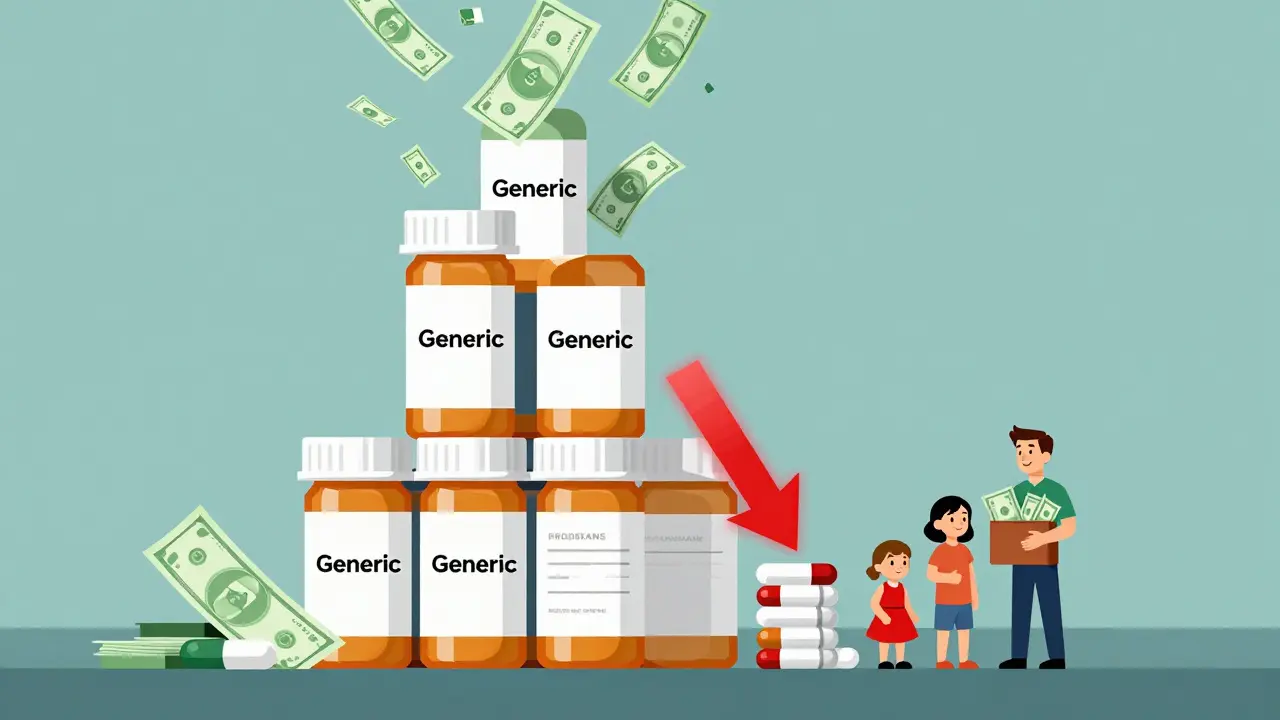
Every year, Americans fill over 3.9 billion prescriptions for generic medications. That’s nine out of every ten prescriptions written. And yet, these generics cost only 12% of what brand-name drugs do. The result? A staggering $467 billion saved in 2024 alone-part of a decade-long total of $3.4 trillion in savings. This isn’t a minor adjustment. It’s the single biggest force holding back runaway healthcare costs in the U.S.
How Generics Cut Costs So Deeply
Generic drugs aren’t cheaper because they’re low quality. They’re cheaper because they don’t need to repeat the billion-dollar clinical trials that brand-name drugs do. Once a patent expires, other manufacturers can make the same medicine using the same active ingredients. The FDA requires them to prove they work the same way, absorb the same way, and deliver the same results. That’s it. No reinventing the wheel. No marketing budgets pushing a $10 pill to $800. Just science, competition, and lower prices. In 2024, Americans spent $98 billion on generic prescriptions. Meanwhile, brand-name drugs-filling just 435 million prescriptions-cost $700 billion. That’s a 7x difference in cost for the same treatment. The math is simple: more generics = less spending. And it’s working. The average monthly savings per person switching from brand to generic? $147. For someone on three medications, that’s over $500 a year back in their pocket.The Biosimilar Breakthrough
Biosimilars are the next wave. These aren’t traditional generics-they’re copies of complex biologic drugs made from living cells, like those used for cancer, rheumatoid arthritis, and diabetes. They’re harder to replicate, so they took longer to enter the market. But now they’re gaining speed. Since 2015, biosimilars have saved $56.2 billion. In 2024 alone, they saved $20.2 billion. That’s not a drop in the bucket. It’s enough to cover the entire annual drug budget for a mid-sized state. And it’s accelerating. The biosimilar market grew 22.7% last year. More are coming. Drugs like Humira, Enbrel, and Rituxan-all costing $20,000 to $60,000 a year-are now being matched by biosimilars priced 30-70% lower. Hospitals and insurers are pushing them hard. Patients are noticing.Who’s Saving the Most?
The biggest savings come from the most common chronic conditions. The top 10 generic drugs in 2024 saved $127 billion. That’s more than the entire annual budget of many U.S. states. These aren’t obscure drugs. They’re the ones millions take daily: lisinopril for high blood pressure, metformin for diabetes, atorvastatin for cholesterol, levothyroxine for thyroid issues. These aren’t luxury treatments. They’re lifelines. And generics make them affordable. Medicare saved $142 billion using generics in 2024. Medicaid saved $62.1 billion. Together, they cover over 130 million Americans. Without generics, those programs would be underwater. Private insurers aren’t far behind. Express Scripts alone saved $18.3 billion in 2023 by steering patients toward generics.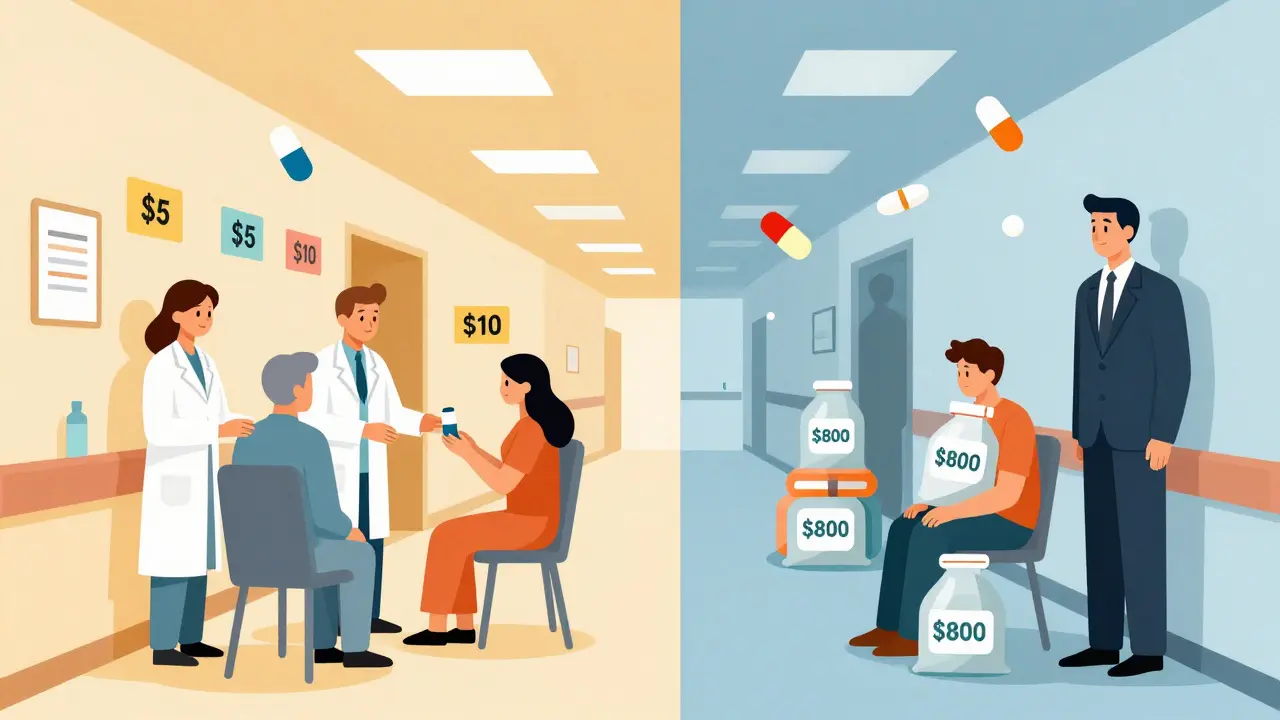
Why Some People Still Pay Too Much
Even with all this savings, many people still pay too much. Why? Because the system isn’t designed to pass savings along. Pharmacy Benefit Managers (PBMs)-the middlemen between insurers, pharmacies, and drugmakers-often keep the difference. A generic that costs $5 at the pharmacy might be priced at $15 on your insurance statement. The PBM pockets the rest. Another problem: patent thickets. Drugmakers file dozens of minor patents on a single drug-covering packaging, dosage forms, delivery methods-to block generics from entering the market. A 2024 JAMA study found that just four brand-name drugs used this tactic to delay competition, costing the system over $3.5 billion in two years. Then there’s “product hopping.” A company slightly changes a drug’s form-say, from a pill to a capsule-and pushes patients to the new version, which still has patent protection. The old version? Suddenly, no one can prescribe it. That’s not innovation. That’s a loophole.State Differences Matter
Not all states play the same game. California has mandatory generic substitution laws. If a doctor prescribes a brand-name drug, the pharmacist must switch it to the generic unless the doctor writes “dispense as written.” Result? 98% of prescriptions filled are generics. Texas? No such law. Pharmacists can substitute, but they don’t have to. Result? Only 87% of prescriptions are generics. That’s a $1.2 billion gap in annual savings just between those two states. Some states also limit what PBMs can charge. Others require transparency in pricing. The difference in savings between states can be billions. It’s not about how many drugs are made-it’s about how they’re used.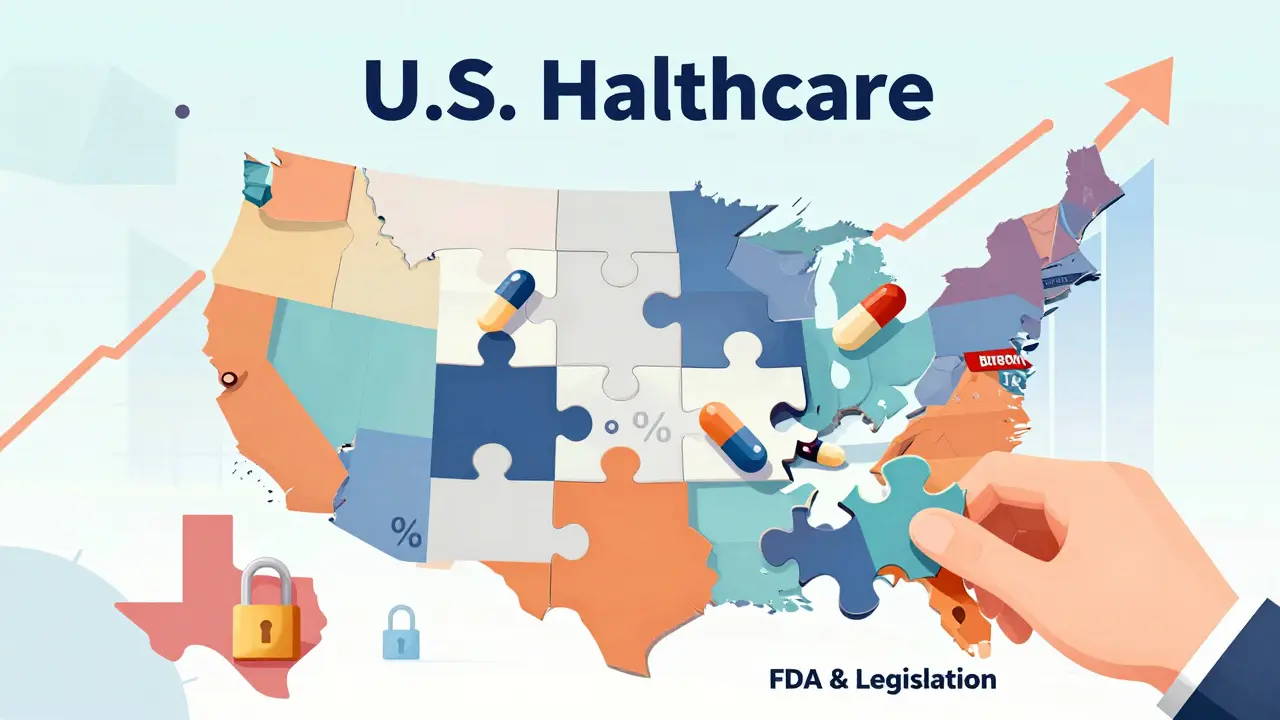
What Patients Really Think
Most patients are happy. A Drugs.com analysis of over 15,000 reviews showed 87% rated the cost of generics as excellent or good. Eighty-nine percent of those who switched from brand to generic reported being satisfied with both price and effectiveness. But not everyone. About 37% of reviews mentioned differences in how the drug felt-side effects, how fast it worked, or even how it looked. That’s not always about quality. It’s about inactive ingredients. A generic might use a different filler or coating. For most people, it doesn’t matter. But for some-especially those with allergies or sensitive conditions-it can. That’s why doctors still sometimes prescribe brand names. Not because generics don’t work. But because they’re cautious. And sometimes, insurance plans still push the more expensive option because they get kickbacks from the brand manufacturer.What’s Next?
The FDA approved 1,145 new generic drugs in 2024-up 7.3% from the year before. Another $24 billion in brand-name drugs are set to lose patent protection by 2025. That means more savings coming. Specialty generics-like complex injectables and inhalers-are the next frontier. They’re harder to make, but they’re also incredibly expensive. Bringing down their prices could save billions more. Legislation like S.1041, the Affordable Prescriptions for Patients Act, is moving through Congress. It targets patent abuse and pay-for-delay deals-where brand companies pay generics to stay off the market. If passed, it could save $7.2 billion a year. But threats remain. Drug shortages hit 287 generic medications in late 2024. Most were made overseas, and supply chains are fragile. And consolidation? Just 10 companies now control 63% of the generic market. That’s up from 51% in 2015. Less competition means less pressure to lower prices.The Big Picture
The U.S. spends $4.9 trillion on healthcare every year. Prescription drugs make up about $490 billion of that. Generics and biosimilars cover 90% of prescriptions but only 12% of the cost. That’s the power of competition. Without generics, drug prices would be unbearable. Millions would skip doses. Hospitals would cut services. Medicare would collapse under the weight of brand-name costs. Generics aren’t just a cost-cutting tool. They’re a lifeline. The real question isn’t whether generics work. It’s why we don’t use them more aggressively. Why do some patients still pay $800 for a pill that costs $10? Why do insurers still favor brands? Why do lawmakers let patent games continue? The answer is simple: the system isn’t broken. It’s working-for the wrong people. The savings are real. The tools exist. The data is clear. What’s missing is the will to fix the gaps.Are generic drugs really as effective as brand-name drugs?
Yes. The FDA requires generic drugs to have the same active ingredients, strength, dosage form, and route of administration as the brand-name version. They must also prove they work the same way in the body. Over 90% of generics meet or exceed brand-name performance. A few patients report subtle differences, often due to inactive ingredients like fillers or coatings-not the medicine itself. If you notice a change, talk to your doctor or pharmacist.
Why do some insurance plans still push brand-name drugs over generics?
Some insurance plans and Pharmacy Benefit Managers (PBMs) receive rebates or kickbacks from brand-name drugmakers to favor their products-even when a cheaper generic is available. This practice, called formulary steering, can make a $10 generic appear more expensive than a $100 brand on your statement. Always check your plan’s formulary and ask your pharmacist if a generic is available and covered.
How much can I save by switching to a generic?
On average, patients save $147 per month per medication when switching from brand to generic. For common drugs like metformin, lisinopril, or atorvastatin, savings can be 80-95%. Some generics cost under $5 for a 30-day supply. If you’re on multiple medications, switching to generics could save you over $1,000 a year.
Are biosimilars safe and affordable?
Yes. Biosimilars are rigorously tested and approved by the FDA as highly similar to their reference biologics. They’re not exact copies-biologics are too complex-but they work the same way. Since 2015, biosimilars have saved over $56 billion. Many cost 30-70% less than the original drug. For conditions like rheumatoid arthritis or cancer, this means life-saving treatments become affordable where they weren’t before.
Why are generic drug shortages happening?
Most generic drugs are made overseas, especially in India and China. Supply chain disruptions, manufacturing issues, or regulatory delays can cause shortages. In late 2024, 287 generic medications were in short supply, including antibiotics, heart medications, and IV fluids. The FDA is working to address this, but the system remains fragile. If your generic is unavailable, ask your pharmacist for alternatives or if a brand version is covered under your plan.
What can I do to ensure I’m getting the lowest price?
Always ask if a generic is available. Use price comparison tools like GoodRx or SingleCare. Check if your pharmacy offers a $4 generic list. Ask your doctor to prescribe generic whenever possible. If your insurance denies coverage, file an appeal. Many plans will approve generics if you show they’re medically appropriate. Don’t assume your prescription is set in stone-your savings could be just one conversation away.



Aysha Siera
They’re not saving you money-they’re selling you poison made in factories with no oversight. You think the FDA checks every batch? Ha. The same pills that kill people in India are the ones in your medicine cabinet. They don’t care if you live or die as long as the numbers look good.