
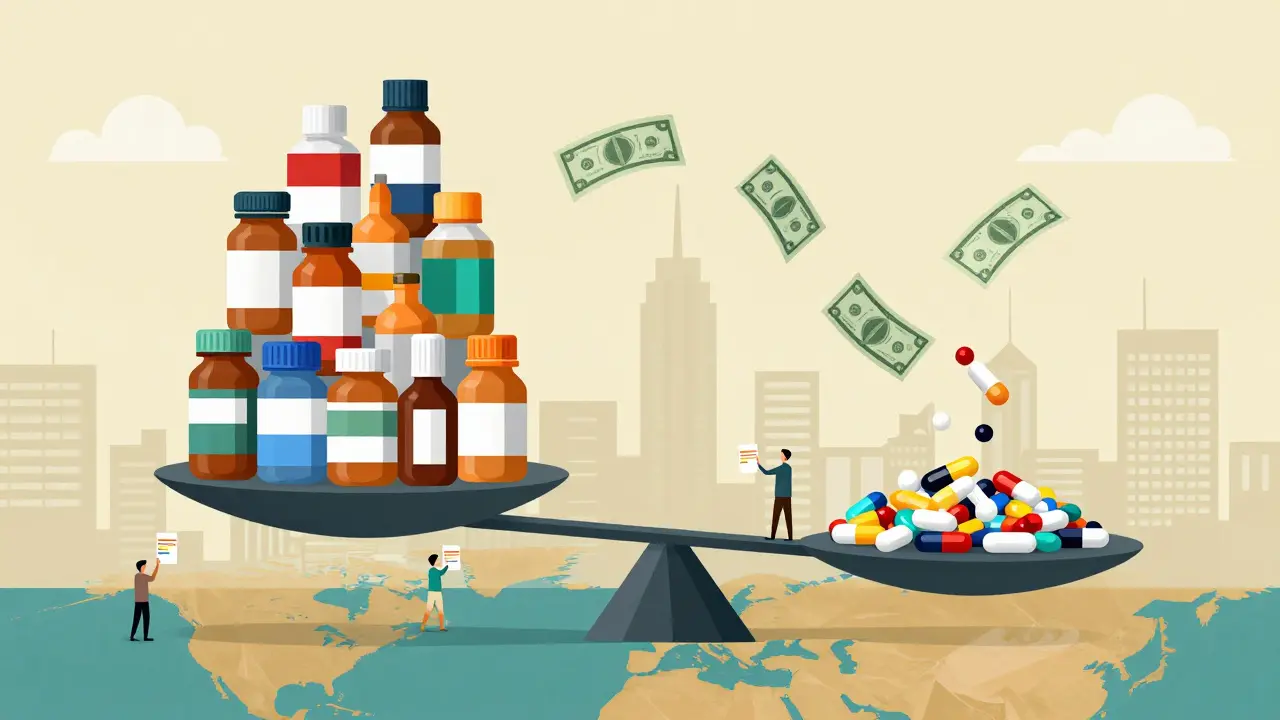
Every year, the world spends more on healthcare than ever before. In 2025, global health spending is expected to hit $10 trillion, with prescription drugs alone accounting for over $1.6 trillion. But here’s the thing: without generics, that number would be nearly double. Generics aren’t just cheaper versions of brand-name drugs-they’re the backbone keeping healthcare systems from collapsing under their own weight.
Why Generics Matter More Than You Think
When you walk into a pharmacy in the U.S., Germany, or Brazil, chances are the pill you’re handed isn’t made by Pfizer, Novartis, or Roche. It’s made by a generic manufacturer-often in India, China, or even Australia. These drugs have the same active ingredients, same effectiveness, same safety profile. But they cost 80-90% less. In high-income countries, generics make up 80-90% of all prescriptions filled. That’s not a coincidence. It’s economic necessity.
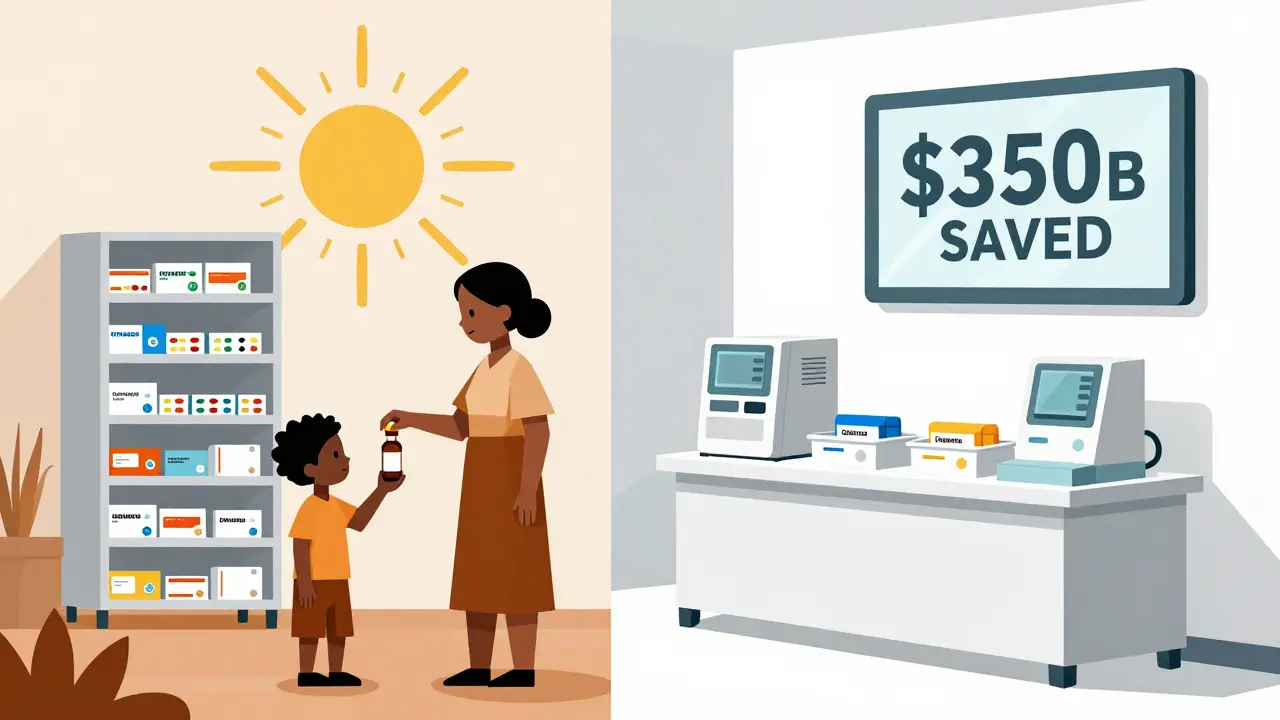
Take the U.S. The Centers for Medicare and Medicaid Services predict drug spending will jump from $776 billion in 2025 to $1.7 trillion by 2033. That’s a 119% increase in less than a decade. But here’s the counterbalance: without generics, that spike would be even worse. In 2024, the U.S. spent $487 billion on prescription drugs at net manufacturer prices. Generics saved consumers and insurers an estimated $350 billion that year alone. That’s not just savings-it’s access.
The Global Divide in Healthcare Spending
Not all countries are created equal when it comes to paying for health. In 2022, the global average for public healthcare spending was just 3.8% of GDP. High-income countries hit 5.8%. But low-income countries? Only 1.2%. And in places like Turkmenistan, Afghanistan, and Nigeria, more than 75% of healthcare costs come straight out of people’s pockets.
When you’re paying for medicine yourself, price isn’t a preference-it’s survival. That’s why generics dominate in these regions. In many African and South Asian countries, over 90% of prescriptions are for generic drugs. They’re not just affordable-they’re the only option. The World Health Organization estimates that 55 countries rely on out-of-pocket payments as their main source of healthcare funding. Without cheap generics, millions would simply go without treatment.
Meanwhile, in wealthier nations, generics aren’t just about affordability-they’re about control. Insurers and governments use them to cap costs. In Europe, generic substitution is often automatic unless a doctor writes “dispense as written.” In the U.S., Medicare Part D plans push patients toward generics first. It’s not just policy. It’s arithmetic.
The Rise of Biosimilars and the New Frontier
Generics used to be simple. Copy a chemical pill. Lower the price. Done. But now, the game is changing. Biologic drugs-like those for rheumatoid arthritis, cancer, and diabetes-are complex molecules made from living cells. You can’t just copy them like a tablet. That’s where biosimilars come in.
Biosimilars are not exact copies, but they’re close enough to be considered equivalent. They’re cheaper than the original biologics-often 15-35% less. But adoption is slow. In the U.S., only about 15% of biologic prescriptions use biosimilars. In Europe, it’s closer to 50%. Why the gap? Regulatory hurdles, physician hesitation, and drugmaker marketing tactics all play a role. But the potential is huge. One cancer biologic, Humira, cost over $70,000 per year in the U.S. before biosimilars arrived. Now, with competition, prices have dropped by 30-40% in some markets.
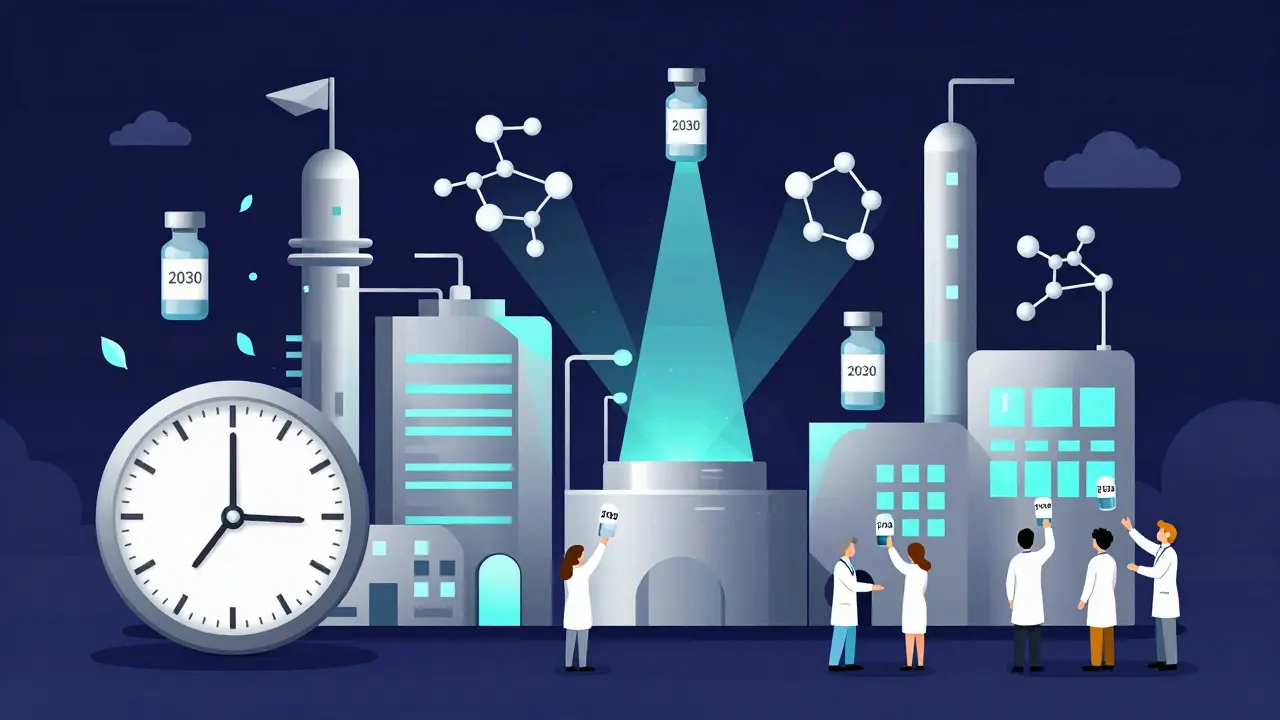
And the clock is ticking. Dozens of blockbuster biologics will lose patent protection between 2025 and 2030. If biosimilars take off, we could see tens of billions in savings. If they don’t, healthcare systems will keep bleeding money.
Why Drug Prices Keep Rising Anyway
If generics are so powerful, why is healthcare spending still climbing? The answer is simple: innovation is expensive.
Drugmakers are pouring billions into new treatments for obesity, Alzheimer’s, and rare cancers. These drugs often cost $100,000 a year or more. In 2024, drug spending in the U.S. rose $50 billion-mostly because of these high-cost specialty drugs. Oncology, immunology, and metabolic disease drugs drove most of the growth. And for many of these, there are no generics-or even biosimilars-yet.
That’s why generics can’t fix everything. They’re the brake, but innovation is the accelerator. The real challenge is balancing both. Countries that allow fast generic approval and strong price negotiation-like Canada, Germany, and Australia-see slower cost growth. The U.S., with weak price controls and slow generic entry, sees the highest spikes.
The Hidden Cost of Delaying Generics
It’s not just about patents. Sometimes, the delay isn’t legal-it’s strategic. Some drugmakers use tactics like “pay-for-delay” deals, where brand companies pay generic makers to hold off on launching cheaper versions. Courts have cracked down on these, but they still happen. Others tweak the drug slightly-change the dosage form, add a new coating-and get a new patent. This is called “evergreening.”
And then there’s the issue of access. Even when generics exist, they’re not always available. In 2023, the FDA listed over 100 drugs in short supply in the U.S., many of them generics. Why? Manufacturing issues, low profit margins, and consolidation in the generic industry mean some pills simply aren’t made anymore. A generic antibiotic might cost 20 cents a pill-but if no one’s producing it, you’re stuck with a $200 brand-name alternative.
What’s Next for Generics in a Changing World
The global pharmaceutical market is shifting. In the U.S. and Europe, generics are a mature market. Growth is slow. But in places like China, India, and Brazil, demand is surging. These countries are moving from “basic access” to “sophisticated care.” That means more people are getting branded drugs-but also more people are using generics to manage chronic conditions like diabetes and hypertension.
At the same time, global aid for health is falling. The Institute for Health Metrics and Evaluation predicts development assistance for health will drop to $39.1 billion in 2025-the lowest since 2009. That puts even more pressure on low-income countries to rely on low-cost generics. The WHO has already flagged 37 countries where real public health spending has declined since before the pandemic. Lebanon lost 71%. Malawi lost 41%. In these places, generics aren’t a policy choice. They’re the only thing standing between people and death.
Meanwhile, insurers are bracing for more demand. The WTW Global Medical Trends Survey found that two-thirds of insurers expect healthcare demand to rise sharply over the next three years. Mental health services alone could see costs per person jump by 15% or more. Generic psychiatric medications-like fluoxetine or sertraline-are already the first-line treatment. If they’re not affordable, millions will go untreated.
Can We Do Better?
Yes. But it takes political will. Countries that have strong generic policies-like Thailand and Brazil-have lower drug prices and better access. India produces over 60% of the world’s generic medicines. Yet, even there, domestic pricing controls are under pressure from global trade deals.
What works? Transparent pricing. Fast-track approval for generics. Banning pay-for-delay deals. Public manufacturing. Bulk purchasing. These aren’t radical ideas. They’re proven tools.
And they’re not just about saving money. They’re about saving lives. Every dollar saved on generics is a dollar that can go to a nurse, a hospital bed, a mental health counselor. In a world where healthcare spending is spiraling, generics are the most powerful tool we have to keep it from breaking.
Are generic drugs as safe and effective as brand-name drugs?
Yes. Generic drugs must meet the same strict standards as brand-name drugs. They contain the same active ingredients, work the same way, and are tested for bioequivalence. The FDA, EMA, and WHO all require generics to perform identically to the original. The only differences are in inactive ingredients like fillers or coatings-which don’t affect how the drug works.
Why are some generic drugs hard to find?
Shortages happen when manufacturers stop making a drug because it’s too cheap to produce profitably. This often affects older generics with low margins, like antibiotics or heart medications. Consolidation in the generic industry means fewer companies are making these drugs, and supply chains are fragile. When one factory shuts down or faces quality issues, shortages follow.
Do generics cause more side effects?
No. Side effects come from the active ingredient, not the brand name. A generic version of metformin causes the same side effects as Glucophage. Some people report differences, but studies show these are usually due to placebo effects or variations in inactive ingredients-not the drug’s effectiveness. If you notice a change after switching, talk to your doctor, but don’t assume it’s the generic’s fault.
Why do some countries have more generics than others?
It depends on patent laws, government pricing rules, and healthcare infrastructure. Countries like India and Thailand have strong generic manufacturing and relaxed patent rules. The U.S. has strong patent protections and slower generic approval. In Europe, governments negotiate bulk prices and often mandate generic substitution. In low-income countries, generics dominate simply because there’s no other option.
Will biosimilars replace all biologic drugs?
Not all-but many. Biosimilars won’t replace every biologic, especially new ones with no competitors yet. But as patents expire, they’ll become the default choice in most countries. In Europe, biosimilars already make up half the market for some biologics. In the U.S., adoption is slower, but it’s growing. By 2030, biosimilars could save over $100 billion annually in the U.S. alone.



Shawn Peck
Generics are the only reason I can afford my blood pressure meds. Brand name? $500 a month. Generic? $12. No brainer. If you’re complaining about generics, you’re either rich or lying.