
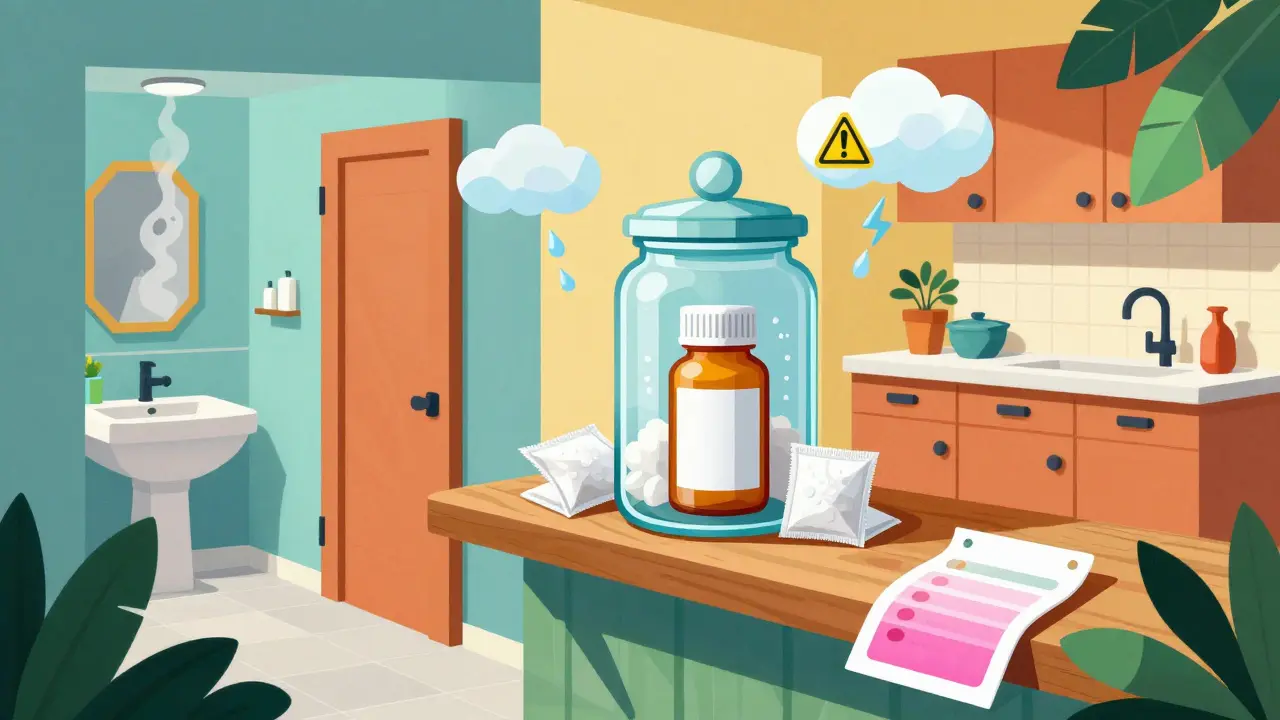
Why Your Pills Don’t Last in Tropical Humidity
Imagine packing your heart medication, antibiotics, or insulin for a trip to Bali, the Philippines, or Uganda. You check the box, seal your bag, and assume you’re safe. But by the time you need that pill, it might not work at all. In tropical climates-where humidity hits 80% and temperatures stay above 28°C-medications degrade faster than you think. It’s not just about heat. It’s the moisture.
Water doesn’t just make your phone sticky. It breaks down drugs chemically. About 70% of humidity-related drug failures happen because water molecules split apart the active ingredients. Lamotrigine, a common epilepsy drug, loses up to 38% of its effectiveness after just four weeks in 75% humidity. Amoxicillin can absorb so much moisture it loses half its potency in 30 days. And that’s before mold starts growing.
How Humidity Ruins Different Types of Medications
Not all pills are created equal when it comes to humidity. Some are far more vulnerable.
- Tablets and capsules: Moisture causes tablets to crumble, stick together, or soften. Capsule shells turn rubbery and leak. A 2021 study found that 45% of moisture-exposed tablets showed visible caking.
- Orally disintegrating tablets (ODTs): These are designed to dissolve on your tongue. In 80% humidity, they take 3 to 5 times longer to break down-meaning they won’t work when you need them.
- Dry powder inhalers: Moisture makes the powder clump. That means less medicine reaches your lungs. Studies show a 15-25% drop in effective dose after just a few days in humid air.
- Antibiotics and antifungals: Tetracycline changes color in 14 days under tropical conditions. Fungi like Aspergillus grow on exposed pills within 72 hours. These aren’t just cosmetic changes-they make drugs unsafe.
- Vaccines and biologics: Freeze-dried vaccines need humidity below 20%. Even a short exposure to damp air can ruin them completely.
The WHO estimates 30% of medications in tropical regions degrade before reaching patients. That’s not a small number. That’s millions of people getting ineffective treatment.
What the Experts Say About Safe Storage
The science is clear: for most drugs, the sweet spot is 30-45% relative humidity and 15-25°C. But tropical homes and clinics rarely hit those numbers. Bathrooms? Forget it. Humidity there often hits 90%. Kitchens? Often above 70%. Even a bedroom near a window can be too damp.
Regulatory bodies like the FDA and WHO set strict rules. The ICH Q1A(R2) guidelines require drug makers to test their products under 30°C and 75% RH to simulate tropical conditions. If a pill can’t survive that, it shouldn’t be sold in those regions. But many low-cost generics still get shipped without proper packaging.
For travelers and residents alike, you can’t rely on the label saying “store at room temperature.” In the tropics, “room temperature” is often a death sentence for your meds.
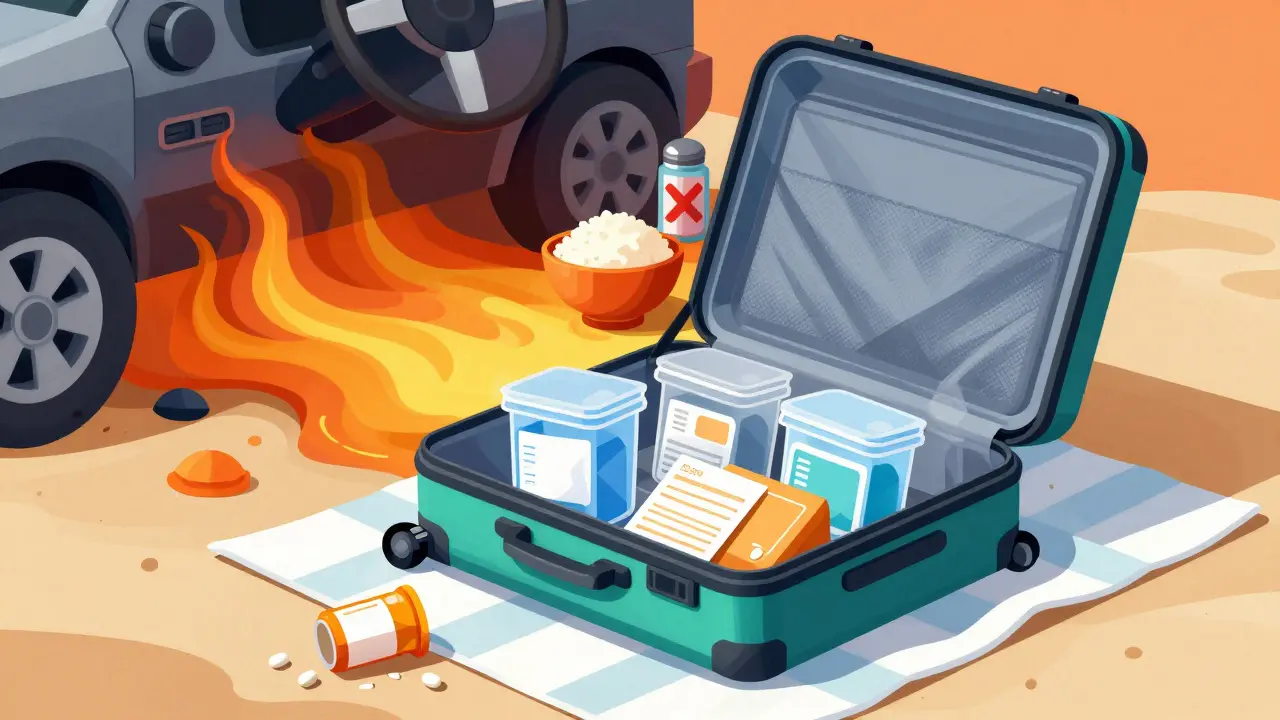
How to Protect Your Medications (Practical Steps)
You don’t need a lab to keep your pills safe. Here’s what actually works:
- Use airtight containers-not plastic bags. Glass jars with rubber seals or hard plastic containers with locking lids work best. Avoid ziplock bags-they leak moisture over time.
- Add silica gel desiccants-the little packets you find in shoeboxes or supplement bottles. Put one in every container. For every 100 mL of container space, use 1-2 grams of silica gel. Replace them every 30 days in humid climates.
- Use humidity indicator cards-these cost less than $1 each. They turn from blue to pink when humidity hits 55%. If it’s pink, your meds are at risk. Replace the desiccants immediately.
- Never store meds in bathrooms or kitchens. Keep them in a cool, dry closet, drawer, or even inside a sealed suitcase with desiccants. Elevated shelves help-moisture rises from floors.
- Carry extra desiccants when traveling. Pack a few extra packets in your toiletry bag. If you’re staying more than a week, bring a small dry cabinet or portable desiccant canister.
For people living in tropical areas long-term, low-cost solutions exist. In Uganda, clinics use “desiccant closets”-metal cabinets filled with 5kg of silica gel. They cost $120 and keep humidity below 40% for months. In the Philippines, community health workers use the “30-30 Rule”: replace desiccants every 30 days when the temperature is above 30°C. That simple rule cut spoilage by 47% in a 2022 trial.
High-Tech Solutions for High-Risk Medications
If you’re storing insulin, vaccines, or expensive biologics, basic desiccants aren’t enough. You need advanced protection.
- Dry cabinets like SMT DryBoxes maintain 5-15% RH with precise temperature control. They’re used in hospitals and pharmacies. Prices range from $2,500 to $15,000, but they reduce hydrolysis by 75-85%.
- Activ-Polymer™ packaging is now used by major drug makers. It’s a moisture-absorbing polymer built into blister packs. It lasts up to 24 months and keeps humidity below 20% RH. The Gates Foundation has distributed over 500 million of these blister packs across Africa since 2021.
- IoT-enabled monitors are being rolled out in clinics. These small devices record humidity and temperature every 15 minutes and send alerts if levels go too high. In Southeast Asia, they’ve cut medication spoilage by 63%.
For most people, these aren’t practical. But if you rely on life-saving drugs that cost thousands, it’s worth the investment.
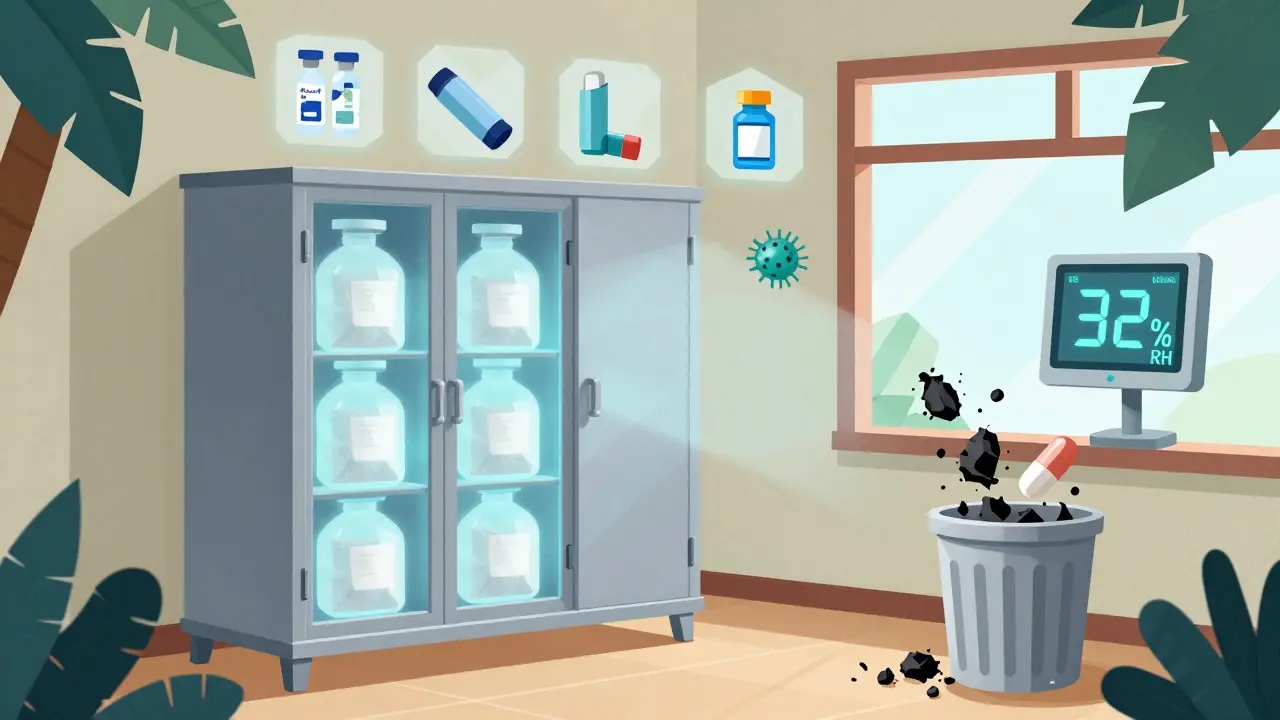
What to Avoid (And Why)
Some “solutions” sound smart-but they’re dangerous.
- Refrigerating meds unless required: Cold doesn’t help if humidity is high. Condensation forms inside containers, making things worse. Only refrigerate if the label says so.
- Leaving pills in hot cars: Even if it’s not humid, heat alone doubles degradation rates every 10°C. A car in the tropics can hit 60°C inside.
- Using rice as a desiccant: It’s a myth. Rice absorbs moisture slowly and can introduce mold spores. Silica gel is 100x more effective.
- Ignoring expiration dates: In humid climates, pills expire faster. If your antibiotic looks discolored, smells odd, or feels sticky-don’t take it.
What’s Changing in the Future
The fight against humidity damage is getting smarter. Researchers at MIT just published a study on graphene oxide coatings that block 99.7% of moisture. That’s better than aluminum foil. These coatings could one day be sprayed onto pill bottles or built into blister packs.
The ICH is also working on new guidelines called Q1H, expected in 2025, that will force drug makers to prove their products survive tropical conditions before selling them there. That means better packaging will become standard, not optional.
For now, though, the burden is still on you. Whether you’re a traveler, expat, or local resident, your meds won’t protect themselves. You have to take control.
Final Checklist: Your Tropical Medication Survival Kit
- ✔ Airtight container (glass or hard plastic)
- ✔ Silica gel desiccants (1-2g per 100mL space)
- ✔ Humidity indicator cards (check weekly)
- ✔ Storage location: dry, cool, away from bathroom/kitchen
- ✔ Extra desiccants for travel
- ✔ No refrigeration unless required
- ✔ Replace desiccants every 30 days in high heat/humidity
If you follow this, you’re doing better than 80% of people in tropical regions. Your meds will last. Your health won’t be at risk. And that’s more than most can say.
Can humidity make my pills toxic?
Yes. When moisture causes mold to grow on pills-especially fungi like Aspergillus-it can create toxins. These aren’t always visible, but they can cause serious illness. Discolored, sticky, or smelly pills should be thrown out. Never take them.
Is it okay to store pills in the fridge in hot climates?
Only if the label says “refrigerate.” Otherwise, no. Fridges in tropical homes often have high humidity, and condensation forms inside pill bottles. That’s worse than room temperature. Stick to dry, cool, dark places instead.
Do all medications degrade the same way in humidity?
No. Antibiotics, antifungals, and pediatric formulations are the most vulnerable. Dry powder inhalers and orally disintegrating tablets are also high-risk. Pills with microcrystalline cellulose hold up better than those with anhydrous lactose. Always check the manufacturer’s storage guidelines.
How often should I replace silica gel desiccants?
Every 30 days in tropical humidity. If you see humidity indicator cards turn pink, replace them immediately. In very humid areas (like coastal cities), replace them every 2 weeks. Silica gel can’t absorb forever-it gets saturated.
Are there any affordable alternatives to expensive dry cabinets?
Yes. The WHO-endorsed PharmaSeal system uses reusable desiccant canisters that cost just $0.85 per unit and keep humidity under 35% RH for six months. For home use, a sealed plastic bin with 5kg of silica gel and a humidity card works well for under $50.
Can I use rice or salt to absorb moisture instead of silica gel?
No. Rice absorbs moisture too slowly and can introduce mold or bacteria. Salt is hygroscopic but clumps and can contaminate pills. Silica gel is non-toxic, non-reactive, and proven to absorb 40% of its weight in water. Stick with the real thing.
What should I do if my pills look different?
If they’re discolored, cracked, sticky, or smell odd, don’t take them. Even if they’re not expired, humidity damage can make them ineffective or unsafe. Take them to a pharmacist for disposal and get a replacement. Your health isn’t worth the risk.



Sue Stone
I just got back from Bali and I swear I thought my anxiety meds were broken until I checked the bottle-turned out the humidity had made them sticky. Never storing them in the bathroom again.