
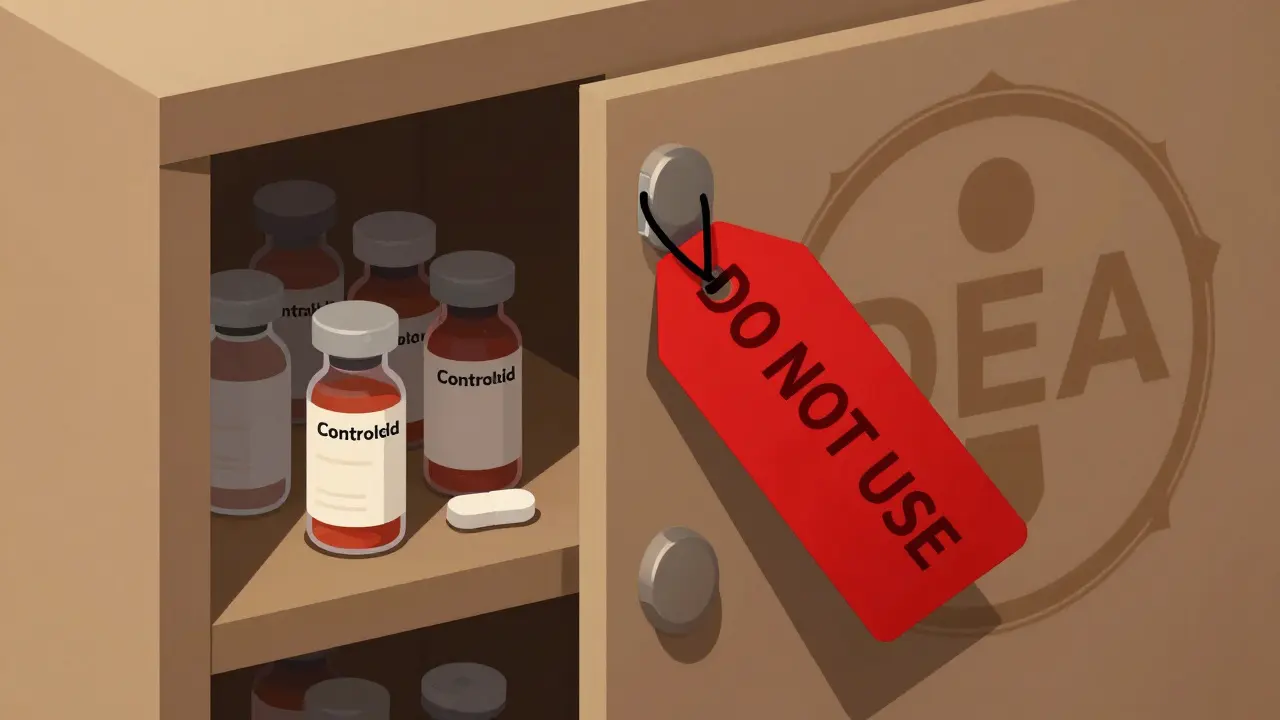
Handling expired controlled substances isn’t just about cleaning out a medicine cabinet. It’s a legal, safety, and environmental issue with serious consequences if done wrong. If you’re a pharmacist, doctor, vet, or even a research lab technician, you’re responsible for making sure these drugs don’t end up in the wrong hands-or worse, in our water supply. The DEA doesn’t take this lightly. In 2022 alone, they issued over 300 warning letters and fined facilities nearly $2.5 million for improper disposal. This isn’t about being careful. It’s about following the law.
Why You Can’t Just Throw Them Away
You might think tossing expired painkillers or sedatives into the trash is harmless. It’s not. Controlled substances like oxycodone, fentanyl, diazepam, or methadone can still be retrieved from landfills, flushed into sewage systems, or stolen from household waste. The DEA calls this diversion, and it’s one of the leading causes of opioid misuse. A 2022 audit found that 14.3% of veterinary drug diversion cases traced back to improper disposal. Even small amounts left in a drawer or sink can be enough to cause an overdose. And it’s not just about addiction-these substances can contaminate soil and groundwater, affecting wildlife and drinking water sources.The DEA’s Rules: What You Need to Know
The Drug Enforcement Administration (DEA) regulates all controlled substances under the Controlled Substances Act (CSA) of 1970. But the big update came in 2014, with 21 CFR Part 1317, which finally laid out clear rules for disposal. The key takeaway? There is no one-size-fits-all method. How you dispose of a drug depends on its schedule-how addictive it is-and how much you have.- Schedule I: No medical use (e.g., heroin). Must be destroyed by a reverse distributor.
- Schedule II: High abuse risk (e.g., oxycodone, fentanyl, Adderall). Requires DEA Form 222 and must go to a reverse distributor.
- Schedule III-V: Lower abuse risk (e.g., hydrocodone, codeine, benzodiazepines). Can sometimes be destroyed on-site with witness documentation.
The DEA strictly prohibits crushing, dissolving, or flushing controlled substances-even if the FDA says it’s okay for regular pills. Why? Because these drugs can still be recovered. A 2022 UCSF policy update explicitly banned flushing, grinding, or pouring into sinks. The only approved method for rendering them non-retrievable is incineration.
Two Types of Disposal: Inventory vs. Wastage
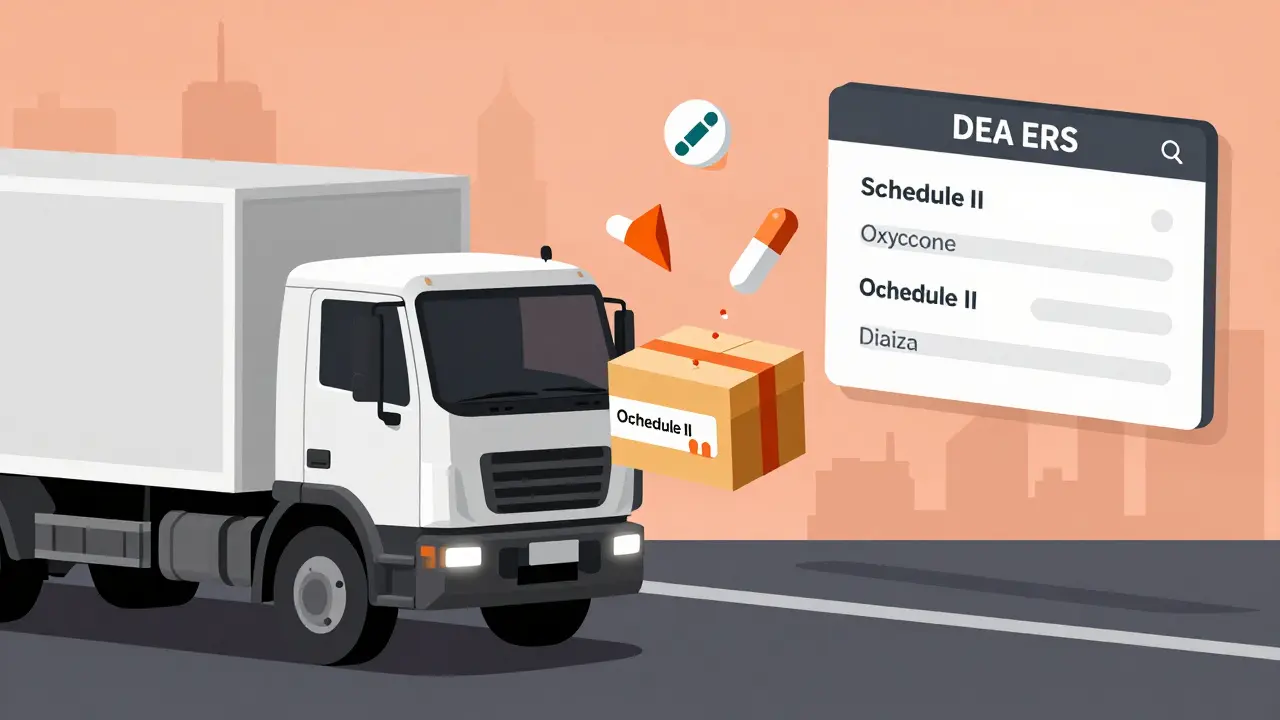
Not all expired drugs are treated the same. The DEA separates disposal into two categories:- Inventory Disposal: This applies to entire bottles, bulk stock, or large quantities no longer needed. Think of a hospital clearing out expired morphine vials. These must be transferred to a DEA-registered reverse distributor. You can’t destroy them yourself. You’ll need to fill out DEA Form 222 (now electronic via the ERS system since January 2023), and pay a fee-typically $250 to $500 per pickup.
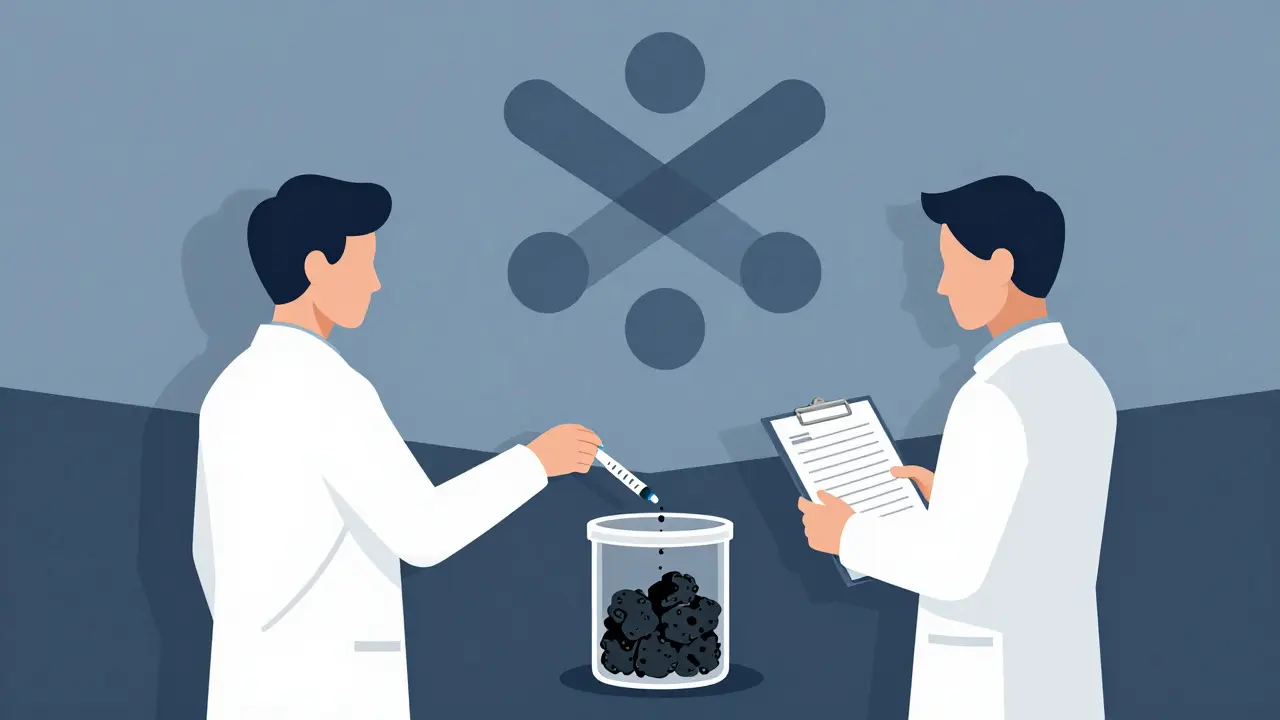
- Wastage: This is small amounts left over after a dose is drawn but not given-like a few milliliters of an injectable. If it’s truly waste (not whole bottles), two authorized personnel can witness its destruction on-site. One must be the registrant or an authorized agent. They document the date, substance, quantity, and signatures. These records must be kept for at least two years.
A 2022 DEA audit of 417 dental clinics found that 18.7% of facilities made errors in distinguishing between inventory and wastage. That’s a recipe for fines.
How to Do It Right: Step-by-Step
Follow these steps to stay compliant and safe:- Label everything. Use clear tags like “Expired - Do Not Use” or “To Be Disposed.” Don’t rely on memory. Mislabeling is the #1 cause of accidental misuse.
- Segregate. Keep expired substances in a locked, separate container from active inventory. A locked cabinet in a controlled area is best.
- Choose your method. For bulk: contact a reverse distributor. For small wastage: arrange for two trained staff to witness destruction. Never do this alone.
- Document. Record the date, substance, quantity, names of witnesses, and method used. For reverse distributors, keep the Chain of Custody Form (like DLD’s) or DEA Form 41. Store these records for two years.
- Train your team. The DEA requires initial 2-hour training and annual 1-hour refreshers. Yet only 67% of facilities comply. Don’t be one of them.
What Happens If You Get It Wrong?
The penalties aren’t just fines. They’re criminal. The DEA can suspend or revoke your registration to handle controlled substances. That means you can’t legally prescribe, dispense, or store them anymore. In 2022, the DEA conducted 1,847 inspections and found violations in nearly 40% of them. Many were due to missing logs, unsecured storage, or improper disposal methods like dumping into sharps containers or mixing with kitty litter.Smaller practices-especially veterinary clinics-are the most at risk. A 2022 survey by the American Animal Hospital Association found that 43.6% of small animal practices were confused about disposal rules. That’s dangerous. One vet clinic in Ohio was fined $85,000 in 2023 after expired sedatives were found in a landfill.
Real-World Challenges and Fixes
Many clinics struggle with logistics. A University of Michigan survey in early 2023 found 63% of labs waited over two weeks for a reverse distributor pickup. Fees are rising-up 6.8% annually-and some companies charge $300 just to haul away a single box.But there are better ways. UCSF’s Research Inventory Online (RIO) system lets users submit disposal requests electronically. In a March 2023 survey, 82.4% of users called it “streamlined.” The DEA’s own online locator tool (updated November 2022) helps you find registered reverse distributors near you. Use it. Don’t guess.
For small practices, consider joining a regional disposal cooperative. Some states now offer group pickup programs for veterinary clinics and outpatient clinics, cutting costs by up to 40%.
What’s Coming Next?
The DEA is rolling out the Electronic Inventory Management System (EIMS) by 2025. This will require real-time reporting of every controlled substance-when it’s ordered, used, or disposed of. No more paper logs. No more delays. If you’re not ready for digital tracking, you’ll fall out of compliance.Meanwhile, the market for pharmaceutical waste disposal is growing fast. It was worth $1.81 billion in 2022 and is projected to hit $4.2 billion by 2030. That means more companies, more options, and more pressure to get it right.
Bottom line: Don’t wait for an inspection to find out you’ve been doing it wrong. The rules are clear. The tools are available. And the cost of getting it wrong is far higher than the cost of doing it right.
Can I flush expired controlled substances down the toilet?
No. The FDA and DEA both prohibit flushing controlled substances. Even if the label says “flush,” that only applies to non-controlled medications like certain pain relievers. Controlled substances like opioids, benzodiazepines, or stimulants can be recovered from water systems and pose serious environmental and public health risks. Always use a reverse distributor or approved on-site destruction method with witness documentation.
What if I have a small amount left over after giving a dose?
That’s called wastage. You can destroy it on-site if two authorized personnel witness the process. One must be the registrant or their designated agent. The substance must be rendered non-retrievable-usually by pouring it into a designated, labeled container with an absorbent material (like activated charcoal or approved absorbent pads), then sealing and documenting it. Never pour it down the sink or mix it with kitty litter. Keep records for two years.
Do I need to use DEA Form 222 for every disposal?
Only for Schedule II substances when transferring inventory to a reverse distributor. Schedule III-V substances may use alternative methods like on-site destruction or direct transfer to a licensed waste handler. Since January 2023, DEA Form 222 must be completed electronically via the Electronic Registration System (ERS), which cuts processing time from weeks to under two days. Paper forms are no longer accepted.
Can I give expired controlled substances to a patient or friend?
Absolutely not. Giving away or transferring controlled substances-even if expired-is illegal under federal law. It’s considered diversion, regardless of intent. Expired drugs may lose potency or become unstable, making them dangerous. Always dispose of them through approved channels.
What if I’m a small veterinary clinic with limited budget?
You’re not alone. Many small clinics struggle with disposal costs. The DEA’s online locator tool helps you find nearby reverse distributors who may offer discounted rates for small volumes. Some states have regional collection programs for veterinary practices. Joining a cooperative with other clinics can cut costs by up to 40%. Also, prioritize disposal of Schedule II substances first-they carry the highest risk and penalties. Keep detailed records even for small amounts; they protect you.



Sarah Barrett
It’s staggering how many facilities still treat controlled substances like old pizza crusts-toss ‘em in the trash and hope for the best. The DEA’s 2022 audit numbers aren’t just statistics; they’re a wake-up call wrapped in bureaucratic paper.
And let’s not pretend flushing is harmless. I’ve seen groundwater studies where trace opioids show up in fish livers. It’s not science fiction-it’s a slow-motion ecological collapse we’re all complicit in.
The real tragedy? The tools exist. Reverse distributors, ERS systems, regional co-ops. But inertia, bureaucracy, and sheer laziness keep us stuck in the 1990s.
I’ve worked in three clinics. Each one had a different ‘solution.’ One used kitty litter. Another just… didn’t document. The third? They hired a grad student to log everything. She quit after six months. Burnout is real.
Maybe the EIMS rollout in 2025 will force change. Or maybe we’ll need a federal mandate with teeth-like requiring all pharmacies to carry disposal kits, free of charge.
Either way, the status quo isn’t sustainable. And ‘sustainable’ isn’t a buzzword here-it’s a lifeline for people, animals, and ecosystems we haven’t even thought about yet.