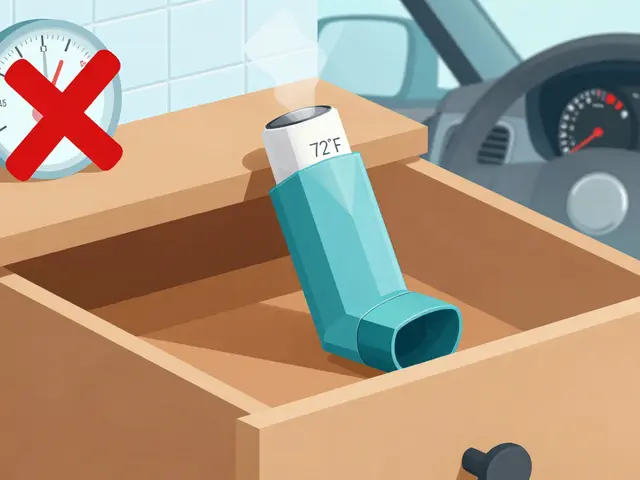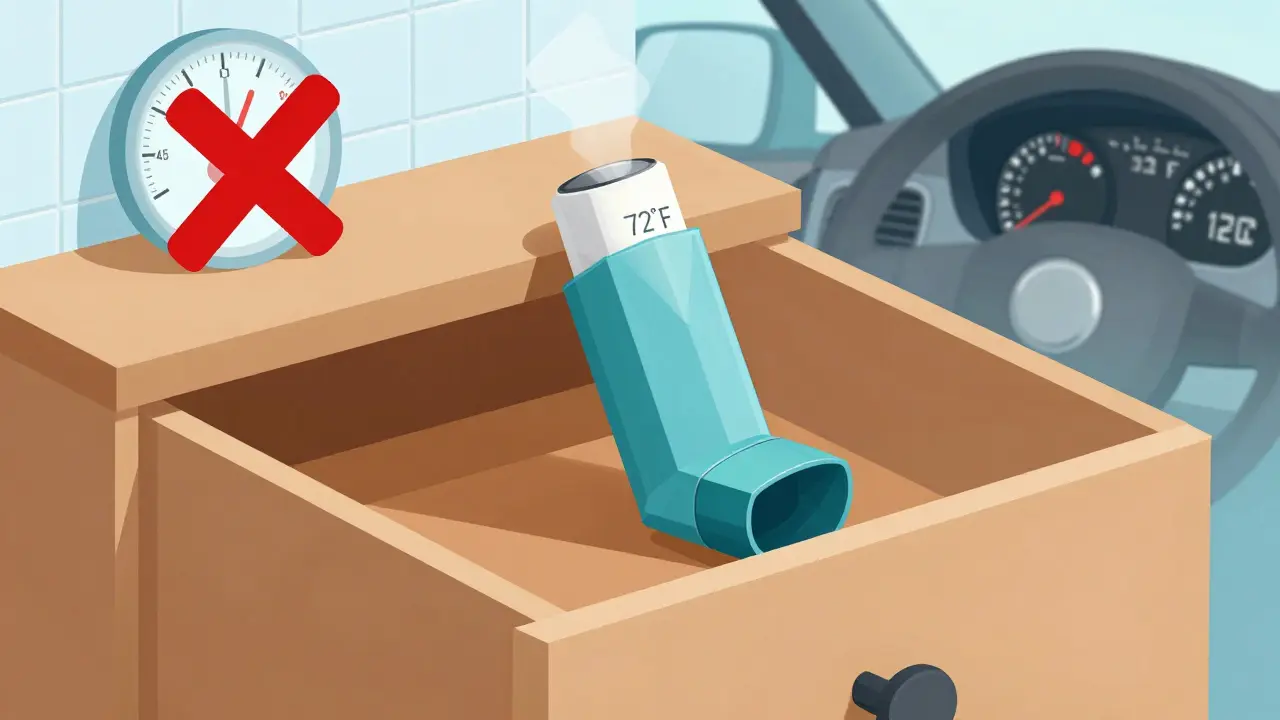
Keeping your inhaler or nebulizer medication working when you need it most isn’t just about following rules-it’s about staying alive. If your rescue inhaler fails during an asthma attack because it got too hot, too cold, or too damp, you’re not just inconvenienced-you’re at serious risk. And the truth? Most people store these life-saving devices wrong.
According to the American Lung Association, about 12% of emergency asthma episodes are linked to medication that lost its strength because of improper storage. That’s not a small number. That’s someone’s child, parent, or friend not getting the air they need because their inhaler was left in a glove compartment or a humid bathroom.
What Temperature Is Safe for Inhalers?
Inhalers aren’t like vitamins you can toss in a drawer. They’re precision devices with pressurized gas, fine powders, or liquid suspensions that break down fast when exposed to heat, cold, or moisture. The gold standard for most inhalers is room temperature: between 59°F and 77°F (15°C to 25°C). Some manufacturers allow a wider range-up to 86°F (30°C)-but that’s the absolute maximum. Push past that, and you’re gambling with your health.
Here’s what happens when you go over that limit:
- At 95°F (like inside a car on a sunny day), your metered-dose inhaler can lose up to 40% of its effectiveness in just 24 hours.
- At 158°F (what your car dashboard can hit in 30 minutes), the medication can be completely denatured-meaning it’s no longer active. The FDA has confirmed this through environmental testing.
- Even a few hours in a hot gym bag or on a windowsill can reduce your dose enough to make a difference during an attack.
On the flip side, freezing your inhaler doesn’t help. While some nebulizer liquids need refrigeration (more on that later), most inhalers should never go in the fridge. Cold can cause the propellant to separate or the valve to malfunction. If it’s too cold to leave your phone outside, it’s too cold for your inhaler.
Different Inhalers, Different Rules
Not all inhalers are made the same. Storing them like they are is a common-and dangerous-mistake.
Pressurized Metered-Dose Inhalers (pMDIs) like ProAir HFA or Ventolin HFA are aluminum canisters with gas propellants. These are the most common. They’re sensitive to heat and pressure. Never leave them in a car, near a heater, or in direct sunlight. And never puncture or throw them in the trash. They’re pressurized-some have exploded in fire trucks and landfills.
Dry Powder Inhalers (DPIs) like Spiriva HandiHaler or Advair Diskus are even more fragile. They use fine powders that clump or harden when exposed to moisture. Even humidity above 60% can make the capsules brittle, causing them to break or clog. That’s why storing them in the bathroom is a disaster. The steam from your shower can ruin them in days.
Breath-Actuated Inhalers (BAIs) like Proventil RespiClick need strict temperature control: 68°F to 77°F. They’re more sensitive than standard pMDIs. If you notice the device feels stiff or doesn’t release a puff properly, temperature damage might be why.
Nebulizer Medications: More Fragile Than You Think
Nebulizer solutions are liquid-and liquids are even more unstable than aerosols. Albuterol, Pulmicort, and other nebulizer meds have very narrow storage windows.
Here’s the breakdown:
- Unopened ampules like Pulmicort Respules must be kept refrigerated at 36°F to 46°F (2°C to 8°C). Don’t assume they’re fine on the counter.
- After opening, they’re stable at room temperature for only 7 days. After that, even if it looks fine, the medication has started to degrade.
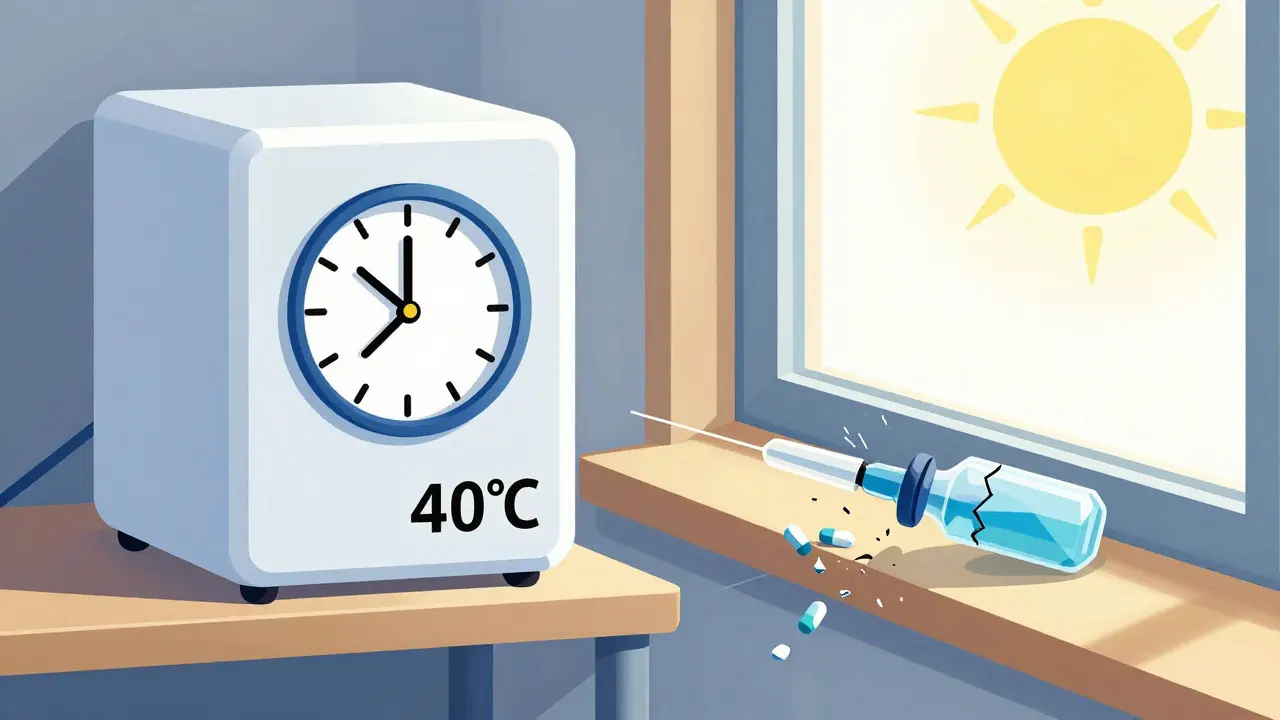
- Exposure above 104°F (40°C) can destroy the medication in as little as 30 minutes. A hot car, a sunny windowsill, or even a radiator can do it.
And here’s the kicker: a 2023 study in Respiratory Care found nebulizer solutions are 3.2 times more likely to degrade than inhalers under the same bad conditions. That’s not a coincidence-it’s physics. Liquids change faster than gases or powders.
Where NOT to Store Your Medication
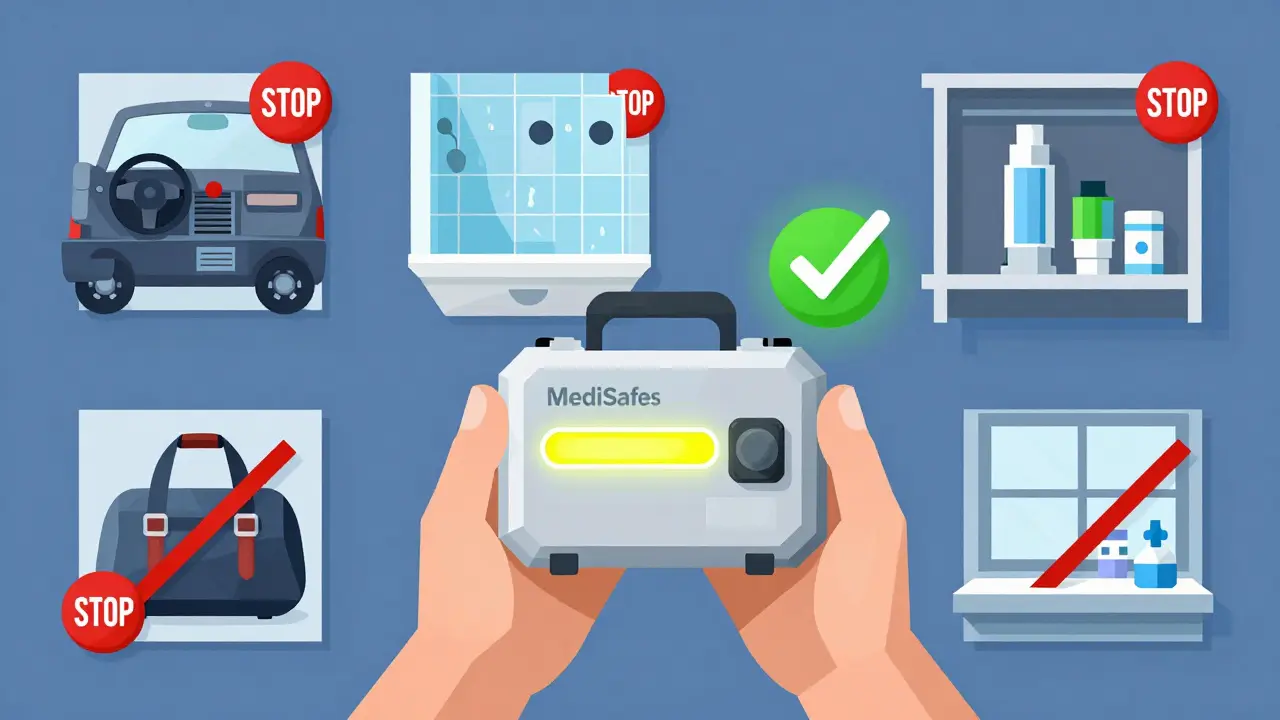
These are the most common-and deadly-storage mistakes:
- The bathroom: Humidity from showers and sinks can ruin DPIs and degrade liquid meds. Studies show bathroom storage can reduce albuterol concentration by 35% in just 14 days.
- The car: Even on a mild 75°F day, the inside of a car can hit 120°F. In summer? It can hit 150°F. That’s not just hot-it’s lethal for medication.
- On a windowsill: Sunlight doesn’t just heat things up-it breaks down chemicals. Light exposure can degrade some medications faster than heat.
- Next to electronics: Nebulizer compressors can be affected by electromagnetic fields. Philips Respironics recommends keeping them at least 12 inches away from Wi-Fi routers, microwaves, or Bluetooth devices.
- With other inhalers: If you store a DPI next to a pMDI, moisture from the pMDI’s propellant can leak and ruin the powder. Keep them separate.
How to Store Inhalers and Nebulizer Meds Right
Here’s how to get it right every time:
- Use the original packaging. It’s designed to block light and moisture. Don’t toss it into a pill organizer.
- Store in a cool, dry place. A bedroom drawer, a closet shelf, or a kitchen cabinet away from the stove are all good. Avoid basements and attics-they get too hot or damp.
- Use a humidity monitor. The CDC recommends a digital hygrometer to check your storage area. Ideal humidity? 40% to 50%. If it’s above 60%, move your meds.
- Use a temperature strip. Products like Timestrip stick to your inhaler case and show if it’s been exposed to unsafe heat. They’re cheap, easy, and lifesaving.
- Keep nebulizer solutions cold until first use. Once opened, write the date on the ampule. Toss it after 7 days-even if it looks fine.
For travel, follow the Rule of 15: No more than 15 minutes outside a temperature-controlled environment. If you’re going to the beach, the airport, or the gym, use an insulated case. The MediSafe case (a popular model) keeps meds at safe temps for up to 15 hours-even in 100°F heat.
What About Refrigeration?
This is where confusion runs deep.
Some inhalers-like Symbicort-can be briefly refrigerated during extreme heat (above 95°F) according to the European Respiratory Society. But the American Thoracic Society says no refrigeration for any multi-dose inhaler. Why the conflict? Because refrigeration can cause condensation inside the device, which ruins DPIs and clogs valves.
Bottom line: If the label doesn’t say to refrigerate, don’t. Don’t guess. Don’t assume. Check the manufacturer’s instructions. If you’re unsure, call your pharmacist. It takes 30 seconds.
What to Do With Expired or Used Inhalers
You can’t just throw them in the trash. Here’s what to do:
- For pMDIs: Take them to a pharmacy that offers drug take-back programs. Many CVS, Walgreens, and hospital pharmacies accept them. If none are nearby, remove the metal canister (if detachable), puncture it with a can opener (wear gloves!), and recycle the metal. The plastic casing goes in the trash.
- For DPIs: The plastic casing is recyclable in some areas. Check with your local recycling program. The powder capsules? Throw them away. Don’t flush them.
- For nebulizer ampules: Don’t pour liquid down the drain. Return unused ampules to a pharmacy take-back bin. If that’s not possible, mix the liquid with cat litter or coffee grounds in a sealed bag before tossing.
Never burn inhalers. They can explode. Never flush them. They contaminate water systems.
Why This Matters More Than You Think
It’s not just about saving money or avoiding waste. It’s about survival.
Dr. Michael Foggs, President of the American College of Allergy, Asthma & Immunology, says improperly stored inhalers account for 20% of preventable asthma ER visits in summer months. That’s not a statistic-it’s a parent who had to rush their child to the hospital because their inhaler didn’t work.
And here’s the worst part: 92% of patients think they’re storing their meds correctly. Only 38% actually are. That gap is deadly.
There’s new tech coming. Smart inhaler cases with Bluetooth temperature tracking are already FDA-cleared. GlaxoSmithKline’s new packaging changes color if humidity gets too high. By 2026, the FDA may require all rescue inhalers to have built-in sensors. But until then, you’re the only one who can protect your medication.
Check your inhaler. Check your nebulizer. Check your storage spot. If you’re not sure, ask your pharmacist. It’s a simple step-but it might be the one that saves your life.
Can I store my inhaler in the fridge?
Only if the manufacturer’s instructions say so. Most inhalers should be kept at room temperature. Refrigeration can cause condensation inside the device, which may clog valves or ruin powder formulations. Nebulizer liquids like Pulmicort need refrigeration until opened, but once opened, they’re stable at room temperature for 7 days. Never refrigerate dry powder or metered-dose inhalers unless explicitly instructed.
What happens if my inhaler gets too hot?
Heat breaks down the active ingredients and can cause the propellant to leak or separate. In a car at 120°F, your inhaler can lose up to 40% of its effectiveness in one day. At 158°F, the medication can become completely inactive. This means during an asthma attack, you might not get the dose you need-putting you at risk of hospitalization or worse.
Is it safe to keep inhalers in my gym bag?
No. Gym bags often sit in hot cars, direct sunlight, or warm locker rooms. Temperatures inside a gym bag can easily exceed 100°F, especially in summer. This can permanently damage the medication. Use an insulated case designed for medications if you need to carry it with you.
How do I know if my inhaler has gone bad?
Signs include: a weaker spray, a different smell, visible clumping in powder inhalers, or the device feeling stiff or jammed. If you’ve stored it in extreme heat or humidity, or if it’s been more than 7 days since opening a nebulizer ampule, assume it’s ineffective. When in doubt, replace it. Your safety is worth more than the cost of a new inhaler.
Can I reuse a nebulizer ampule if there’s liquid left?
No. Once opened, nebulizer ampules are only stable for 7 days at room temperature. Even if you only used half, the remaining liquid can degrade, lose potency, or become contaminated. Discard it after 7 days-even if it looks clear. Never save it for later.