
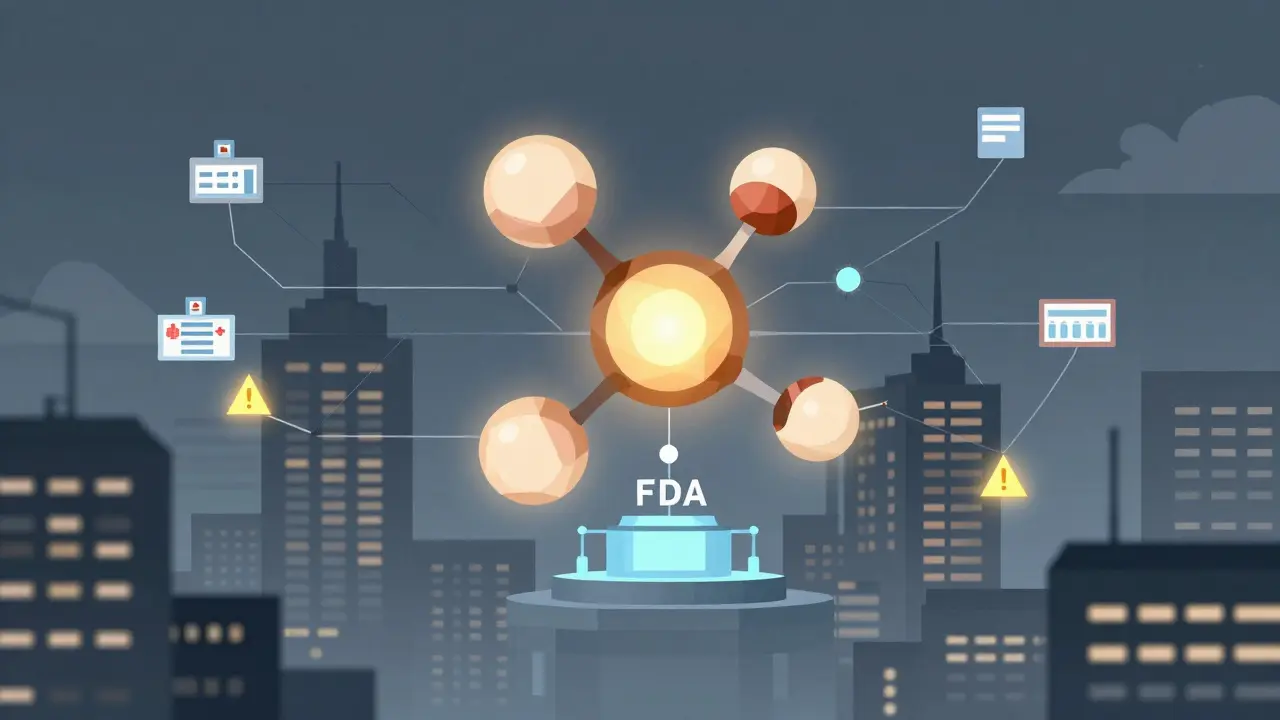
Tracking post-marketing studies for drug safety isn’t optional-it’s a legal and ethical requirement. Once a drug hits the market, the real test begins. Clinical trials involve a few thousand carefully selected patients under controlled conditions. But in the real world, millions of people take the drug-some with other illnesses, on multiple medications, or in older age groups. That’s where things can change. A side effect that showed up in 1 out of 10,000 patients during trials might become common once 500,000 people are using it. That’s why tracking post-marketing safety studies isn’t just about compliance. It’s about catching problems before they hurt more people.
Understand the Three Phases of Post-Marketing Surveillance
Post-marketing surveillance (PMS) follows a clear structure. It’s not random reporting. It’s a system. The first phase is planning. Before a drug even launches, companies must submit a safety surveillance plan and a risk minimization plan. These aren’t just paperwork. They outline exactly how adverse events will be collected, who will report them, and what steps will be taken if something dangerous shows up. Think of it like setting up smoke detectors before you move into a new house.The second phase is ongoing reporting. This happens through three main channels: spontaneous reports from doctors and patients, database studies using electronic health records and insurance claims, and formal post-marketing clinical studies. The FDA’s FAERS database alone holds over 30 million reports as of 2023. That’s not just data-it’s early warnings. A spike in reports of liver damage for a new diabetes drug? That’s a signal. Someone has to notice it.
The third phase is reevaluation. Every 4 to 10 years after a drug hits the market, regulators require a full safety and efficacy review. If new data shows risks outweigh benefits-or if the drug doesn’t work as claimed-the label gets updated, or worse, the drug gets pulled. This isn’t theoretical. Between 2018 and 2022, 87% of all safety actions taken by the FDA involved label changes. That means warnings got stronger, dosing instructions changed, or new contraindications were added.
Know Your Data Sources Inside and Out
You can’t track what you don’t measure. And in drug safety, the data comes from many places. The most important are:- FAERS (FDA Adverse Event Reporting System): This is the backbone. Anyone-doctors, pharmacists, patients, or manufacturers-can submit a report. It’s voluntary, so it’s incomplete. But it’s also the most immediate source of new safety signals. In 2022, 63% of safety actions started with a spontaneous FAERS report.
- Sentinel System: This is the FDA’s active surveillance network. It pulls data from health insurance claims and electronic health records of over 300 million Americans. Unlike FAERS, Sentinel doesn’t rely on people reporting. It finds patterns automatically. It’s better for spotting trends, not rare events. But it has limits: it often lacks lab results, vital signs, or detailed clinical notes.
- Real-World Evidence (RWE) from EHRs: Newer efforts link EHR data with insurance claims. The FDA’s Real World Evidence Data Enterprise now covers 24 million people across six data partners. This gives more clinical detail, helping answer questions like: Did the patient have kidney disease before taking the drug? Was the dose adjusted?
- International systems: The UK’s Yellow Card scheme and Canada’s Canada Vigilance Program are critical for global monitoring. In 2022, the UK received over 76,000 reports. That’s more than double the number from 2018. Global data helps spot signals that might be missed in one country.
Each system has blind spots. FAERS is noisy. Sentinel is broad but shallow. RWE is detailed but slow to collect. The key is using them together. A signal detected in FAERS should be validated in Sentinel. A trend found in claims data should be checked against actual patient charts.
Signal Detection Is Not Just About Numbers
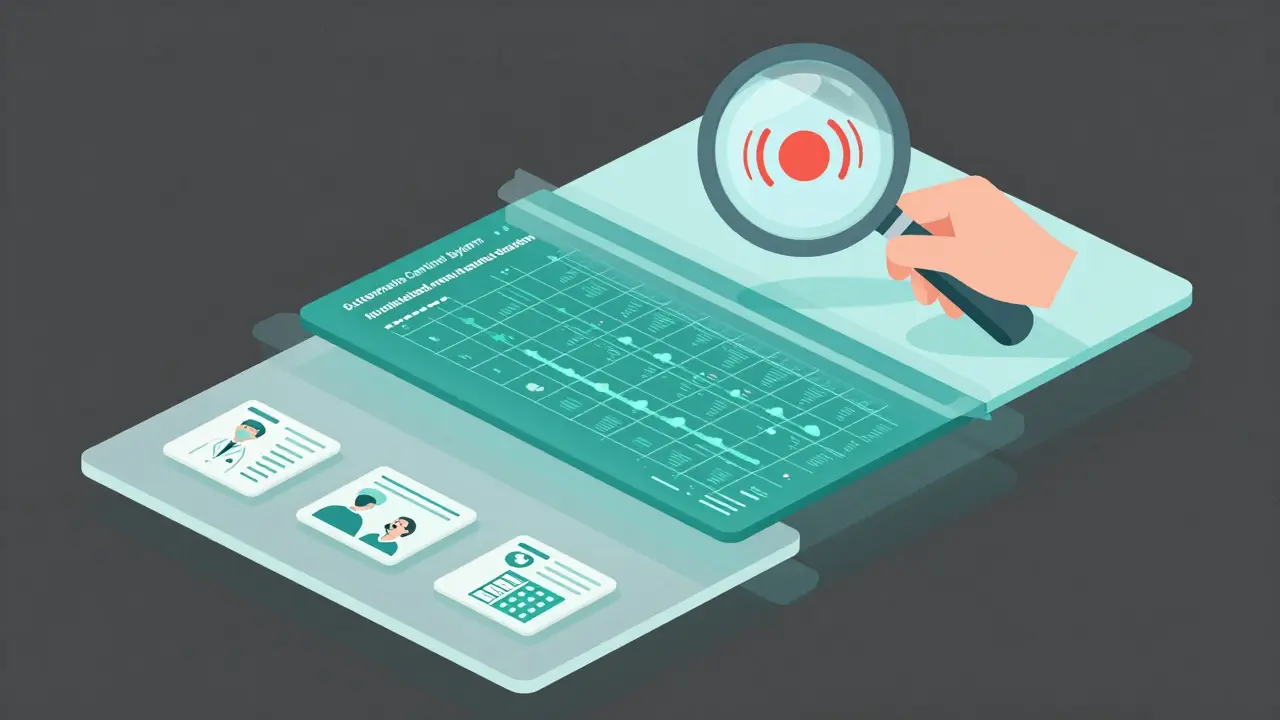
Finding a signal isn’t like spotting a typo in a document. It’s like listening for a whisper in a storm. The FDA uses a five-phase process:- Identification: Algorithms scan FAERS and Sentinel for unusual patterns-like a sudden rise in heart attacks linked to a new antidepressant.
- Triage: Not every spike matters. Teams prioritize based on how many people are affected, how severe the outcome is, and whether it’s a known risk.
- Evaluation: Experts dig deeper. They look at patient age, other medications, dosing, and comorbidities. Did the patients have pre-existing heart disease? Were they on multiple drugs that interact?
- Action: If the signal holds, regulators decide: update the label? Issue a warning letter? Require a Risk Evaluation and Mitigation Strategy (REMS)?
- Communication: The FDA issues Drug Safety Communications, posts updates quarterly, and publishes findings in peer-reviewed journals.
Here’s what’s new: machine learning is now used to cut down false alarms. In 2018, 34% of signals turned out to be noise. By 2023, that dropped to 19%. That’s a big win. But it’s not perfect. New tools like Large Language Models (LLMs) are being tested to read unstructured doctor’s notes in EHRs. One pilot showed a 42% improvement in finding hidden signals-but also a 23% increase in false positives. So human review is still essential.
Why Most Post-Marketing Studies Run Late (And How to Fix It)
The FDA can require companies to run post-marketing studies. But here’s the problem: most are late. Between 2015 and 2022, 72% of mandated studies missed their deadlines. The average completion time? 5.3 years. The mandate? 3 years.Why? Three reasons:
- Data access: Getting records from hospitals, clinics, and insurers is slow. Each system has different formats. Some require legal agreements. Others charge fees.
- Patient recruitment: Finding enough patients who took the drug and meet study criteria is harder than you think. Especially for rare side effects.
- Lack of coordination: Pharma companies often treat safety tracking as a compliance task, not a core function. Teams are siloed. Pharmacovigilance, regulatory affairs, and data science don’t talk enough.
The fix? Start with structure. Use a centralized tracking system with automated alerts. If a study is 6 months behind, someone gets notified. Assign one person to own each study. And hire enough pharmacovigilance specialists. Experts recommend one specialist for every $500 million in annual sales. If your drug brings in $2 billion a year, you need four full-time safety experts-not one part-timer.
Also, use standardized metrics. Track your Post-Marketing Study Timeliness Index (PMSTI): the percentage of studies completed on time. Make it a KPI. If your PMSTI is below 70%, something’s broken.
What Happens When a Safety Signal Is Confirmed
Finding a signal is only step one. Acting on it is what saves lives. Here’s what typically happens:- Label updates (87%): This is the most common outcome. New warnings, dosage limits, or contraindications are added. For example, a drug might get a black box warning for liver failure.
- ‘Dear Health Care Professional’ letters (9%): These are direct letters sent to doctors alerting them to a new risk. Often used for urgent issues that need immediate attention.
- REMS modifications (3%): If a drug has serious risks, the FDA may require a Risk Evaluation and Mitigation Strategy. This could mean restricted distribution, mandatory training for prescribers, or patient registries.
- Market withdrawal (less than 1%): Rare. But it happens. When the risk clearly outweighs the benefit, and no safe way to use the drug remains.
In the 2020-2022 period, the FDA issued 147 Drug Safety Communications affecting 112 different drugs. That’s nearly one every two weeks. That’s how fast things move. You need to be ready to respond-not react.
The Future: AI, Global Data, and Genomic Integration
The tools are getting smarter. By 2026, the FDA’s Sentinel Common Data Model Plus (SCDM+) will include genomic data for 50 million patients. That means we’ll soon know not just if a drug causes liver damage, but which genetic profiles are most at risk.The European Union is launching an AI-powered signal detection system for EudraVigilance in 2025. The WHO is building a global pharmacovigilance network targeting 100 countries by 2027. This isn’t science fiction. It’s happening now.
But technology alone won’t fix the system. The biggest gap remains: real-world data still lacks the depth of clinical trials. Lab results, vital signs, and detailed patient histories are often missing from insurance claims. That’s why combining automated tools with human expertise is still the gold standard.
What You Need to Do Today
If you’re responsible for tracking post-marketing studies, here’s your action list:- Map all your mandated studies. Know deadlines. Track progress weekly.
- Set up automated alerts for safety signals in FAERS and Sentinel. Don’t wait for monthly reports.
- Build a cross-functional team: pharmacovigilance, data science, regulatory, and clinical affairs. Meet monthly.
- Use standardized metrics like PMSTI. Make timeliness a performance goal.
- Stay updated on FDA Drug Safety Communications. Subscribe to their alerts.
- Don’t treat safety as a compliance checkbox. Treat it as a patient safety mission.
Drug safety isn’t a one-time task. It’s a continuous process. The drug doesn’t stop being monitored after approval. It’s just the beginning. And if you’re not tracking it properly, you’re not just risking compliance-you’re risking lives.



Joe Bartlett
This is why the UK's Yellow Card system is way ahead of the US. We've been doing this right for decades.