
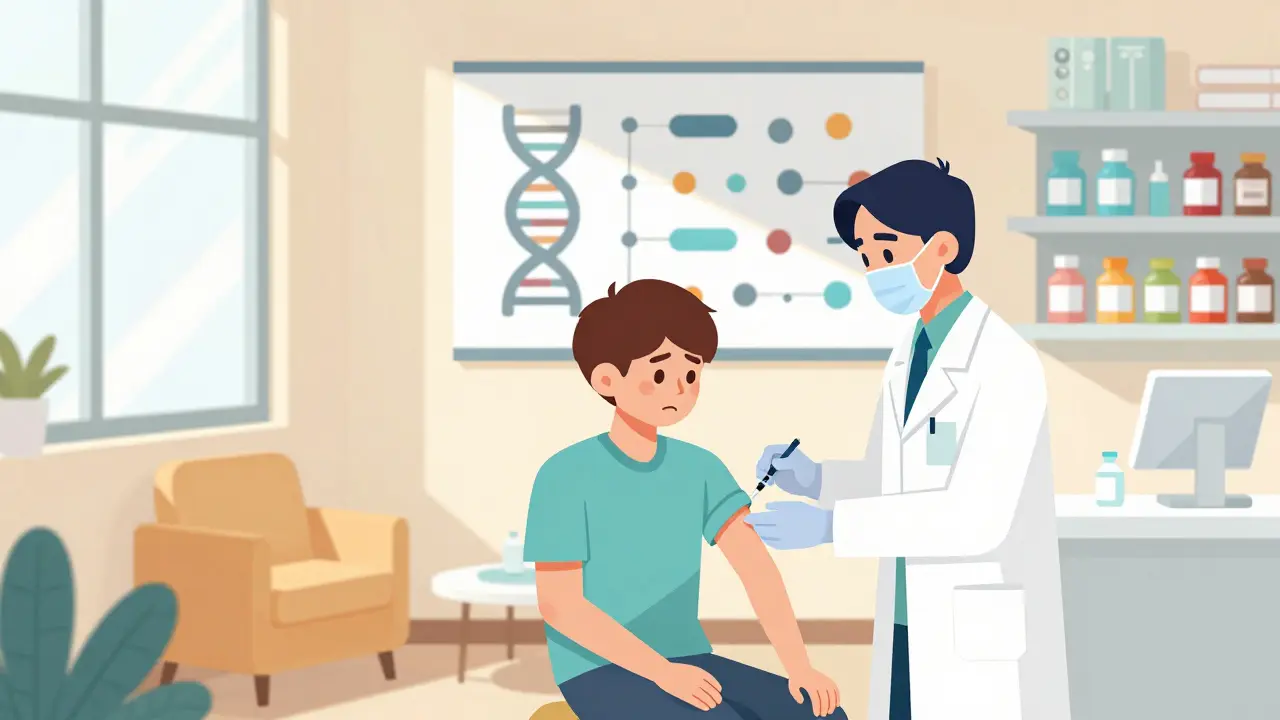
Pharmacists aren’t just handing out pills anymore. In community pharmacies across the U.S., they’re giving flu shots, explaining why a generic version of your blood pressure med works just as well as the brand name, and sitting down with hesitant teens to talk about HPV vaccines. This shift isn’t accidental-it’s the result of years of advocacy, policy changes, and real-world need. And it’s changing how people access care.
From Dispenser to Defender
Twenty years ago, if you wanted a vaccine, you went to your doctor’s office. If you couldn’t afford your prescription, you either paid full price or skipped it. Today, your local pharmacy can do both. Pharmacists now have legal authority to administer vaccines in all 50 states, D.C., and Puerto Rico. That’s not just a perk-it’s a lifeline. In rural towns where the nearest clinic is 40 miles away, the pharmacy is often the only place you can get a shot without waiting weeks.
It’s not just about access. It’s about trust. People talk to their pharmacists. They ask questions. They admit fears. One pharmacist in Ohio told me how a 16-year-old came in scared of the mRNA vaccine, convinced it would alter DNA. The pharmacist spent 12 minutes walking through how the technology actually works-no jargon, no pressure. The kid left with a shot and a changed mind. That’s the power of proximity and relationship.
Why Generic Prescriptions Matter
Generic drugs aren’t cheaper because they’re worse. They’re cheaper because the patent expired. The active ingredient? Identical. The fillers? Sometimes different, but never unsafe. Yet, many patients still assume brand-name equals better. Pharmacists are on the front lines changing that belief.
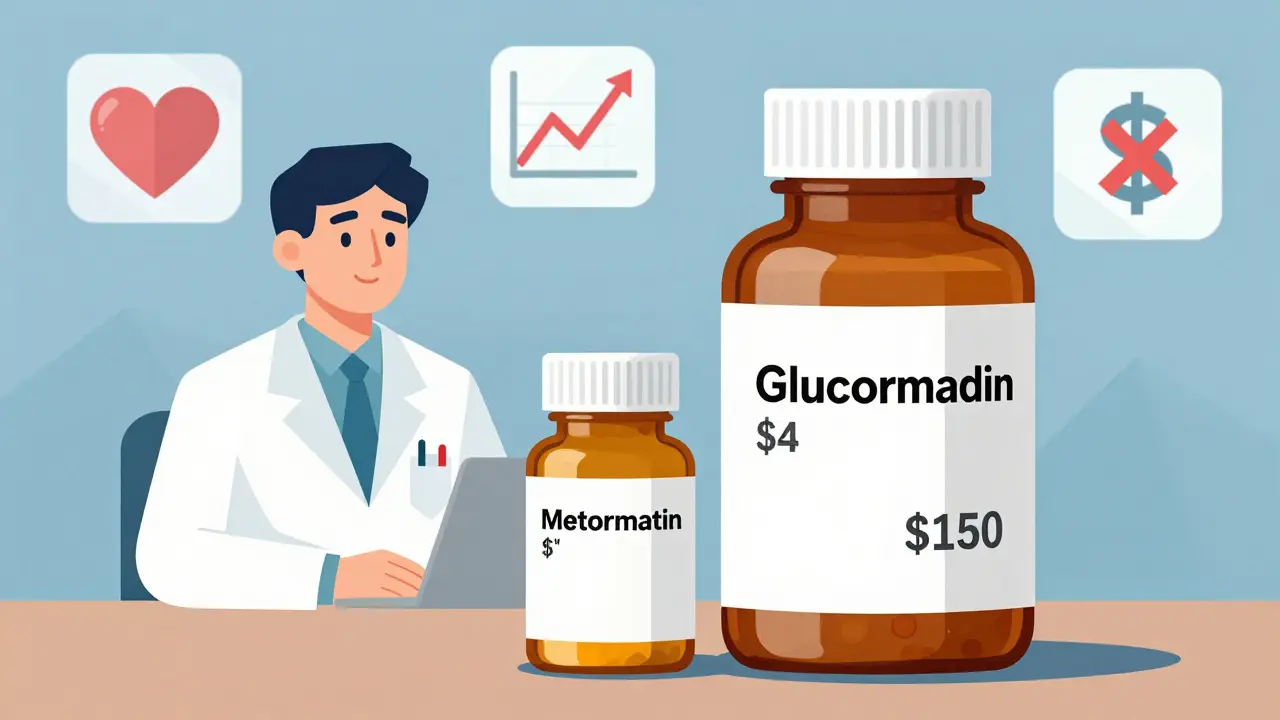
Take metformin, the go-to drug for type 2 diabetes. The brand version, Glucophage, costs around $150 for a 30-day supply. The generic? $4. Same effectiveness. Same side effects. Same results. But without a pharmacist stepping in to explain, patients keep paying the high price. That’s not just wasteful-it’s dangerous. People skip doses. They ration pills. They end up in the ER.
Pharmacists don’t just suggest generics. They track what’s working. They check for interactions. They call doctors when a patient’s blood sugar isn’t improving on the current med. They’re the ones who notice when a patient’s insulin isn’t being stored properly, or when a new antibiotic is clashing with their heart medication. That’s medication therapy management-and it’s part of their job now, in most states.
How Pharmacists Are Getting the Power to Act
It didn’t happen overnight. In 1995, only nine states let pharmacists give vaccines. Today, 27 states have expanded pharmacist authority since 2020. California’s AB 577 lets pharmacists not only give vaccines to anyone three and older, but also order and interpret lab tests. That’s huge. It means a pharmacist can spot early signs of kidney trouble from a routine blood test and flag it before the patient even sees a doctor.
Training is strict. Most pharmacists complete 20-30 hours of certified training through the American Pharmacists Association. They learn injection technique, cold chain storage, how to handle allergic reactions, and how to report shots to state registries. In 34 states, they have to report each vaccine within 72 hours. Miss that, and they risk fines.
But it’s not just about vaccines. Pharmacists are also pushing for better access to generics. They’re lobbying against Pharmacy Benefit Managers (PBMs) that squeeze their profits. PBMs negotiate drug prices behind the scenes, then set reimbursement rates. In many cases, pharmacists get paid less to dispense a generic than it costs them to buy it. That’s why 78% of independent pharmacists say PBM practices are hurting their ability to care for patients.
The Numbers Don’t Lie
Let’s look at the facts:
- 93% of Americans live within five miles of a community pharmacy.
- Pharmacists gave 32% of all adult flu shots in the 2019-2020 season.
- Chain pharmacies administered over 35 million flu vaccines in 2022-2023-nearly 38% of all adult doses.
- 92% of independent pharmacies now offer immunizations, up from 65% in 2015.
- 87% of patients say convenience is why they choose a pharmacy for vaccines.
And the trend is accelerating. By 2026, experts predict pharmacists will administer over half of all adult vaccines in the U.S. That’s not just growth-it’s a transformation.
The Hidden Costs
But here’s the catch: the system isn’t paying pharmacists enough. Medicare Part B reimburses only about 87% of the actual cost to administer a vaccine. That means for every $20 shot, the pharmacy might get paid $17.50. Add in the cost of the vaccine itself, cold storage, staff time, and paperwork-and many pharmacies are losing money.
And it’s worse for independents. Chain pharmacies have buying power. They get bulk discounts. They have IT systems that auto-report to state registries. Independent pharmacies? They’re often doing it all manually. One pharmacist in Iowa told me she spends two hours a day just entering vaccine data. That’s two hours she could be counseling patients.
Then there’s insurance billing. Forty-two percent of patients reported problems getting their pharmacy vaccines covered. Sometimes the claim gets denied because the pharmacy’s NPI number isn’t in the insurer’s system. Sometimes the patient’s plan doesn’t cover vaccines unless they’re given by a doctor. That’s not patient care-that’s bureaucracy.

What’s Being Done
Pharmacists aren’t sitting still. The American Pharmacists Association launched the “Finish the Fight” campaign, mobilizing over 23,000 letters to Congress demanding PBM reform. The CDC has set a goal: increase pharmacist-administered vaccines by 25% by 2025. And 48 states are currently reviewing bills to expand pharmacists’ scope of practice even further.
Some states are starting to fix the payment problem. In Minnesota, a new law requires insurers to reimburse pharmacists at the same rate as physicians for vaccine administration. In Oregon, pharmacists can now bill for medication therapy management services under Medicaid. These aren’t just policy wins-they’re lifelines for small pharmacies.
The Big Missing Piece
Even with all this progress, one thing’s still broken: communication between pharmacies and doctors. Most electronic health records don’t talk to pharmacy systems. A patient gets a pneumonia shot at the pharmacy. The primary care doctor doesn’t know. Next visit, the doctor orders it again. Waste. Risk. Confusion.
That’s why 89% of pharmacists surveyed by the American Society of Health-System Pharmacists want integrated immunization records. If your shot is logged in one system that everyone can see-doctor, pharmacy, public health-you avoid duplication. You catch missed vaccines. You protect the whole community.
Right now, that system doesn’t exist at a national level. But it’s coming. States like California and New York are piloting interoperable registries. The CDC is pushing for it. And pharmacists? They’re the ones begging for it.
What This Means for You
If you’re due for a vaccine, skip the waiting room. Walk into your pharmacy. Ask if they offer the shot you need. If you’re paying too much for your meds, ask if there’s a generic. Don’t assume the pharmacist won’t know. They’re trained for this.
If you’re a parent, don’t wait for your pediatrician to bring up vaccines. Talk to your pharmacist. They see your kids every time you pick up an antibiotic or an inhaler. They remember what’s been given. They know what’s coming next.
If you’re a patient with chronic illness, ask your pharmacist to review your entire med list. They’ll spot interactions you didn’t know about. They’ll tell you which pills you can switch to generics without losing effectiveness. That’s not just advice-it’s prevention.
Pharmacists aren’t waiting for permission to help. They’re already doing it. The question isn’t whether they should be part of your care team. It’s why you haven’t asked them to be yet.
Can pharmacists really give vaccines legally in every state?
Yes. All 50 states, Washington D.C., and Puerto Rico allow pharmacists to administer vaccines. But the rules vary. Some states let them give any FDA-approved vaccine to anyone over 3. Others restrict them to flu, shingles, or tetanus shots, and only for adults. Some require a doctor’s protocol; others allow standing orders. Always check your state’s laws, but in most places, pharmacists are fully authorized.
Are generic drugs as safe and effective as brand-name ones?
Absolutely. The FDA requires generics to have the same active ingredient, strength, dosage form, and route of administration as the brand-name drug. They must also meet the same strict manufacturing standards. The only differences are in inactive ingredients-like fillers or dyes-which don’t affect how the drug works. Generics are tested for bioequivalence, meaning they work the same way in your body. They’re cheaper because they don’t carry the cost of research, marketing, or patent protection.
Why do some insurance plans refuse to cover vaccines given at pharmacies?
Some insurance plans still have outdated rules that only cover vaccines given by doctors. Others don’t have the right billing codes set up for pharmacy claims. Sometimes the pharmacy’s provider number isn’t in the insurer’s system. Patients often don’t realize this until they get a bill. The best fix? Call your insurer before you go. Ask if your vaccine is covered at pharmacies and what documentation you need. Pharmacists can often help you navigate this-they’ve done it before.
How do pharmacists know which vaccines I’ve already had?
They ask you. They check your immunization card. They look up your state’s immunization registry-if your state has one and your records are in it. But here’s the problem: many states don’t share data with pharmacies, and many patients don’t have records. That’s why pharmacists often ask the same questions repeatedly. The solution? Advocate for integrated health records. Ask your pharmacist to enter your shots into the registry when you get them. And keep your own personal vaccine record.
Can pharmacists help me switch to cheaper generic medications?
Yes-and they’re trained to do it. If you’re on a brand-name drug, ask your pharmacist if a generic is available and covered by your plan. They’ll check your formulary, compare costs, and even contact your doctor if a switch is appropriate. Many pharmacists offer free med reviews to help you cut costs. In some states, they can even initiate a substitution without a new prescription. Don’t be shy. Saving $100 a month on meds is worth a five-minute chat.



Kristen Russell
Walked into my pharmacy last week for a flu shot and asked if they had a generic for my blood pressure med-turned out it was $3. I’ve been paying $120 for years. Mind blown.