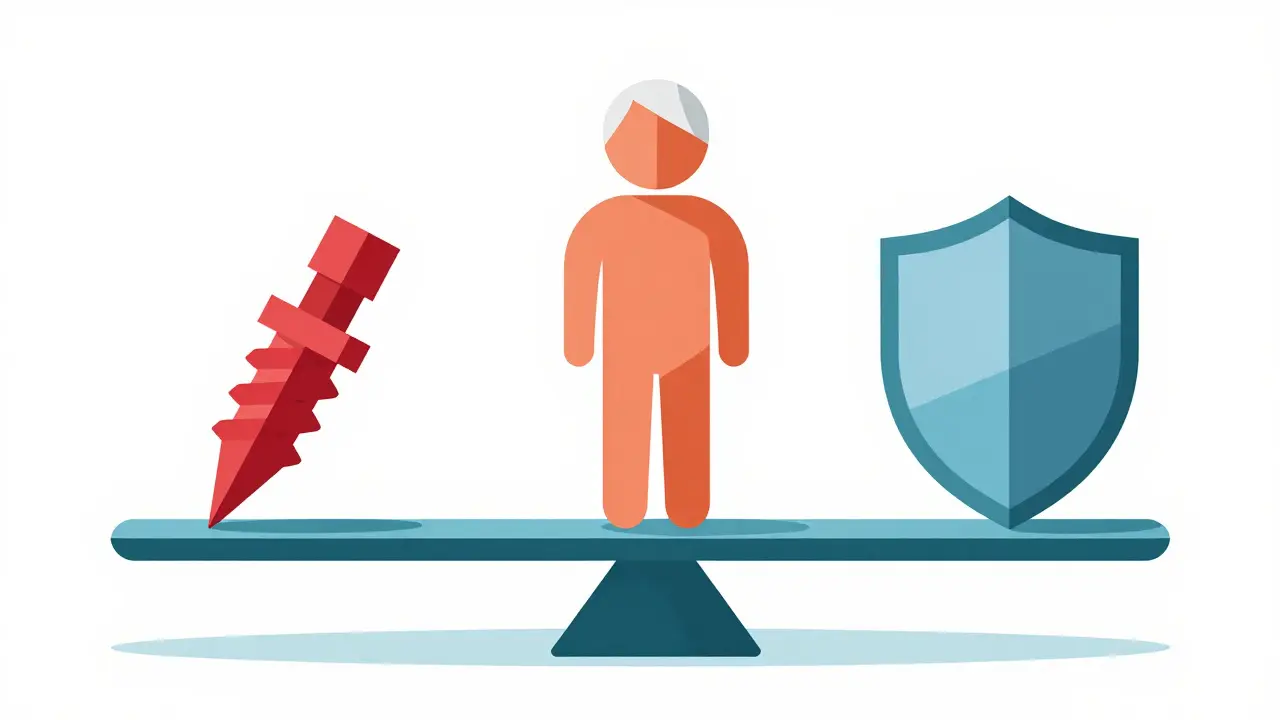
Managing pain in older adults is a delicate balancing act. On one hand, you want to ensure a loved one isn't suffering in silence; on the other, the risks associated with potent painkillers can be daunting. For a long time, the medical world swung between two extremes: over-prescribing opioids and then over-correcting with rigid limits that left many seniors, especially those with cancer, in unnecessary pain. Today, the approach has shifted toward a more personalized strategy that prioritizes safety without sacrificing comfort.
| Factor | Standard Adult Approach | Geriatric Approach |
|---|---|---|
| Starting Dose | Full therapeutic dose | 30-50% of standard dose |
| Formulation | Extended-release common | Start with Immediate-Release |
| Titration Speed | Rapid adjustment | Slow (based on terminal half-life) |
| Goal | Pain score reduction | Functional improvement |
Why Seniors Need Different Pain Protocols
As we age, our bodies don't process medication the same way they did at thirty. Opioids in seniors is a complex area of pharmacology where age-related physiological changes, such as decreased kidney and liver function, significantly alter how drugs are metabolized . When the kidneys can't clear a drug as quickly, the medication stays in the system longer, increasing the risk of toxicity and sedation.
It's not just about organ function. Changes in body-fat distribution and muscle mass mean that fat-soluble drugs may linger longer in the body. This is why a "standard" dose can be an overdose for a frail 80-year-old. If a doctor prescribes a dose based on a general adult chart, they might accidentally trigger delirium or severe respiratory depression. This is why the mantra in geriatric care is always "start low and go slow."
The Shift in CDC Guidelines: From Rigid Limits to Patient-Centered Care
There was a period where the medical community became terrified of opioids due to the addiction crisis. The 2016 CDC guidelines created strict dosage thresholds that, while well-intentioned, caused a massive problem for the elderly. Many doctors stopped prescribing necessary pain medication to avoid crossing a theoretical "danger line," leaving people with advanced cancer or sickle cell disease in agony.
The Centers for Disease Control and Prevention (CDC) corrected this in their 2022 update. They explicitly stated that the previous rules were inappropriately applied to those receiving palliative or end-of-life care. The new standard is clear: opioids remain the first-line treatment for moderate-to-severe cancer pain, with a reported response rate of 75%. The focus has moved from "how many milligrams is too many?" to "is this dose improving the patient's quality of life?"
Choosing the Right Medication: What to Use and What to Avoid
Not all opioids are created equal. Some are safer for the aging brain and gut, while others can be dangerous. For instance, Buprenorphine is a partial opioid agonist that often results in lower rates of constipation and fewer central nervous system side effects when used in low-dose transdermal patches . This makes it a compelling option for seniors who struggle with the heavy sedation associated with other painkillers.
On the flip side, there are "red flag" medications. Meperidine (Demerol) and Codeine should generally be avoided in seniors. Meperidine, in particular, produces metabolites that can accumulate in the body and cause seizures or sudden delirium. Even common over-the-counter additions like acetaminophen need a cap; for frail patients over 80, the limit is often 2 grams per 24 hours to protect the liver.
Many people try to swap opioids for Gabapentinoids, but be careful. While they help with nerve pain, they can cause dizziness and confusion in older adults, which directly increases the risk of falls. They aren't always a "safe" alternative; they are simply a different set of risks.
Safety First: Dosing and Titration Rules
If a senior is "opioid-naïve" (meaning they haven't taken them recently), starting with a full pill is a mistake. Experts recommend starting at 30-50% of the standard adult dose. In some cases, this means using an elixir or cutting a pill in half to start with something as low as 2.5 mg of oxycodone.
One of the biggest safety pitfalls is starting with a long-acting patch or pill. Long-acting formulations should only be used after the patient has developed a tolerance using immediate-release agents. Why? Because if a long-acting drug causes a bad reaction, it stays in the system for days. If an immediate-release drug causes a problem, it wears off much faster.
Titration-the process of adjusting the dose-must also be patient. You shouldn't increase a dose faster than four times the drug's terminal half-life. For example, short-acting oxycodone shouldn't be adjusted more often than every 48 hours. Rushing this process is a fast track to respiratory depression or cognitive decline.
Monitoring and Red Flags: What to Watch For
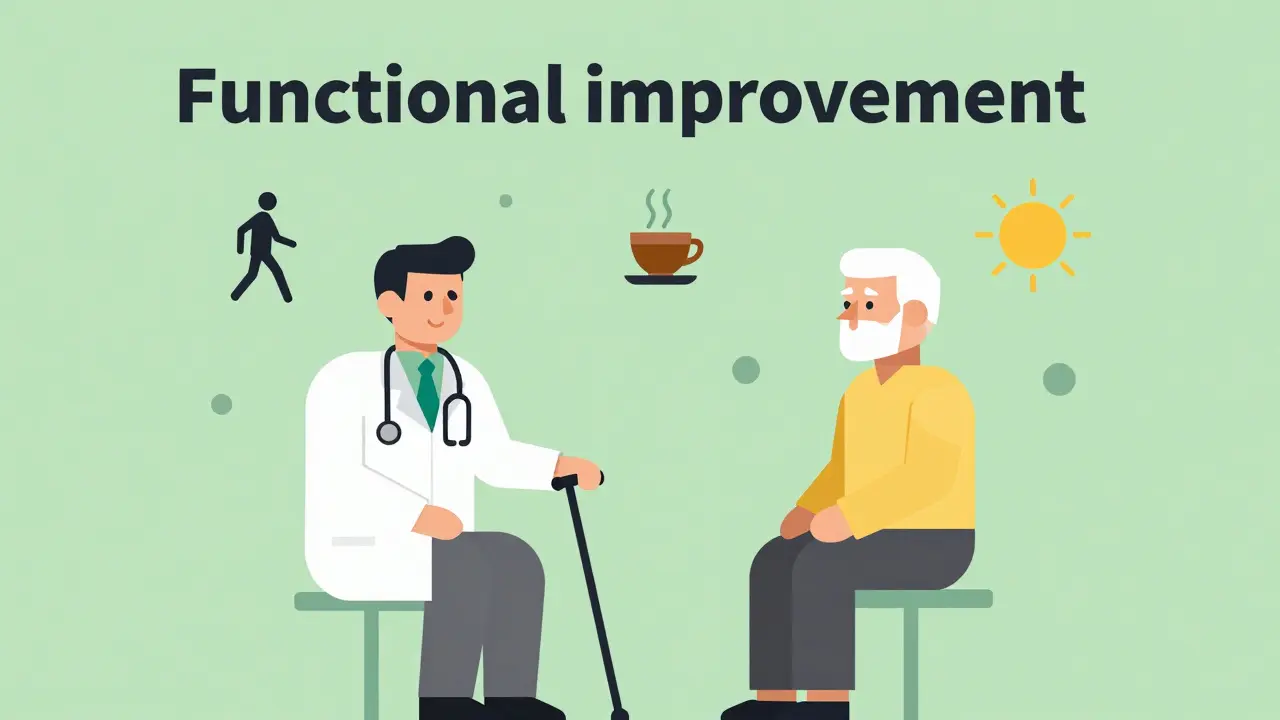
Prescribing the drug is only half the battle. The real work is in the monitoring. A doctor should be evaluating the patient's progress toward functional goals. Can they walk to the bathroom? Can they feed themselves? If the pain is gone but the patient is too sedated to move, the treatment is failing.
Keep a close eye on these four key areas:
- Cognitive Status: Watch for sudden confusion, disorientation, or "brain fog." This could be a sign of delirium, which is a major concern in geriatric opioid use.
- Respiratory Function: Especially for those with sleep apnea, opioids can suppress breathing. Monitor for shallow breath or excessive daytime sleepiness.
- Fall Risk: Dizziness and sedation lead to falls. Ensure the home environment is safe and the patient has support when standing.
- Bowel Health: Opioid-induced constipation is almost guaranteed. Proactive bowel management (stool softeners or stimulants) should start the day the medication does.

Integrating Non-Drug Therapies
Opioids shouldn't be the only tool in the kit. The American Medical Association suggests a diverse range of strategies. This includes non-pharmacologic options like physical therapy, which can help with joint mobility, or cognitive behavioral therapy to help patients cope with chronic pain. Even targeted nerve blocks can sometimes reduce the amount of systemic medication a patient needs.
The goal is a "multimodal" approach. By combining low-dose medication with movement and mental health support, you reduce the total burden on the liver and kidneys while maximizing the patient's ability to actually live their life, not just exist without pain.
Why can't seniors just take the same dose as younger adults?
Seniors have decreased renal and hepatic function, meaning their kidneys and liver don't clear drugs as efficiently. This leads to the medication building up in the bloodstream, which can cause toxic levels or severe sedation even at doses that would be normal for a younger person.
What are the most dangerous opioids for the elderly?
Meperidine and codeine are generally avoided. Meperidine is particularly risky because its metabolites can accumulate in the brain, leading to seizures and delirium. Methadone is also used with extreme caution due to its complex pharmacology and long half-life.
How do I know if my loved one is over-sedated?
Look for signs of excessive drowsiness, difficulty waking up, slurred speech, or a sudden increase in confusion (delirium). If they are too sleepy to engage in basic daily activities, the dose may be too high and should be discussed with their doctor immediately.
Is it safe to use buprenorphine patches in seniors?
Yes, transdermal buprenorphine is often considered a safer alternative. Research indicates it causes lower rates of constipation and fewer central nervous system side effects compared to traditional full opioid agonists, making it a strong choice for geriatric pain management.
What is 'MME' and why does it matter?
MME stands for Morphine Milligram Equivalents. It's a way for doctors to standardize different opioids to a single scale. For seniors, low-dose is typically up to 40 MME per day. Monitoring MME helps doctors avoid dangerously high cumulative doses when a patient is taking more than one type of painkiller.
Next Steps for Caregivers
If you are managing a senior's pain, start by keeping a detailed pain and behavior log. Note when the pain is worst and how they react after a dose. This data is invaluable for the doctor when deciding whether to titrate the dose up or switch medications. Always ask your provider about a "exit strategy" or a tapering plan, even for palliative care, to ensure the medication remains appropriate as the patient's condition evolves.