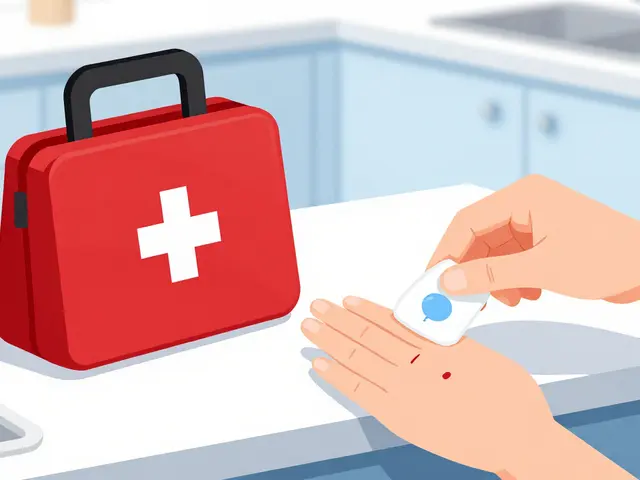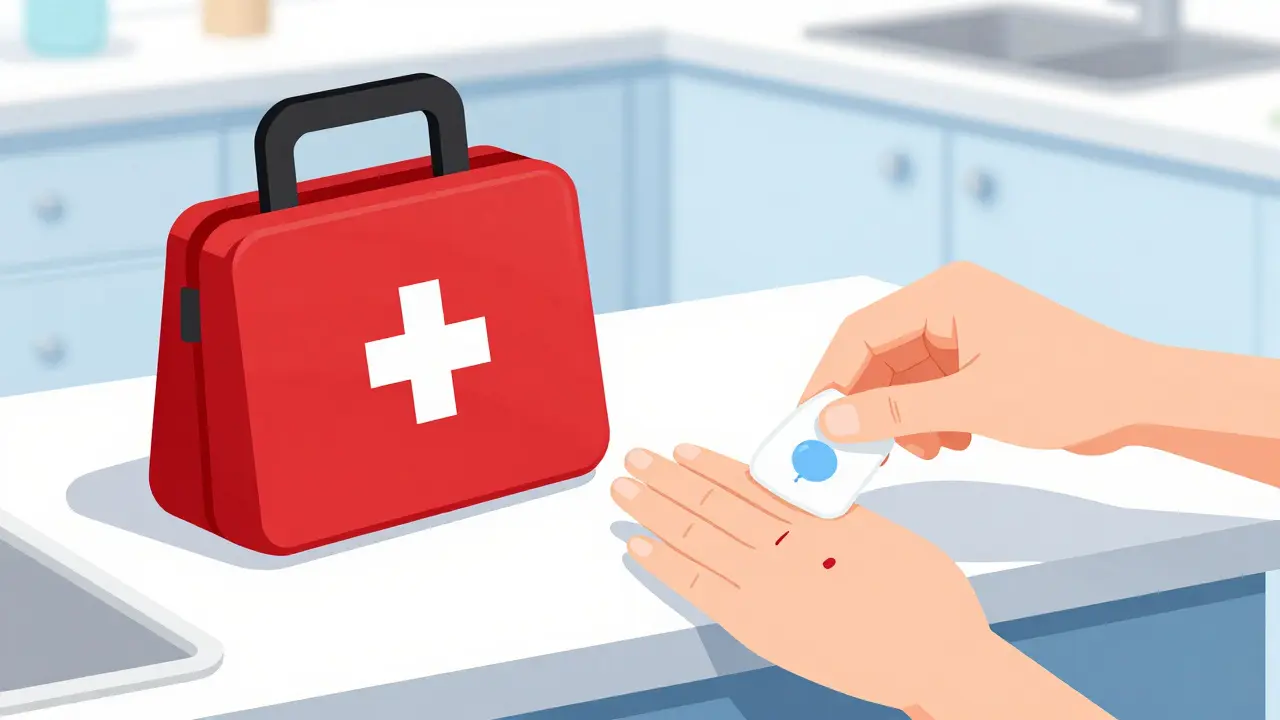
You don't need a medical degree to handle a kitchen knife slip or a scraped knee, but you do need the right tools. Most of us have a first aid kit gathering dust under the sink, but do you actually know what's inside it or if those creams are even still good? Using the wrong product-like pouring harsh chemicals directly into a deep cut-can actually slow down your healing. The goal of OTC first aid medications is to give you a way to manage minor injuries immediately, preventing a small problem from turning into an expensive emergency room visit.
The First Line of Defense: Antiseptics
When you first get a cut, your main goal is to stop the clock on bacteria. Antiseptics is a group of chemical agents designed to eliminate microorganisms from the skin surface to prevent infection. However, there is a big difference between cleaning the skin and cleaning the wound.
Most kits include Isopropyl Alcohol, usually in 60-70% concentration pads. These are great for prepping the skin around a wound. But here is the catch: don't put alcohol or Hydrogen Peroxide (typically 3%) directly into a deep, open cut. While they kill bacteria, they can also damage healthy tissue, which actually delays the healing process. If you've ever felt that intense sting, that's the chemical reaction happening.
For something more heavy-duty, some people use povidone-iodine. It's incredibly effective-some studies show it reduces bacterial load by nearly 99.8%-but it stains everything it touches. If you're using peroxide, remember that it's unstable; it often loses its punch within 30 days of opening the bottle, so don't trust a container that's been open for a year.
Stopping Infection with Antibiotic Ointments
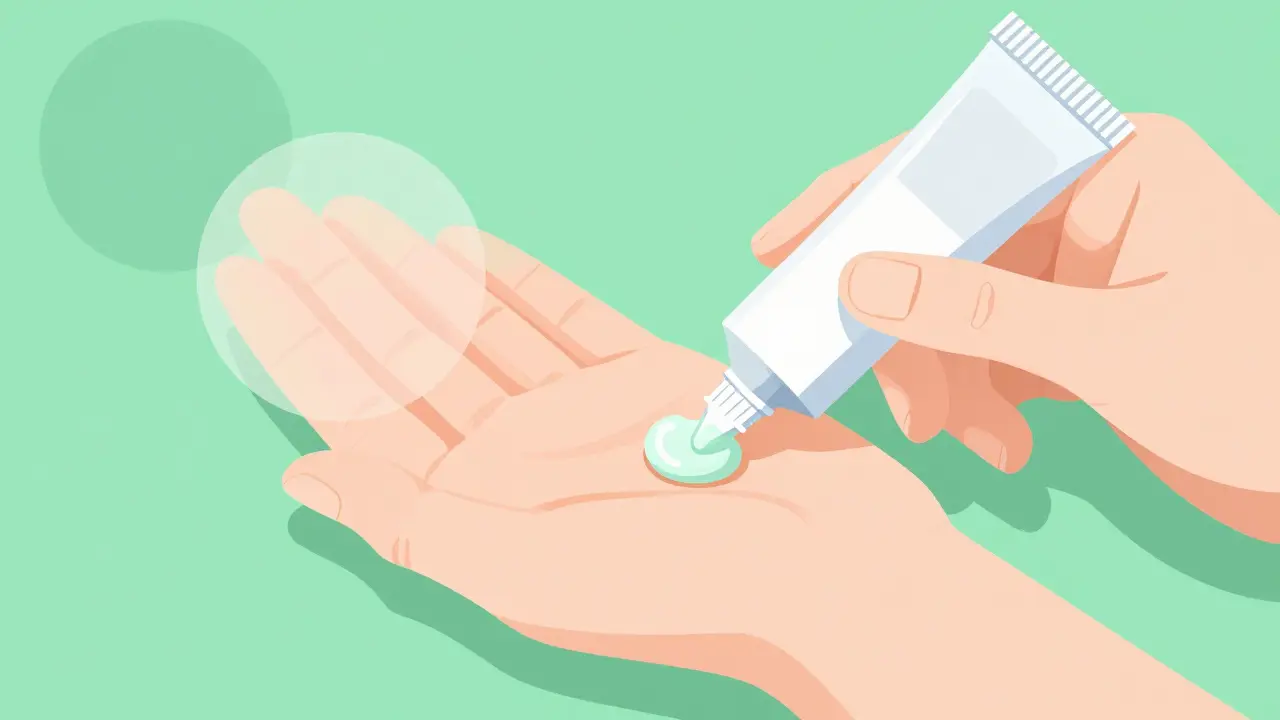
Once a wound is clean, you want to keep it protected. This is where Antibiotic Ointments come in. These aren't just for killing germs; they keep the wound moist, which helps the skin knit back together faster.
The industry gold standard is usually a triple antibiotic ointment. This typically contains a blend of Bacitracin, Neomycin, and Polymyxin B. You've probably seen brands like Neosporin in your cabinet. In clinical tests, these triple-threat formulas generally outperform single-ingredient ointments when it comes to preventing infection.
But be careful: not everyone handles these well. About 5% of people have a sensitivity to neomycin, which can cause a red, itchy rash that looks like the infection is getting worse when it's actually just an allergic reaction. If you have sensitive skin, a bacitracin-only ointment is a safer bet. Also, keep an eye on the date. These ointments lose about 15% of their potency every year after they're opened. If your tube is three years old, it's basically just expensive grease.
| Product Type | Primary Goal | Best Use Case | Key Risk/Downside |
|---|---|---|---|
| Isopropyl Alcohol | Surface Disinfection | Skin around the wound | Tissue damage if used inside cut |
| Hydrogen Peroxide | Cleaning debris | Initial rinse of dirty wound | Short shelf life after opening |
| Triple Antibiotic | Infection Prevention | Cuts and scrapes | Potential Neomycin allergy |
Managing the Pain: Choosing the Right Pill
Not all pain is the same. If you have a pounding headache, you need a different tool than if you have a swollen ankle. Pain Relief Medications generally fall into two camps: those that just block pain and those that fight inflammation.
Acetaminophen (the active ingredient in Tylenol) is your go-to for non-inflammatory pain, like a tension headache. It's generally easier on the stomach, making it a safe choice for people who can't take NSAIDs. However, it is processed by the liver. Taking more than the recommended dose (usually capping at 4,000mg a day) can cause severe liver damage.
Then you have NSAIDs (Nonsteroidal Anti-inflammatory Drugs), which include Ibuprofen (Advil, Motrin) and Naproxen Sodium (Aleve). These are the heavy hitters for swelling, menstrual cramps, or joint pain. Ibuprofen works quickly but wears off in a few hours. Naproxen lasts longer-up to 12 hours-but carries a higher risk for people with heart issues or stomach ulcers.
One special case is Aspirin. While it helps with pain, chewable aspirin is a life-saver during a suspected heart attack. Using it within the first 30 minutes of symptoms can significantly reduce mortality rates. Just don't give it to children, as it can cause a rare but serious condition called Reye's syndrome.
Quick Guide to Pain Med Selection
If you're staring at your medicine cabinet and aren't sure what to grab, use these general rules of thumb:
- For a fever or a simple headache: Acetaminophen is usually the safest first choice.
- For a sprained wrist or toothache: Ibuprofen is better because it reduces the inflammation causing the pain.
- For long-term soreness during a long day: Naproxen is the winner since you don't have to re-dose every 4 hours.
- For chest pain/heart attack symptoms: Reach for chewable Aspirin immediately and call emergency services.
How to Maintain Your Kit Without the Stress
Most people buy a kit and then forget about it until they actually need it, only to find the ointment has separated and the pills are expired. You don't need a monthly audit, but a semi-annual check is a good habit. A pro tip is to sync this with something you already do, like changing your smoke detector batteries or adjusting your clocks for daylight savings.
Storage also matters. We tend to keep first aid kits in the bathroom, but the humidity and heat from the shower can actually degrade medication. If your meds are stored in an area that regularly hits above 86°F (30°C), your acetaminophen could lose up to 35% of its effectiveness. Keep your supplies in a cool, dry place in an airtight container.
Finally, get into the habit of reading the "Drug Facts" label. It sounds obvious, but a huge number of OTC medication errors come from simple dosage miscalculations. Use a calibrated measuring spoon for liquid meds-don't trust a random kitchen spoon, which can lead to under- or over-dosing.
Can I use hydrogen peroxide on a deep cut?
It's not recommended. While it's great for cleaning dirt out of a shallow scrape, using it on a deep wound can damage the healthy tissue and delay the healing process. Stick to cleaning the surrounding area and using a mild soap and water rinse for the wound itself.
What happens if I use expired antibiotic ointment?
It likely won't hurt you, but it won't work as well. The active antibiotics break down over time, losing about 15% of their potency annually. An expired ointment might not be strong enough to stop a bacterial infection, which defeats the purpose of using it.
Is ibuprofen better than acetaminophen?
Neither is "better" overall; it depends on the pain. Ibuprofen is superior for inflammation (like a swollen joint), while acetaminophen is better for general pain and fever and is typically safer for those with stomach issues or kidney concerns.
How do I know if I'm allergic to Neosporin?
If you apply the ointment and the area becomes more red, itchy, or develops tiny bumps (hives), you might be reacting to the neomycin. If this happens, stop using it immediately and switch to a bacitracin-only product.
Can I take ibuprofen and acetaminophen together?
In some cases, doctors suggest this for severe pain because they work through different pathways in the body. However, you should only do this under medical advice to avoid overloading your liver or kidneys.