
Cold Chain Temperature Risk Checker
Medication Temperature Safety Assessment
Assess risks to temperature-sensitive medications during transport. Based on FDA guidelines and Censinet (2024) data.
Results
When you take a pill, inject insulin, or receive a life-saving infusion, you assume the medicine in your hand is exactly what it should be: pure, potent, and safe. But behind that simple act is a global network so fragile that a single power outage, cyberattack, or shipping delay can put lives at risk. The pharmaceutical supply chain isn’t just logistics-it’s a lifeline. And right now, that lifeline is under strain.
What’s at Stake When the Supply Chain Fails
Every year, over 1.5 million Americans suffer harm because of issues tied to the pharmaceutical supply chain. That’s not a guess. It’s a documented statistic from Censinet (2024). These aren’t just delays. They’re dangerous substitutions, missed treatments, and avoidable complications. A patient with multiple sclerosis waits 17 days for their Tysabri infusion because of a supply hiccup-and two new brain lesions show up on their MRI. A diabetic switches insulin brands mid-treatment because the original is out of stock, and their blood sugar spirals out of control. These aren’t rare cases. They’re happening in hospitals and homes across the country.
The stakes are even higher in emerging economies. Caribbean hospitals face a supply chain pressure index of 8.1-far above the safe target of -0.5. In places like this, patients don’t just wait longer. They go without. Eighty-nine percent of developing nations rely on imported medicines. When global shipping costs spike or political tensions disrupt trade, lives are on the line. The supply chain doesn’t just move pills. It moves hope.
How Cold Chains Keep Medicines Alive
Not all drugs are created equal. About 72% of biologics-like cancer treatments, vaccines, and autoimmune therapies-must be kept between 2°C and 8°C. Fifteen percent need to stay frozen below -60°C. One degree too warm, and the entire batch can degrade. The medicine doesn’t just lose effectiveness. It can turn toxic.
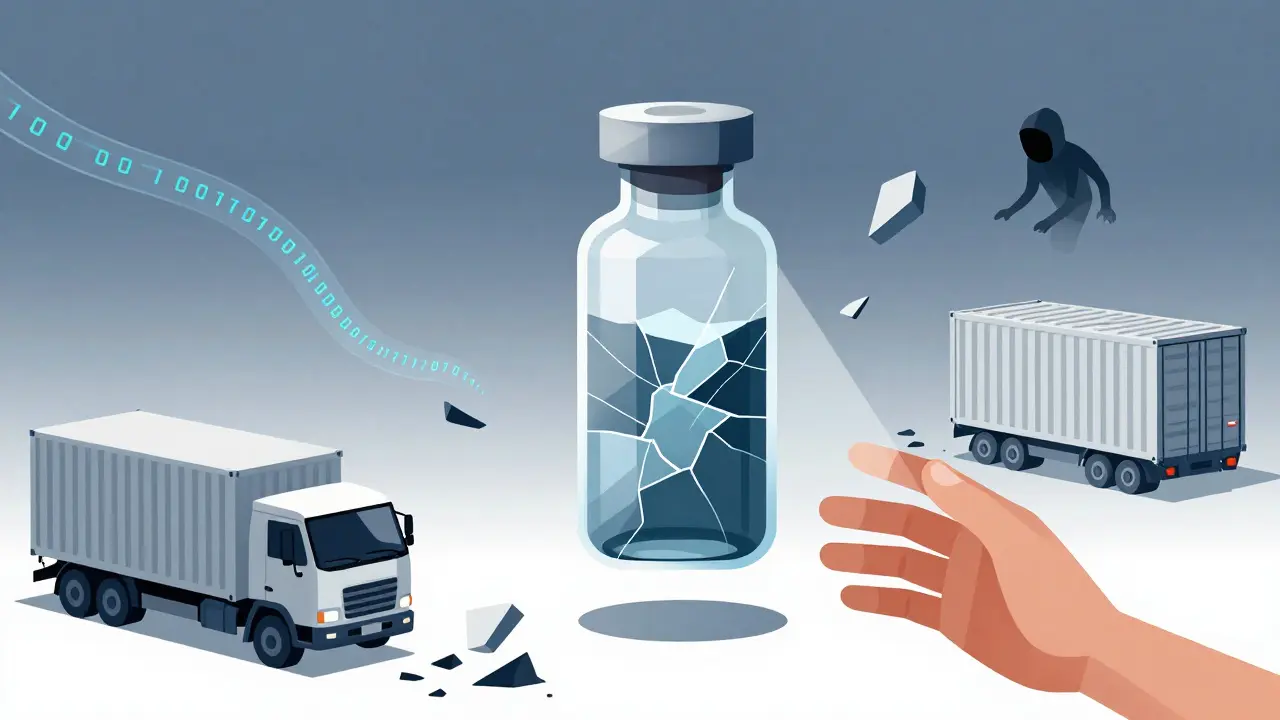
Imagine a shipment of insulin leaving a warehouse in Chicago, traveling by truck to a rural clinic in Mississippi. The refrigerated container breaks down. The driver doesn’t notice. By the time it gets to the clinic, the insulin has been exposed to heat for 14 hours. Patients who receive it won’t feel sick right away. But over weeks, their blood sugar control worsens. Their doctors don’t know why. The supply chain didn’t break-it just quietly failed.
Real-time monitoring systems now cover 68% of high-value shipments, cutting temperature excursions by 42%. But that still leaves over a third of critical drugs traveling without digital oversight. And the cost of a single temperature-controlled distribution center? Around $2.8 million. Many smaller pharmacies and clinics simply can’t afford it.
Counterfeits, Chaos, and the $77 Billion Problem
Counterfeit drugs are a growing threat. In 2024, a CrowdStrike software failure shut down 759 hospitals, halting prescription processing and inventory tracking. For days, pharmacists couldn’t verify if the medications they were dispensing were real. In one case, a batch of antibiotics turned out to be fake-lacking active ingredients entirely. Patients got sicker. Some died.
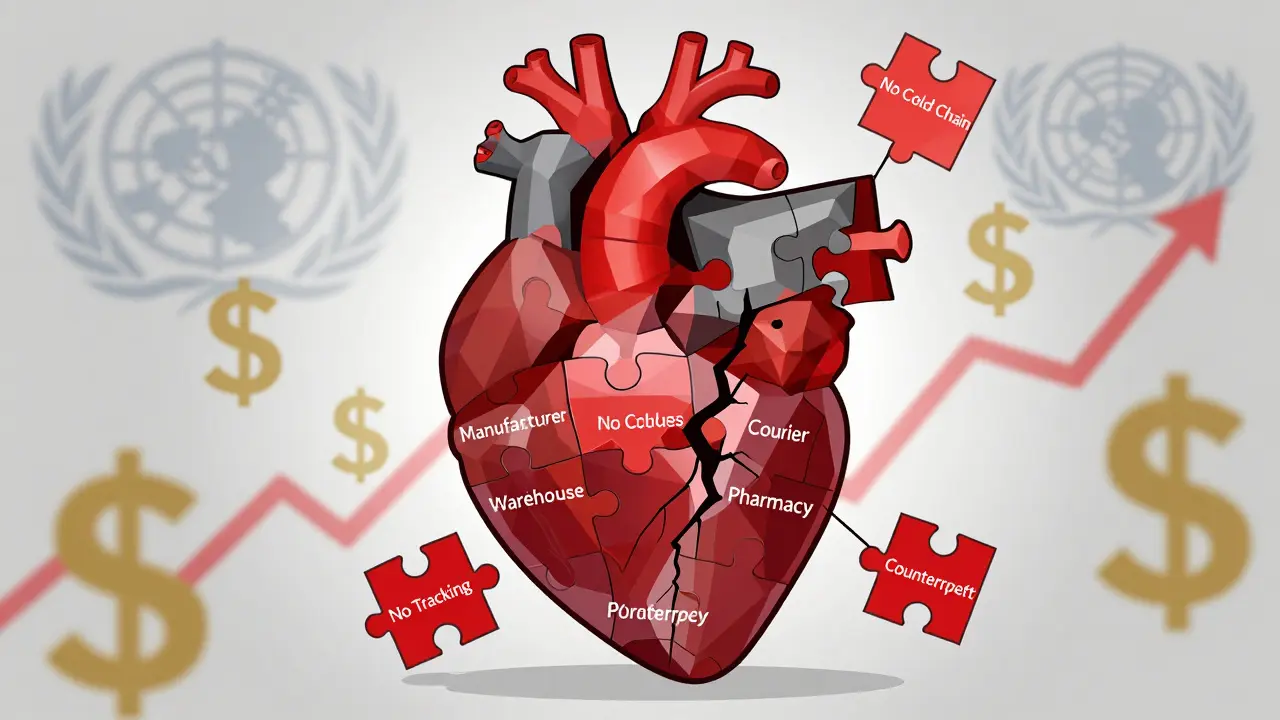
The FDA’s Drug Supply Chain Security Act (DSCSA) requires every prescription drug to have a 2D barcode by 2023. That’s a big step. But compliance isn’t universal. Generic manufacturers still score an average of 3.2 out of 5 on documentation quality, while Pfizer scores 4.7. That gap matters. When a hospital can’t trace a drug back to its source, it can’t trust it.
And the cost? $77 billion annually in the U.S. alone. That’s the price of hospitalizations, extended treatments, and legal battles caused by supply chain errors. It’s not just money. It’s lives.
Why Shortages Hit Harder Than Ever
During the first six months of the COVID-19 pandemic, drug shortages jumped 300%. Why? Because the system had no buffer. Unlike a grocery store that can stock extra cans of soup, pharmaceutical supply chains run on razor-thin inventory. Why? Short shelf lives. High costs. Strict regulations.
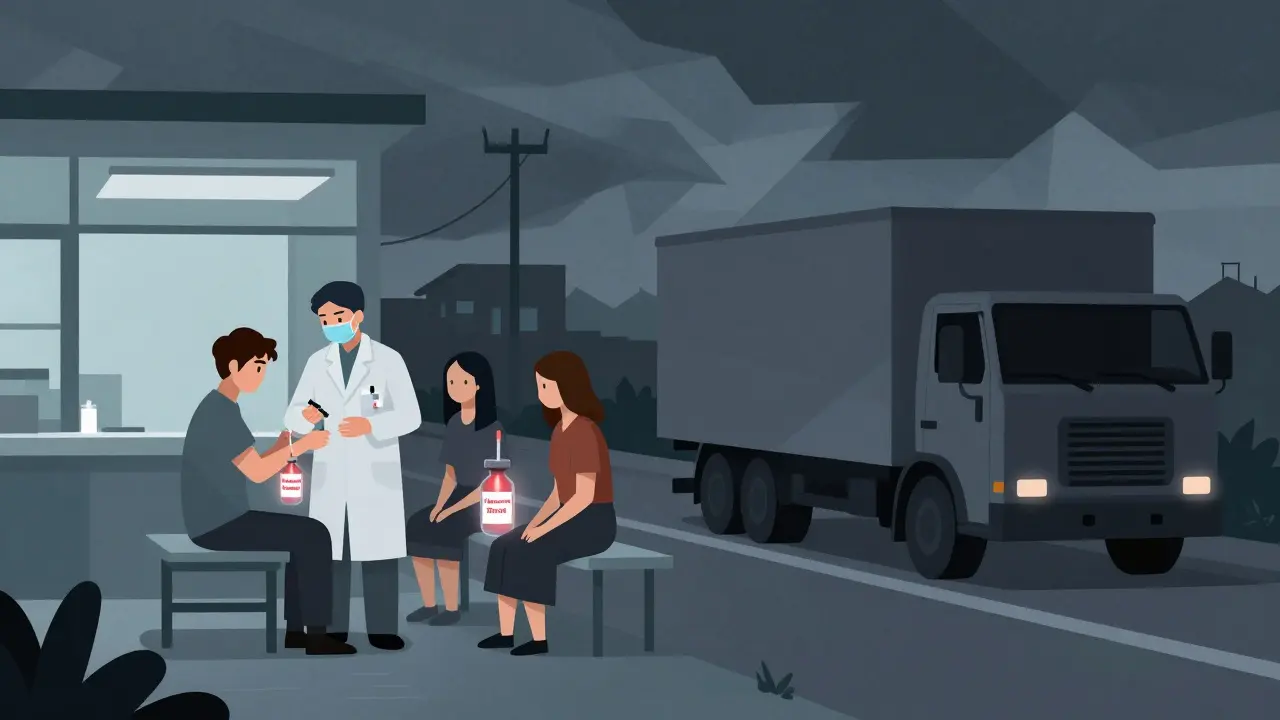
Take epinephrine. It’s the only thing that can stop a fatal allergic reaction. In 2025, pharmacists on Reddit reported three straight months of shortages. They had to ration it. One nurse described giving half-doses to patients who needed full ones. That’s not a mistake. That’s a systemic failure.
And it’s not just about scarcity. It’s about substitution. In 2024, 68% of U.S. hospitals reported switching medications due to shortages. Of those, 29% saw adverse patient reactions. A patient on a specific anticoagulant might be switched to a generic version. Same name. Different chemistry. Different side effects. Different outcomes.
The Hidden Weakness: Third-Party Vendors
Most people think of pharmacies and manufacturers when they think of drug safety. But the biggest risks come from third-party vendors. Censinet found that 74% of healthcare cybersecurity incidents in 2023 were linked to suppliers-not hospitals themselves.
A logistics company in India handles shipping for a U.S. vaccine. Its IT system is outdated. A hacker gets in. They alter tracking data. A batch of vaccines gets rerouted. No one notices until the doses arrive at a clinic in Ohio with expired labels. The clinic administers them anyway, assuming they’re fine. That’s not negligence. That’s a flaw in the entire chain.
Seventy-six percent of hospitals say integrating old systems with new serialization requirements is their biggest challenge. Legacy software doesn’t talk to blockchain platforms. Warehouse scanners don’t sync with FDA databases. The result? Gaps in visibility. Blind spots in safety.
What’s Being Done-and What’s Missing
Progress is happening. The FDA now requires 100% electronic tracing by November 2025. Sixty-two percent of manufacturers are already there. Blockchain use in supply chains has grown 37% since 2020. AI-driven demand forecasting could cut shortages by 35% by 2027. These are real improvements.
But progress is uneven. McKesson, AmerisourceBergen, and Cardinal Health control 67% of the market. They have the resources to invest in cold chains, blockchain, and cybersecurity. Smaller distributors? Not so much. And while the PharmChain certification program has trained over 8,400 professionals, most hospitals still lack trained staff. The average learning curve for DSCSA compliance? 14 to 18 months. That’s over a year of vulnerability.
The WHO’s 2025 Global Benchmarking Tool is a step forward. It now measures supply chain resilience across 194 countries. But measuring isn’t fixing. Countries with pressure indexes above 5 still lack funding, infrastructure, and trained personnel. The system works well in places with money and technology. It’s a disaster everywhere else.
What Patients and Providers Can Do
As a patient, you can’t control global shipping routes or factory conditions. But you can ask questions:
- Is this medication the same brand I’ve always taken?
- Have there been any recent shortages?
- Can you verify the manufacturer and expiration date?
For providers, the solution isn’t just technology-it’s culture. Hospitals need cross-functional teams: pharmacists who understand regulations, data analysts who can interpret supply chain metrics, and logistics experts who know how to handle cold chain failures. Training isn’t optional. It’s essential.
And we need to stop treating supply chain issues as “back-office problems.” They’re front-line health issues. A delay in a cancer drug isn’t an administrative hiccup. It’s a death sentence for someone who’s already fighting for their life.
The Road Ahead
The global pharmaceutical market is worth $1.5 trillion and growing. Yet, it’s one of the most vulnerable supply chains in the world-third behind semiconductors and aerospace. The good news? We know what works. Real-time tracking. Blockchain. AI forecasting. Cold chain monitoring.
The bad news? We’re not using them everywhere. We’re not funding them equally. We’re not training enough people. And until we treat supply chain integrity with the same urgency as drug approval, patients will keep paying the price.
Medicine is only as safe as the system that delivers it. And right now, that system is cracked.



Paul Cuccurullo
The pharmaceutical supply chain isn't just broken-it's a ticking time bomb, and we're all sitting on the fuse. I've worked in hospital logistics for over two decades, and I've seen firsthand how one failed refrigerated shipment can ripple into years of patient harm. We talk about drug efficacy, but we ignore the infrastructure that gets it to the bedside. It's like having a Ferrari with a bicycle tire-no matter how advanced the engine, it won't get you far. We need systemic investment, not piecemeal fixes. This isn't about cost-it's about moral responsibility.
Every time a patient misses a dose because of a supply delay, we're not just failing them administratively-we're failing them ethically. The FDA's new tracing requirements are a start, but they're like putting a Band-Aid on a severed artery. We need real-time, end-to-end visibility. And yes, that means funding. It means training. It means treating supply chain integrity with the same urgency as clinical trials.
I've watched nurses ration epinephrine. I've seen diabetics switch insulins and spiral out of control. These aren't statistics. These are people. And if we don't act now, the next headline won't be about a shortage-it'll be about a mass casualty event caused by a forgotten warehouse in Ohio.
We can fix this. But we have to stop pretending it's someone else's problem.