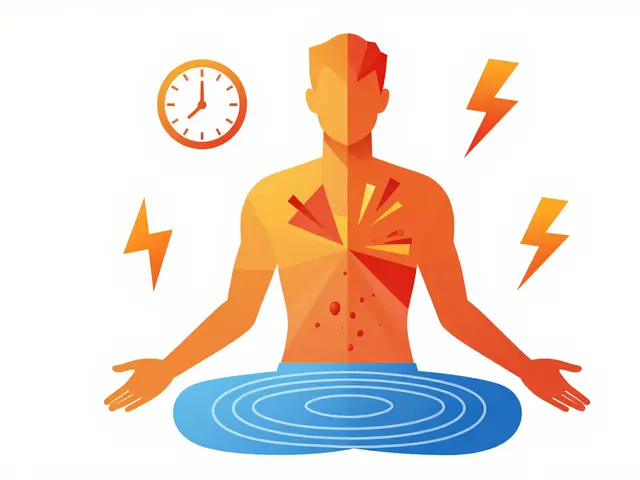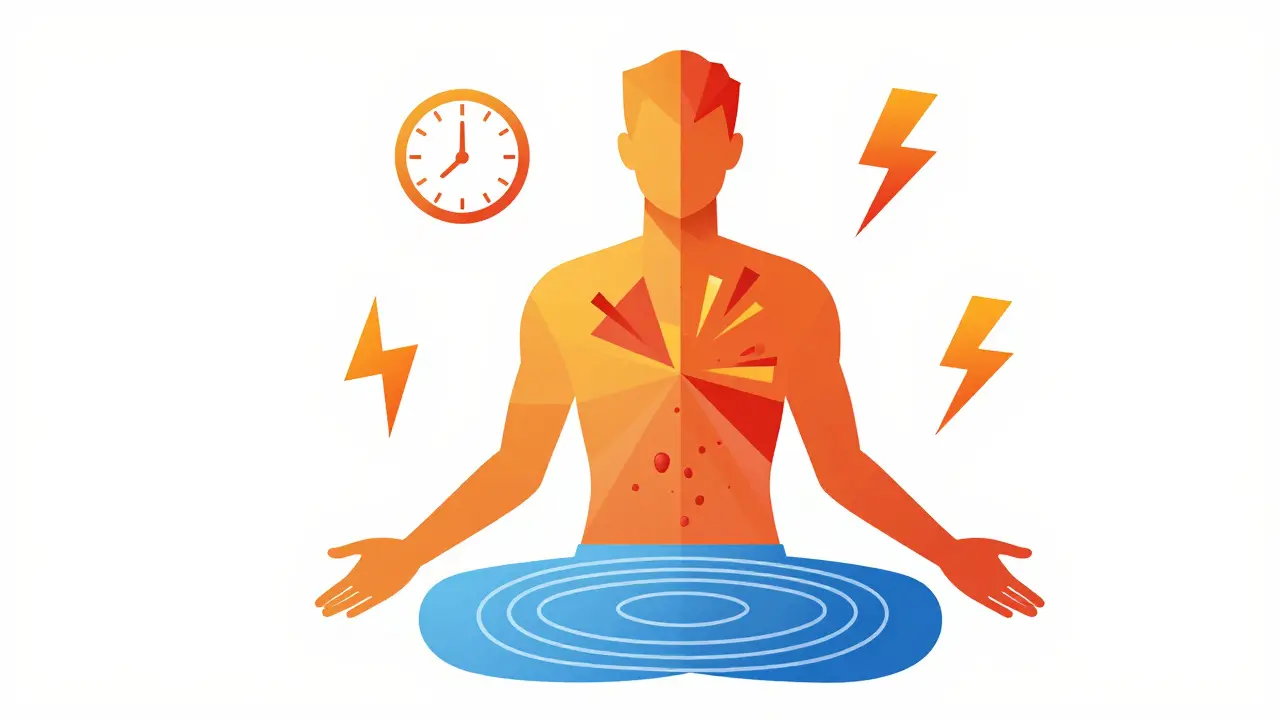
Living with psoriasis often feels like playing a game where the rules keep changing. One day your skin is clear, and the next, a sudden flare-up leaves you dealing with thick, inflamed patches. While the root cause is an autoimmune disorder and an abnormal immune response that accelerates skin cell production, the real challenge lies in the triggers. Why does a stressful week at work or a simple sore throat suddenly ignite your skin? Understanding these catalysts isn't just about medical theory; it's about regaining control over your daily life.
Quick Summary: Managing Your Flares
- Stress: Triggers cortisol and inflammatory cytokines, creating a vicious cycle of anxiety and skin inflammation.
- Infections: Streptococcal infections often lead to guttate psoriasis; viral infections can trigger flares via the RIG-I pathway.
- Skin Barrier: Damage from dryness, harsh soaps, or injury (Koebner phenomenon) allows bacteria to enter, worsening lesions.
- Prevention: Focus on ceramide-rich moisturizers, mindfulness, and prompt infection treatment.
The Stress Connection: More Than Just "In Your Head"
It's a common frustration: a doctor tells you to "just relax," as if the stress isn't the very thing making your skin itch. In reality, Stress is a biological trigger. When you're overwhelmed, your body releases cortisol, a hormone that activates the flight-or-fight response. This doesn't just affect your mood; it triggers the release of inflammatory cytokines that tell your immune system to attack your skin.
The relationship is bidirectional. A significant life event-like losing a loved one or starting a high-pressure job-can trigger the first appearance of psoriasis in genetically susceptible people. Once the patches appear, the stress of dealing with a visible skin condition creates a secondary wave of anxiety, which in turn fuels more inflammation. This cycle can turn a mild case into a severe flare that covers large portions of the body in a matter of weeks.
To break this loop, you need more than a bubble bath. Clinical data shows that just 20 minutes of daily mindfulness meditation can drop cortisol levels by 25% over two months. Integrating physical activity or professional therapy isn't just about mental health; it's a direct intervention for your skin.
When Infections Spark a Flare
Not all triggers are psychological. Infections act as a catalyst for the immune system, which then "misfires" and targets the skin. This is most evident in Guttate Psoriasis, a form of the condition characterized by small, drop-like lesions. This specific type is frequently triggered by streptococcal infections in the upper respiratory tract, such as strep throat or tonsillitis, particularly in teenagers and young adults.
Viral infections also play a role through a process involving RIG-I, a protein that acts as a sensor for viruses. When RIG-I is activated, it can trigger the expression of IL-23, a cytokine that drives the inflammatory response in predisposed individuals. This means a simple common cold, the flu, or even COVID-19 can be the spark that starts a prolonged flare-up.
Preventing these flares starts with basic hygiene and proactive health care. Regular handwashing and staying current with vaccinations-like the seasonal flu shot-can reduce infection-triggered flares by as much as 35%.
Protecting Your Skin Barrier
Think of your Skin Barrier as a security fence. When this fence is intact, it keeps moisture in and irritants out. When it's damaged, you enter a dangerous cycle: barrier destruction leads to microbiota disturbance, which then aggravates the lesions. This is why dry, cold winter air is a nightmare for nearly 68% of patients.
There is also a phenomenon known as the Koebner Phenomenon. This is when psoriasis develops exactly where the skin has been traumatized. It doesn't have to be a major injury; a simple bug bite, a scratch from a pet, or a sunburn can be enough to trigger a new plaque. In some cases, nearly half of new plaque formations occur at sites of minor, unnoticed abrasions.
| Trigger Category | Common Examples | Primary Mechanism | Prevention Strategy |
|---|---|---|---|
| Psychological | Work stress, grief, anxiety | Cortisol & Cytokine release | Mindfulness, exercise, therapy |
| Biological | Strep throat, Flu, COVID-19 | Immune dysregulation (RIG-I) | Vaccinations, hand hygiene |
| Physical/Environmental | Dry air, bug bites, harsh soaps | Barrier breach & Koebner effect | Ceramides, humidifiers, pH-balanced soap |
Practical Steps for Daily Barrier Care
If you want to stop a flare before it starts, your skincare routine needs to be about protection, not just cleaning. Many people make the mistake of using harsh antibacterial soaps that strip the skin of its natural lipids. Instead, look for soaps with a pH level below 5.5 to avoid disrupting the acid mantle.
The gold standard for barrier repair involves Ceramides. These are fatty acids that help "glue" your skin cells together. Applying a fragrance-free moisturizer containing ceramides at least twice a day-especially immediately after bathing-locks in moisture and reinforces the barrier. If you live in a dry climate, keeping your indoor humidity between 40% and 60% can prevent the skin from cracking and becoming susceptible to the Koebner effect.
Diet, Lifestyle, and Emerging Research
While stress and infection are the "big three," lifestyle factors often act as background noise that lowers your threshold for a flare. Some patients report that dairy, gluten, and nightshades trigger their symptoms, though these vary wildly from person to person. There is also growing evidence regarding the "gut-skin axis," suggesting that probiotic supplements may reduce flare frequency by around 22% for those with an imbalance in gut bacteria.
The future of management is moving toward personalization. We are seeing the rise of AI-powered tracking apps and wearable stress monitors that can alert a patient when their physiological stress levels are peaking, allowing them to intervene with relaxation techniques before the skin reacts. Furthermore, new biologic medications targeting the IL-23 pathway are showing massive success, with some patients seeing 90% improvement in their severity index after just 16 weeks of treatment.
Can positive stress also trigger a psoriasis flare?
Yes. Any significant change in your emotional state that triggers a physiological stress response can be a catalyst. This includes "good" stress, such as moving to a new city, getting married, or starting a dream job. The body reacts to the excitement and pressure by releasing the same inflammatory chemicals that trigger a flare.
What is the Koebner phenomenon?
The Koebner phenomenon occurs when a new psoriatic lesion forms at the site of a skin injury. This could be anything from a deep cut to a minor insect bite or a scrape. It happens because the trauma triggers a localized inflammatory response in skin that is already predisposed to psoriasis.
Which infections are most likely to cause guttate psoriasis?
Streptococcal infections are the most common culprits, especially those affecting the upper respiratory tract. This includes strep throat, tonsillitis, and sinusitis. These infections are particularly common triggers for children and young adults.
Do all psoriasis patients react the same to sunlight?
No. While about 72% of patients find that hot, sunny weather actually improves their symptoms, about 8% have photosensitive psoriasis. For these individuals, UV exposure can actually trigger or worsen a flare-up, making sun protection critical.
How do I know if my soap is too harsh for my skin barrier?
If your skin feels "tight," itchy, or looks red immediately after washing, your soap is likely too alkaline. Look for products labeled "pH balanced" or specifically those with a pH below 5.5. Avoid soaps with heavy fragrances or strong sulfates (like SLS), which can strip the protective lipid layer from your skin.
Next Steps for Management
If you are currently in the middle of a flare, start by simplifying. Switch to a fragrance-free, ceramide-based moisturizer and avoid scrubbing your skin. If you've recently had a cold or a sore throat, consult your doctor about whether an infection might be driving the inflammation.
For long-term stability, start a trigger diary. Note when your flares happen and what happened in the two weeks prior. Did you have a deadline at work? Did you catch a cold? Did you use a new laundry detergent? Tracking these patterns allows you to move from reacting to flares to predicting and preventing them.