
Returning to work with chronic pain isn’t about pushing through discomfort-it’s about building a sustainable plan that lets you stay employed without making your pain worse. If you’ve been on leave because of ongoing pain from conditions like arthritis, fibromyalgia, back injuries, or long COVID, you’re not alone. More than 50 million adults in the U.S. live with chronic pain, and many of them want-or need-to keep working. The good news? The law supports you. Under the ADA (Americans with Disabilities Act), chronic pain that limits major life activities is a protected disability. That means your employer must make reasonable changes to help you do your job, as long as it doesn’t cause them serious hardship.
What Counts as a Reasonable Accommodation?
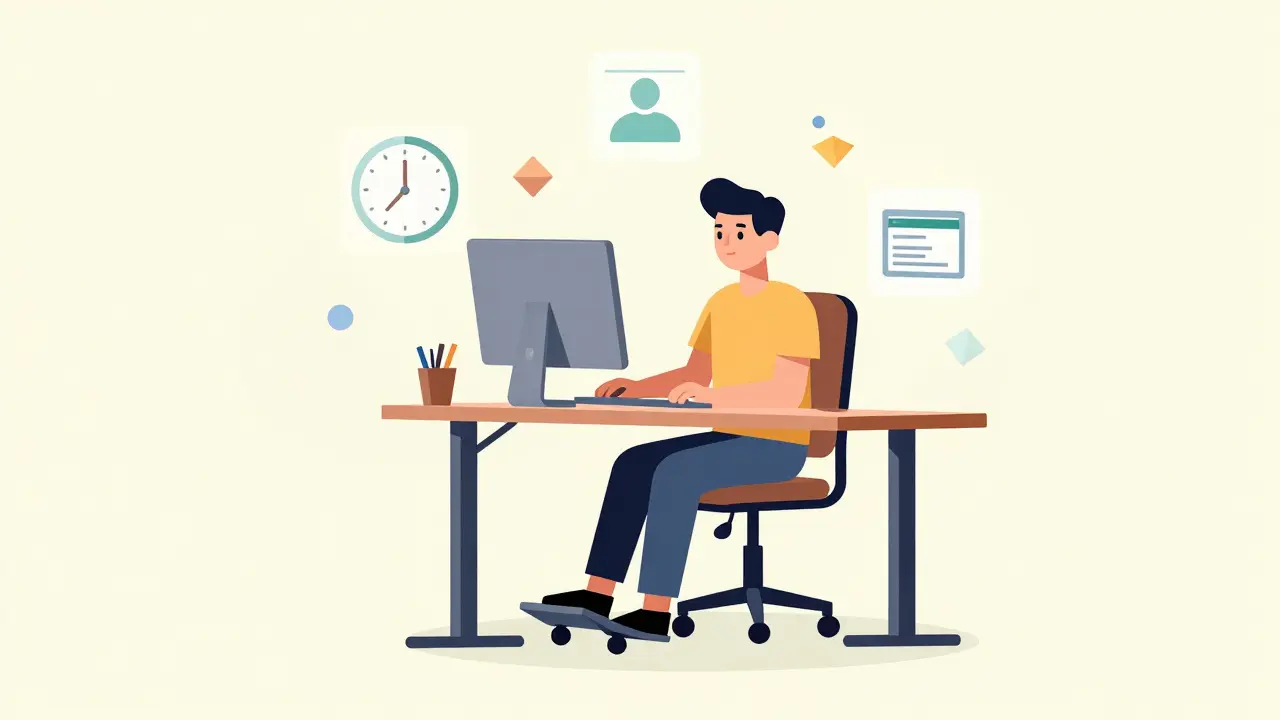
Accommodations aren’t one-size-fits-all. They’re tailored to your pain, your job, and your body. Some of the most common and effective changes include:- Ergonomic workstations: Adjustable standing desks ($300-$1,200), ergonomic chairs ($200-$1,000), and specialized keyboards or mice can reduce strain on your back, neck, and wrists. Even simple things like a footrest ($25-$150) or a cushioned seat ($50-$200) can make a big difference.
- Flexible scheduling: Starting work later to avoid morning stiffness, ending early for medical appointments, or taking 5-15 minute breaks every 1-2 hours to stretch or rest can prevent flare-ups. Many people find that working 4 days a week instead of 5, or shifting to a 6-hour day, helps them stay productive without burning out.
- Remote or hybrid work: If commuting or being in a noisy office makes your pain worse, working from home-even part-time-can be a game-changer. You don’t need to be in the office 40 hours a week to be valuable.
- Environmental adjustments: Temperature control matters. If cold or heat triggers your pain (common with MS or lupus), a personal heater, fan, or relocating your desk away from drafty windows can help. Moving your workstation closer to the bathroom or elevator reduces walking distance, which is critical if fatigue sets in after 100-200 feet.
- Assistive tech: Voice-to-text software ($100-$300) can replace typing if hand pain is an issue. Screen readers, trackball mice, or foot pedals for mouse control are also low-cost, high-impact tools.
- Duty modifications: If your job includes tasks that worsen your pain-like lifting heavy boxes or standing for hours-you can ask to swap those duties with someone else. The law doesn’t require you to do tasks that aren’t essential to your role.
Here’s the kicker: 56% of accommodations cost employers nothing. A flexible schedule? Free. A reminder to take breaks? Free. Moving your desk a few feet? Free. The rest have a median one-time cost of just $300. Most employers don’t realize how affordable this can be.
How to Ask for Accommodations Without Getting Pushback
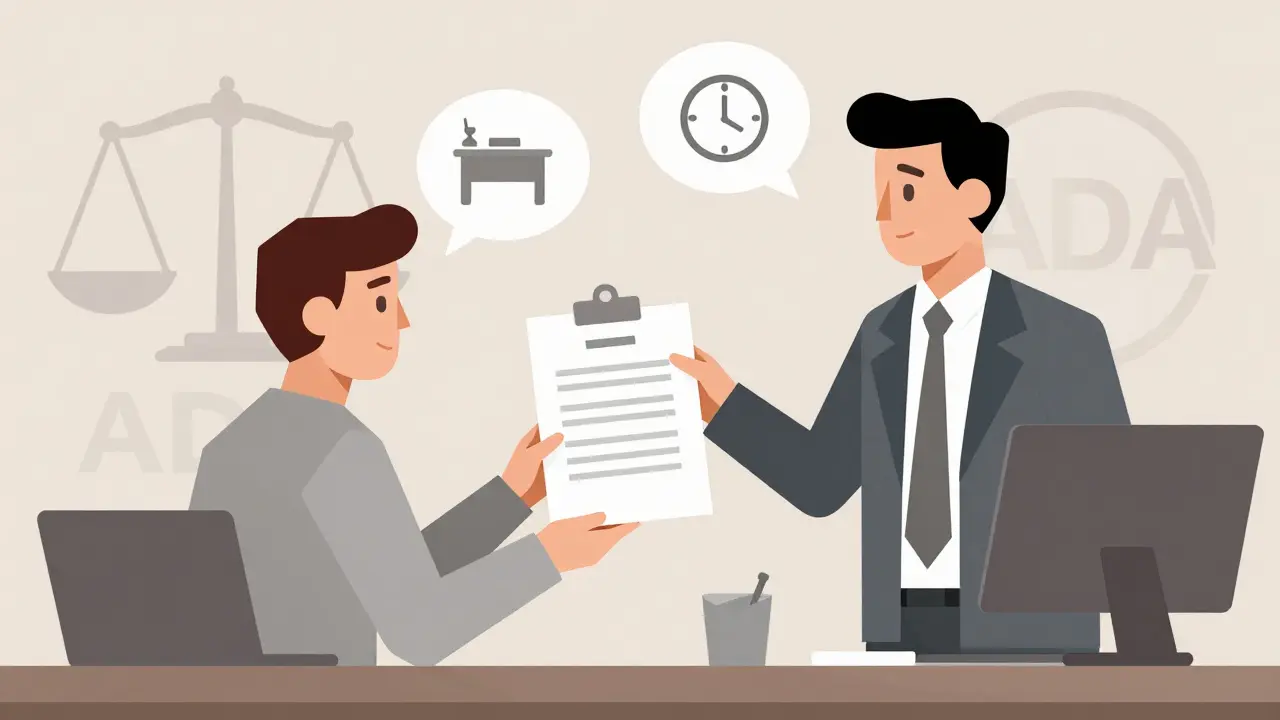
Asking for help is hard, especially when your pain isn’t visible. You might fear being seen as weak, lazy, or less committed. But here’s what works: be specific, be documented, and be calm.Start by talking to your manager or HR-but don’t just say, “I’m in pain.” Say: “I have chronic lower back pain from a herniated disc. I need a sit-stand desk and a 10-minute break every 90 minutes to stand and stretch. My doctor has attached a note confirming this.” Write it down. Email it. Keep a copy. According to research, requests that include medical documentation and clear, concrete requests have an 89% approval rate. Vague requests? Only 45% get approved.
Include your healthcare provider’s note. It doesn’t need to be a novel. Just state:
- Your diagnosis
- How your pain affects your ability to sit, stand, lift, type, or focus
- What accommodations would help
And if your employer says no? You’re not out of options. The Job Accommodation Network (JAN) offers free, confidential advice to both employees and employers. They’ve helped resolve 82% of accommodation issues without lawsuits. Call them. Email them. Use their online tools. They know the law better than most HR departments.
Know Your Legal Rights
The ADA applies to employers with 15 or more employees. But some states go further. In California, for example, even companies with just 5 employees must provide accommodations. If you’re in a federal job, the Rehabilitation Act gives you even stronger protections-and federal agencies approved 87% of chronic pain accommodation requests in 2022.Don’t confuse leave with accommodation. FMLA gives you up to 12 weeks of unpaid, job-protected leave. But once that’s over, you still have rights under the ADA. You can return to work with reduced hours, modified duties, or flexible scheduling-even if you’re still in treatment.
Employers can refuse an accommodation only if it causes “undue hardship.” That means it’s too expensive or disruptive for their size. A small business with 10 employees might not have to install a $2,000 ergonomic system. But they still have to try-like offering a cheaper alternative, letting you work remotely, or adjusting your schedule. The key is the interactive process: you and your employer have to talk, explore options, and find a solution. They can’t just say no and walk away.
Why Some People Don’t Ask-And What Happens When They Don’t
Sixty-two percent of people with chronic pain delay asking for accommodations. Why? Fear. Fear of being judged. Fear of losing their job. Fear of being labeled “difficult.”And the cost? High. One in three people with chronic pain leave their jobs because they didn’t feel supported. That’s not just a personal loss-it’s a societal one. Chronic pain affects productivity, mental health, and financial stability. The CDC says 20.9% of U.S. adults have chronic pain. That’s millions of workers who could stay employed if they had the right support.
But here’s what’s surprising: people with strong relationships at work are 2.3 times more likely to get accommodations approved. Coworkers who check in. Managers who say, “How can I help?” These things matter more than you think. Culture beats policy every time.
Gradual Return: The Secret to Long-Term Success
Going back full-time right after a flare-up? That’s a recipe for burnout. The most successful return-to-work plans are gradual. Start at 20-50% of your normal hours. Work from home two days a week. Take extra breaks. Slowly increase your time as your body adjusts.Research shows this approach leads to 63% higher long-term retention than jumping back into a full 40-hour week. Your body doesn’t recover overnight. Your job doesn’t need you to be 100% right away. You just need to be consistent.
Many employers don’t realize this. They think accommodations are permanent fixes. But for chronic pain, they’re often temporary adjustments during flare-ups. A heated cushion for a few weeks. A reduced schedule during chemotherapy. That’s still a valid accommodation. The EEOC says 41% of denials happen because employers think “if it’s temporary, it doesn’t count.” That’s wrong. Temporary is still protected.

What to Do If Your Request Is Denied
If your employer refuses without trying to find a solution:- Ask for a written explanation. They’re legally required to provide one.
- File a complaint with the EEOC. You have 180 days from the denial to do so.
- Contact JAN. They’ll walk you through your rights and help draft a response.
- Consider an occupational therapist. They can assess your workspace, identify specific barriers, and provide a professional recommendation that carries weight.
Don’t wait until you’re at breaking point. Start the conversation early. Document everything. Use the tools available. You’re not asking for special treatment. You’re asking for the same chance to work that anyone else has.
What’s Changing in 2026
New tools are emerging. Wearable sensors that track movement, heart rate variability, and activity levels are starting to be used in 7% of accommodation cases. These devices don’t replace doctor’s notes-they supplement them. If you can show your pain limits your ability to sit for more than 45 minutes, that’s harder to ignore than a vague description.Legislation is also shifting. There are now proposals to expand FMLA to cover smaller employers and to require employers to have a formal RTW policy for chronic pain. Some states are already piloting “pain-friendly workplace” certification programs. These won’t fix everything-but they’re a step toward normalizing accommodation as part of good business.
And let’s not forget long COVID. Since 2021, the EEOC has confirmed that persistent pain from long COVID qualifies as a disability. That’s opened the door for thousands of people who thought they were just “tired” to now claim legal protections.
Can my employer fire me for having chronic pain?
No. Under the ADA, chronic pain that limits major life activities is a protected disability. Employers cannot fire you just because you have chronic pain. They must provide reasonable accommodations unless doing so would cause undue hardship. If you’re terminated after requesting accommodations, you may have grounds for a discrimination claim with the EEOC.
Do I need a doctor’s note to get accommodations?
Yes. While you don’t need to share your full medical history, you do need documentation from a healthcare provider that confirms your diagnosis, how your pain affects your work, and what accommodations would help. A simple note stating your functional limitations is enough. Vague requests without medical support are far more likely to be denied.
What if my job doesn’t have 15 employees?
The ADA only applies to employers with 15 or more workers. But many states have their own laws with lower thresholds. For example, California protects employees at companies with 5+ workers. Check your state’s civil rights or labor department website. Even if you’re not legally protected, you can still ask for accommodations-many employers will agree out of goodwill or to retain skilled staff.
Can I ask for accommodations even if I’m still on medical leave?
Yes. You can start the conversation before returning to work. In fact, it’s better to plan ahead. You can discuss what accommodations you’ll need once you’re back-whether it’s a modified schedule, remote work, or ergonomic changes. This helps ensure a smoother transition and reduces the chance of setbacks.
Are accommodations only for physical pain?
No. Chronic pain often comes with fatigue, brain fog, anxiety, or difficulty concentrating. Accommodations can include reduced hours, quiet workspaces, flexible deadlines, or access to a private space for rest. Mental and physical pain are equally valid under the law. If your symptoms affect your ability to perform essential job functions, you’re eligible.
How long does it take to get an accommodation approved?
Federal agencies typically respond within 10 business days. Private employers don’t have a set timeline, but the ADA requires them to respond promptly. If you haven’t heard back in two weeks, follow up in writing. Deliberate delays can be considered a failure to engage in the interactive process-which is a violation of the law.
If you’re returning to work with chronic pain, remember: you’re not asking for a favor. You’re exercising a legal right. And you’re not alone. Thousands of people are doing the same thing-adjusting, adapting, and staying employed. You just need the right plan, the right words, and the right support. Start today. Your job-and your health-depend on it.



Tim Hnatko
Just wanted to say this post saved my job. I’ve had fibromyalgia for 8 years and was about to quit until I found JAN. The $300 standing desk they helped me get? Game changer. I didn’t even know I could ask for that. Now I work 30 hours a week, no flare-ups, and my boss says I’m more productive than before. You’re not broken-you’re just working with a different system. Keep going.