
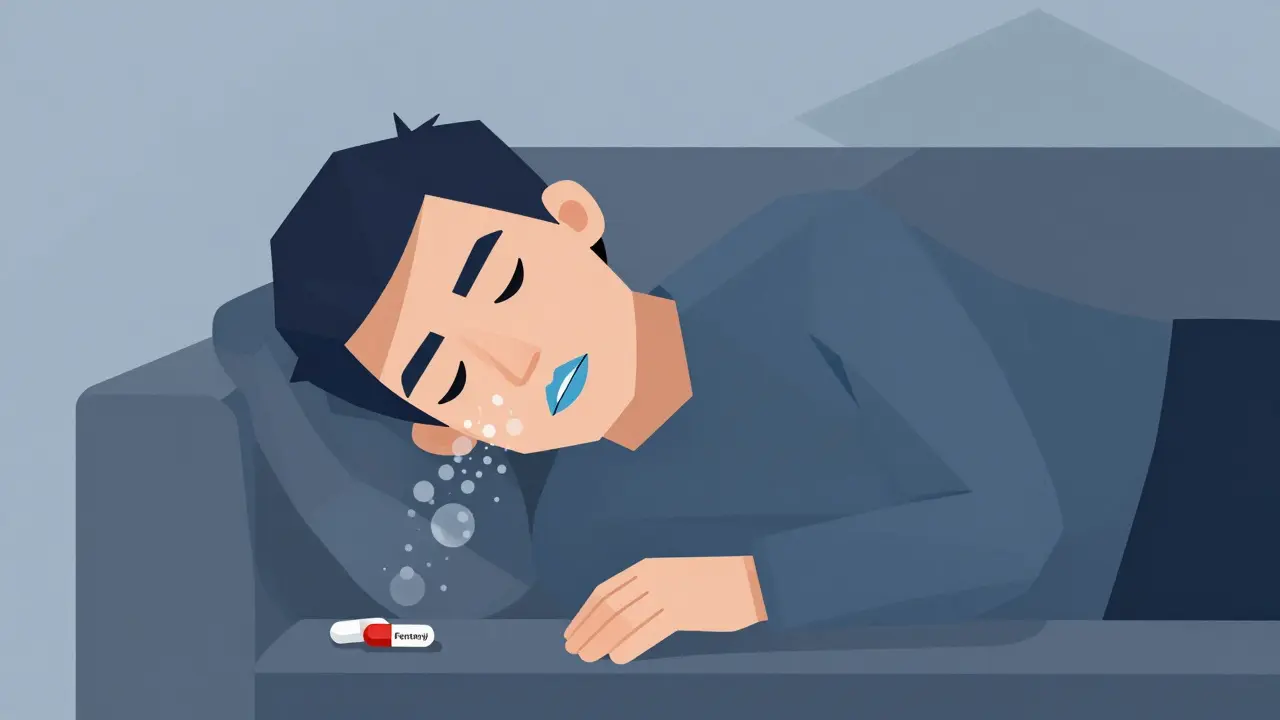
When someone overdoses on medication, time isn’t just a factor-it’s the difference between life and death. You might think overdoses only happen to people with addiction, but that’s not true. Many overdoses are accidental. Someone takes an extra pill because they’re in pain. Someone mixes alcohol with their anxiety medication. Someone buys a pill online thinking it’s oxycodone, but it’s fentanyl. And suddenly, their body can’t handle it. Recognizing the signs early can save a life. Here’s what to look for, what to do, and why waiting could be fatal.
General Signs of a Medication Overdose
No matter the drug, there are common warning signs that something is seriously wrong. If you see even one of these, don’t wait. Call 911 right away.- Nausea and vomiting - This happens in nearly 8 out of 10 non-fatal overdoses. But if the person is unconscious and vomiting, that’s dangerous. They could choke.
- Confusion, agitation, or extreme drowsiness - Someone who can’t answer simple questions, stares blankly, or can’t stay awake may be slipping into unconsciousness.
- Slow, shallow, or stopped breathing - This is the biggest red flag. If there are more than 10 seconds between breaths, or if breathing sounds like gurgling or snoring, it’s an emergency.
- Blue lips or fingernails - This means their blood isn’t getting enough oxygen. Cyanosis is a late sign, but it’s unmistakable.
- Pale, cold, clammy skin - Their body is shutting down. This often goes with low blood pressure and a weak pulse.
- Seizures - Especially with stimulants like cocaine or meth, but can happen with almost any overdose.
These signs don’t always show up together. One person might only have trouble breathing. Another might be shaking and sweating. Don’t wait for all the symptoms. If something feels off, act.
Signs by Drug Type
Different drugs affect the body in different ways. Knowing the type of drug involved helps you recognize what’s happening.Opioid Overdose (Fentanyl, Heroin, Oxycodone, Hydrocodone)
Opioids slow down breathing. That’s why they’re so deadly. The classic trio is called the Opioid Triad:- Pinpoint pupils - Pupils shrink to 1-2 millimeters, like tiny dots. This happens even in bright light.
- Unresponsiveness - They won’t wake up, even if you shake them or shout their name.
- Slow or stopped breathing - Less than 12 breaths per minute. Some people stop breathing entirely.
Other signs include snoring or gurgling sounds, limp arms and legs, and a slow heartbeat. Fentanyl is especially dangerous because it’s 50 to 100 times stronger than morphine. A pill that looks like a regular painkiller can kill in minutes.
Stimulant Overdose (Cocaine, Methamphetamine, Adderall)
Stimulants do the opposite-they overwork the body.- Extreme agitation or paranoia - They might panic, scream, or act violently.
- Very high body temperature - Over 104°F (40°C). Skin may be hot and dry.
- Fast, irregular heartbeat - Pulse over 120 beats per minute. Could lead to heart attack.
- High blood pressure - Systolic pressure over 180 mmHg.
- Seizures - Happen in about 1 in 3 cocaine overdoses.
People often think stimulants are “safer” because they don’t cause breathing to stop. But they can cause heart failure or stroke just as fast.
Depressant Overdose (Alcohol, Benzodiazepines, Barbiturates)
These drugs calm the brain. Too much, and they shut it down.- Slurred speech - Like someone is drunk, but worse.
- Lack of coordination - Can’t walk in a straight line, falls over.
- Unconsciousness - Especially dangerous if they vomit while passed out.
- Slow breathing - Even slower than with opioids in some cases.
Alcohol poisoning is one of the most common depressant overdoses. If someone is passed out, vomiting, and cold to the touch, they need help now. About 6 out of 10 fatal alcohol overdoses happen because the person choked on their own vomit.
Polysubstance Overdose
More than half of all overdose deaths in 2022 involved multiple drugs. Mixing opioids with alcohol or benzodiazepines is especially deadly. Someone might take Xanax to calm down after using heroin. The result? Double the risk of stopped breathing. These cases are harder to recognize because symptoms overlap. A person might look like they’re having an opioid overdose-but also have tremors or seizures from stimulants. When in doubt, assume the worst.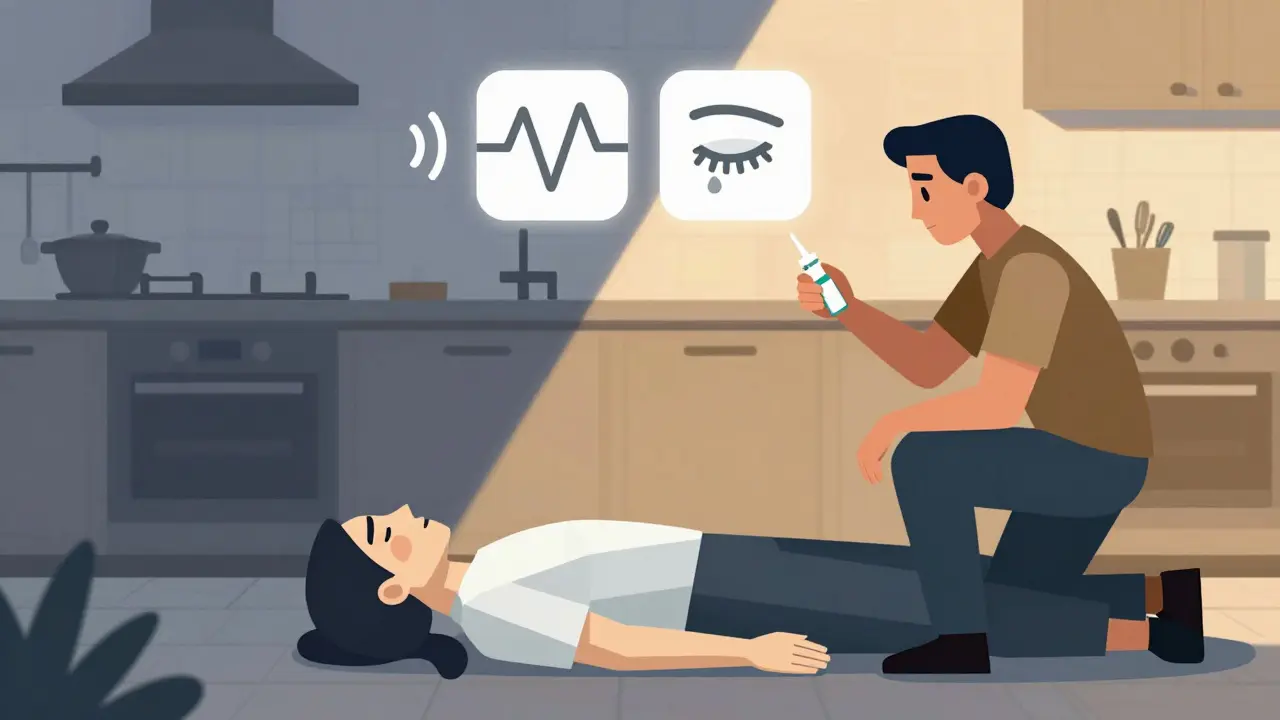
What to Do If You Suspect an Overdose
You can’t wait for an ambulance to arrive. Every minute counts.- Call 911 immediately - Don’t text. Don’t wait to see if they wake up. Say “I think someone is overdosing.” The dispatcher will guide you.
- Give naloxone if you have it - Naloxone (Narcan) reverses opioid overdoses. It’s safe. Even if you’re not sure it’s an opioid, give it. It won’t hurt someone who didn’t take opioids. Use the nasal spray: one spray in each nostril. Wait 2-3 minutes. If they don’t wake up, give another dose.
- Keep them breathing - If they’re not breathing, start CPR. Push hard and fast on the center of the chest. Don’t stop until help arrives.
- Keep them on their side - This prevents choking if they vomit. The recovery position saves lives.
- Stay with them - Even if they wake up, they can crash again. Naloxone wears off in 30-90 minutes. Opioids last longer. They need medical care.
Don’t do these things:
- Don’t let them “sleep it off.” - 29% of fatal overdoses happened because someone waited.
- Don’t put them in a cold shower. - This can cause shock or lower their body temperature dangerously.
- Don’t give them coffee, food, or home remedies. - Nothing works except medical help.
Why Quick Action Matters
The brain starts dying after just 3-5 minutes without oxygen. If breathing stops for more than 10 minutes, permanent brain damage is likely. Naloxone can reverse an overdose in 85% of cases-if it’s given within 2-3 minutes. But in real life, people wait. They’re scared. They don’t know what to do. They think the person will be fine. They’re wrong.States with “Good Samaritan” laws (like Minnesota’s Steve’s Law) have seen a 27% increase in 911 calls for overdoses. These laws protect people who call for help. No one gets arrested for drug possession if they’re trying to save a life. If you’re worried about legal trouble, remember: the person will die if you don’t act.

How to Prevent Overdoses
Prevention isn’t just about avoiding drugs. It’s about reducing risk.- Use fentanyl test strips - These cost less than $2 each. Dip a small piece of the drug in water, then test it. If fentanyl shows up, don’t use it. In 2022, 67% of counterfeit pills tested positive for fentanyl.
- Don’t use alone - If you use drugs, always have someone with you. If they overdose, they can get help.
- Know your tolerance - If you haven’t used in a week or more, your body is less tolerant. One pill that used to be safe can kill you now.
- Keep naloxone on hand - Naloxone is now available over-the-counter at pharmacies without a prescription. It costs $40-$50 for a two-dose kit. If you or someone you know uses opioids, keep it in your wallet, car, or first aid kit.
There are apps like “Naloxone Saves” that show you where to get free naloxone nearby. Community centers, clinics, and even some libraries hand it out for free.
What’s Changing in 2026
New threats are emerging. One of the biggest is xylazine (also called “tranq”). It’s not an opioid, but it’s showing up in 67% of fentanyl samples in cities like Philadelphia. It doesn’t respond to naloxone. People who use it get severe skin wounds, slow breathing, and coma. Emergency rooms are seeing more cases.Researchers are testing new drugs that could reverse overdoses for up to 24 hours-far longer than naloxone. But those aren’t available yet. Right now, naloxone is still your best tool.
By 2025, overdose deaths could hit 120,000 per year in the U.S. if nothing changes. But they don’t have to. You can be part of the solution.
Can you overdose on over-the-counter medications?
Yes. Acetaminophen (Tylenol) is the most common cause of accidental overdose in the U.S. Taking more than 4,000 milligrams in a day can cause liver failure. Cold and flu medicines often contain acetaminophen, so mixing them with other pain relievers is risky. Even aspirin or ibuprofen can cause stomach bleeding or kidney damage in high doses.
Is naloxone safe to use if you’re not sure it’s an opioid overdose?
Yes. Naloxone only works on opioids. If the person didn’t take opioids, it won’t harm them. It won’t wake them up, but it also won’t cause side effects. It’s better to give it and find out it wasn’t needed than to wait and lose someone.
What if I’m afraid to call 911 because of drug laws?
All 50 states and Washington D.C. have some version of a Good Samaritan law. If you call 911 to report an overdose, you and the person overdosing are protected from arrest for simple drug possession. Police won’t show up to arrest you-they come to save a life. The priority is medical help, not punishment.
Can you overdose on prescription medication if you take it as directed?
Yes. Some people develop a tolerance and start taking more. Others mix it with alcohol or other drugs. Some medications, like opioids or benzodiazepines, can be deadly even at prescribed doses if taken with other depressants. Always tell your doctor about everything you’re taking, including supplements and alcohol.
Where can I get free naloxone?
Many pharmacies offer naloxone without a prescription. Community health centers, needle exchange programs, and some city health departments give it out for free. Apps like “Naloxone Saves” show you nearby locations. You can also order it online from trusted organizations like Naloxone4All or the Harm Reduction Coalition.
If you or someone you know is struggling with medication use, call the SAMHSA National Helpline at 1-800-662-4357. It’s free, confidential, and available 24/7. You’re not alone, and help is within reach.



Tim Schulz
Omg this is literally the most important post I’ve seen all year 🥹 I’m sending this to my whole family. My cousin took a ‘Xanax’ off TikTok and it was fentanyl. He’s alive because his roommate knew the triad. Naloxone saved his life. We’re all getting kits now. Thank you for this. 🙏💊