
Nocebo Effect Communication Simulator
The nocebo effect shows how your expectations about medication can create real physical symptoms. This tool simulates how different communication styles affect reported side effects, based on real research.
Simulation Results
Based on the information you selected:
When 5 side effects are listed in Balanced language:
Compared to 15 side effects listed in Alarmist language:
This aligns with research showing that:
- Patients seeing 15 side effects report 1.5x more symptoms than those seeing 5
- Balanced communication can reduce nocebo effects by up to 20%
- Generic drug switches can cause symptom spikes due to expectation changes
What if the side effects you’re blaming on your medication aren’t actually caused by the drug at all? What if they’re being triggered by something you read, heard, or were told - even if the medicine is identical to the one you took before? This isn’t speculation. It’s a real, measurable, and increasingly recognized phenomenon called the nocebo effect.
What Exactly Is the Nocebo Effect?
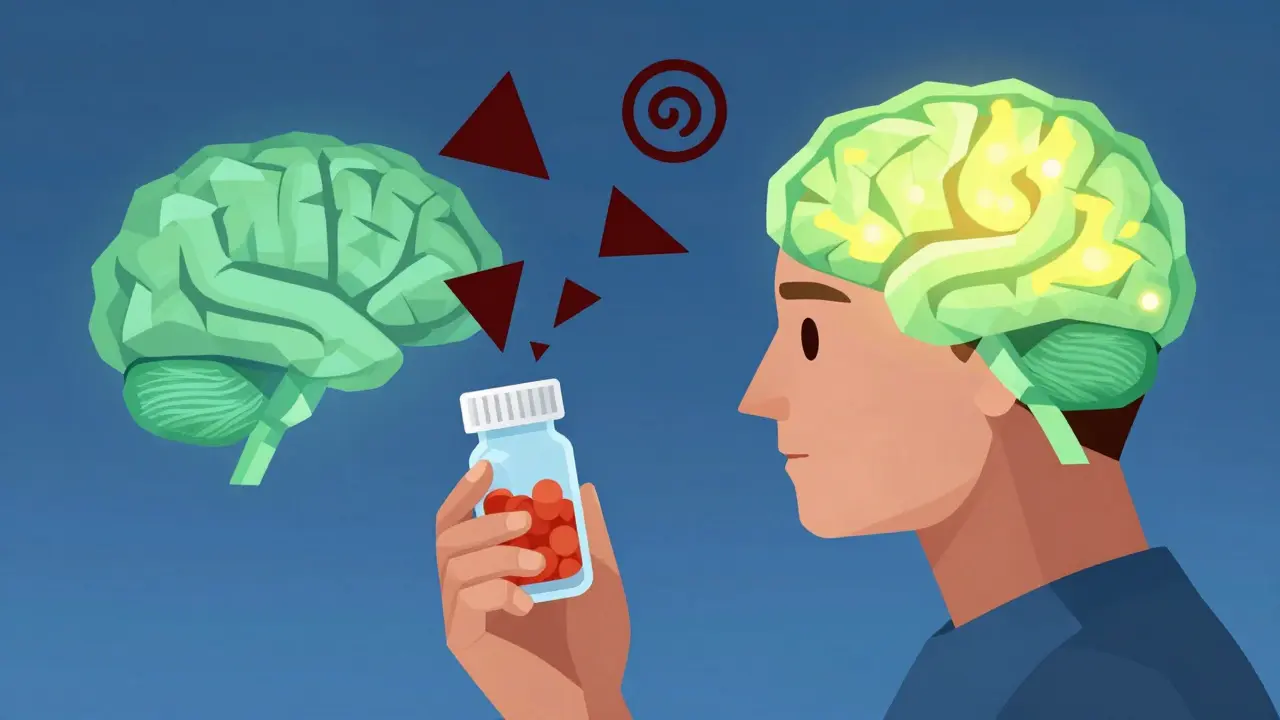
The nocebo effect happens when negative expectations about a treatment cause real, physical symptoms - even when the treatment has no active ingredients. It’s the dark twin of the placebo effect. While placebo makes you feel better because you believe the treatment will help, nocebo makes you feel worse because you believe it might hurt you. It’s not imaginary. Your brain physically reacts. Brain scans show that when someone expects pain or nausea from a pill, areas like the anterior cingulate cortex and insula light up - the same regions that activate during actual physical pain. The body doesn’t care whether the threat is real or just expected. It responds as if it is. In clinical trials, about 20% of people taking a sugar pill report side effects like headaches, dizziness, or fatigue. Nearly 10% quit the trial because they feel unwell - even though they never took the real drug. That’s not coincidence. That’s the nocebo effect in action.How Does It Happen?
There are three main ways the nocebo effect kicks in:- Direct symptom induction: You’re told a medication might cause nausea. Later, you feel a slight stomach flutter - something everyone feels now and then - and suddenly it’s “the pill making me sick.”
- Misattribution: You’re already stressed, tired, or dealing with a minor illness. Then you start a new medication. Your brain links the two, even if the timing is random.
- Amplification: Your condition naturally fluctuates. A bad day becomes “the drug isn’t working” or “it’s making things worse.”
Real-World Examples: When Brand Changes Trigger Real Symptoms
One of the clearest examples happened in New Zealand in 2017. The government switched patients from brand-name venlafaxine to a generic version. The active ingredient was identical. The dosage was the same. The pill looked different - that’s it. Before the switch, adverse event reports to the national monitoring system were stable. After the switch - and after media reports warned about “poor quality generics” - reports jumped sharply. People reported dizziness, anxiety, and nausea. Many stopped taking the drug. Doctors were confused. The medicine hadn’t changed. But the expectation had. Similar stories pop up on Reddit, PatientsLikeMe, and doctor’s offices worldwide. One user wrote: “I switched from brand-name sertraline to generic. I got insomnia and nausea. My pharmacist said it might be psychological. I didn’t believe him - until I went back to the brand and the symptoms vanished.” In this case, the symptoms weren’t caused by chemistry. They were caused by fear.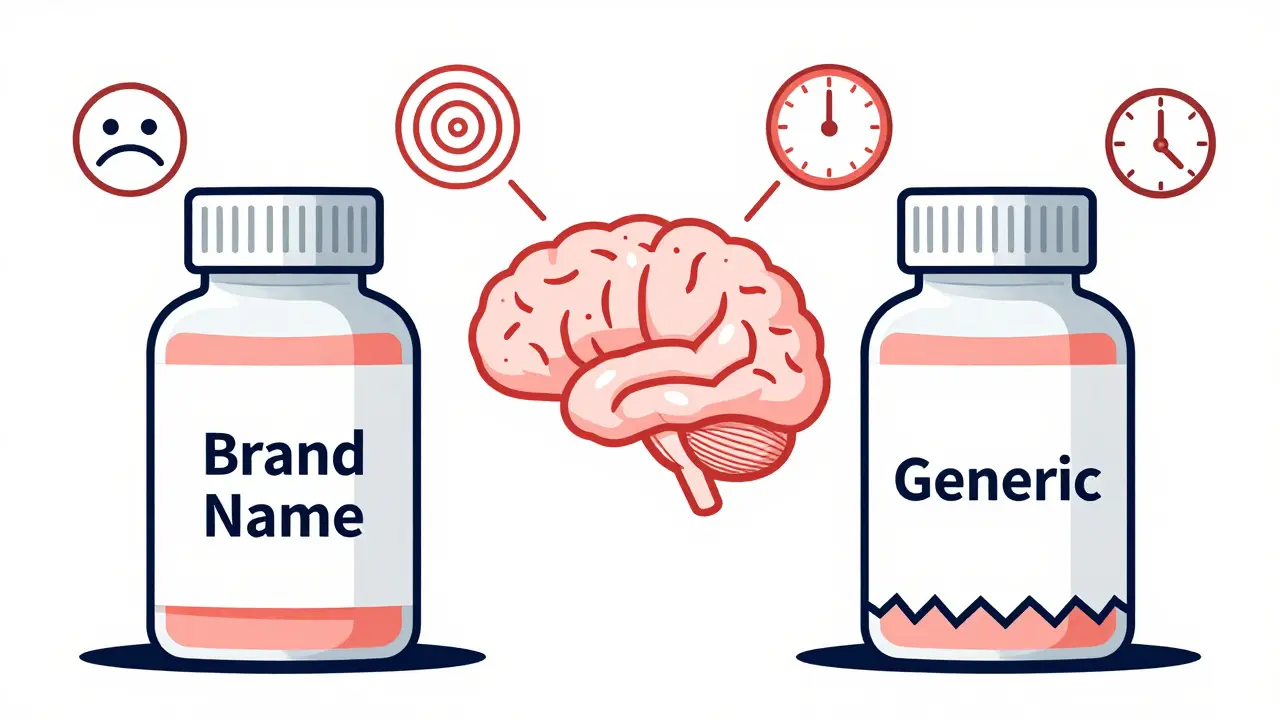
Why Women and People With Anxiety Are More Affected
The nocebo effect doesn’t hit everyone equally. Research shows:- Women report 23% more side effects than men in placebo-controlled trials - even when taking identical pills.
- People with anxiety or depression are 1.7 times more likely to experience nocebo effects.
- Those who are highly observant of their bodies or easily influenced by others are also more vulnerable.
Doctors Are Seeing This Too - But Most Don’t Know What to Do
A 2021 survey of European doctors found that 68% had seen patients develop symptoms after being warned about side effects. Many said they didn’t know how to respond without sounding dismissive. Telling someone “it’s all in your head” doesn’t help. It makes things worse. The solution isn’t to ignore risks - it’s to reframe them. Good communication works. Instead of saying, “Some people get severe nausea with this drug,” try: “Most people feel no difference at all. A small number might feel a bit queasy at first, but it usually fades in a few days.” One study in New Zealand found that training doctors in this kind of communication reduced medication discontinuation by 20%. That’s not just better patient care - it’s better use of healthcare resources.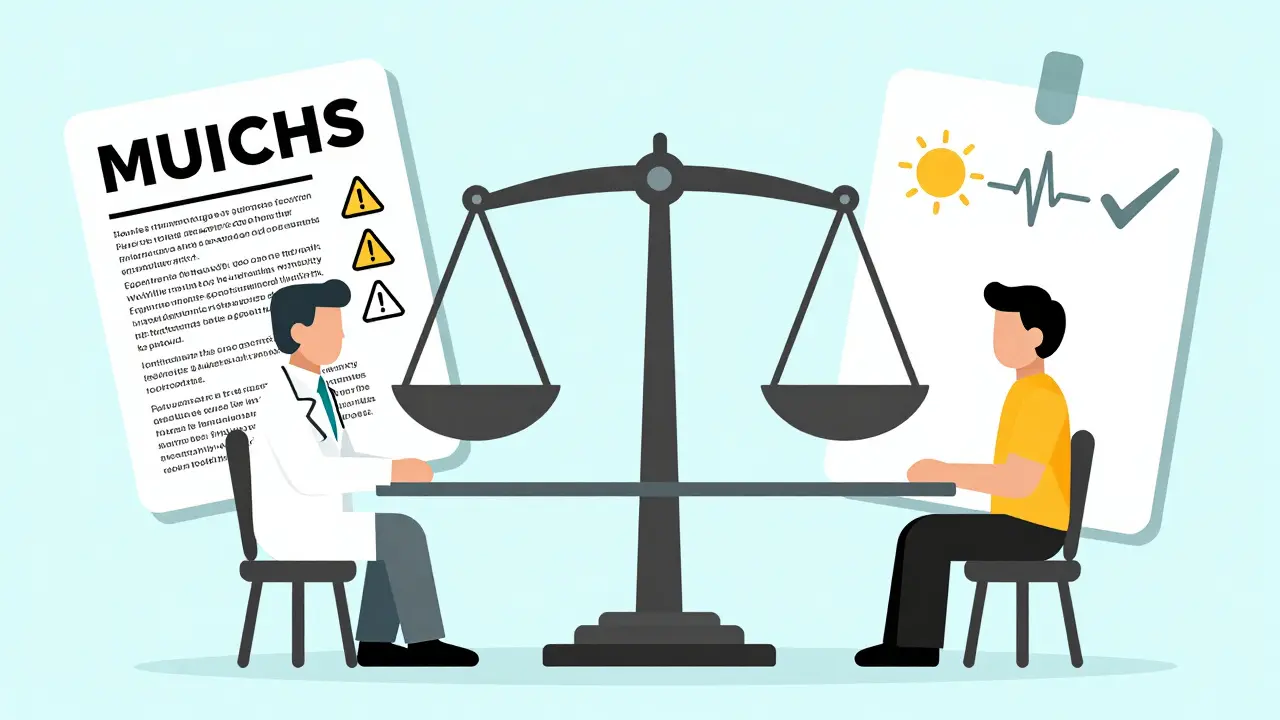
The Economic Cost: Billions Lost to Misunderstood Side Effects
The nocebo effect isn’t just a personal problem. It’s a system-wide issue. About 15-20% of patients stop taking effective medications because they think they’re causing side effects - many of which are nocebo-driven. That leads to:- More doctor visits
- Unnecessary tests
- Switches to more expensive drugs
- Increased hospitalizations
What Can You Do If You Think You’re Experiencing the Nocebo Effect?
If you’ve started a new medication and feel unwell:- Don’t assume it’s the drug. Track your symptoms. Are they new? Or were they already there?
- Check the timing. Did symptoms start before you took the pill? Or only after you read the leaflet?
- Ask your doctor: “Could this be related to my expectations?” Don’t be afraid to say it.
- Compare notes. Did someone else on the same drug have the same issue? Or did they feel fine?
- Try a short break (with medical approval). If symptoms disappear and return when you restart, that’s a clue.
The Future: Can We Train Our Brains to Avoid It?
Researchers are now testing “open-label placebos” - giving patients real sugar pills but telling them: “This pill has no active ingredients, but studies show it can help your body heal itself if you believe in it.” Some patients report real improvement. If we can use belief to heal, maybe we can use it to prevent harm too. Future clinics may screen patients for nocebo risk - especially before prescribing high-impact drugs like antidepressants, painkillers, or blood pressure meds. The World Health Organization now lists “improving medication communication to reduce nocebo effects” as a global priority. By 2030, experts predict most hospitals will have standardized protocols to address it. The message is clear: Your mind doesn’t just react to medicine. It shapes how medicine works.Can the nocebo effect cause real physical harm?
Yes. While the trigger is psychological, the physical response is real. The brain can activate stress pathways, increase inflammation, raise blood pressure, and alter pain perception - all without any chemical in the body. These changes can lead to real symptoms like headaches, nausea, fatigue, and even heart palpitations. The harm isn’t imagined - it’s neurobiological.
Is the nocebo effect the same as hypochondria?
No. Hypochondria is a persistent fear of having a serious illness despite medical reassurance. The nocebo effect is a specific, context-driven reaction to information about a treatment. Someone experiencing a nocebo effect isn’t necessarily anxious all the time - they’re reacting to what they were told about a specific drug. It’s a conditioned response, not a general disorder.
Why do generic drugs seem to cause more side effects than brand-name ones?
They don’t - at least not chemically. Generic drugs contain the same active ingredient in the same dose as brand-name versions. The difference is perception. When patients switch, they often hear warnings like “generics might not work as well” or “they’re cheaper for a reason.” These messages trigger negative expectations, which activate the nocebo effect. Studies confirm that side effect reports spike after brand-to-generic switches - even though the drug is identical.
Can doctors reduce the nocebo effect without hiding risks?
Absolutely. It’s not about hiding risks - it’s about framing them. Instead of saying, “1 in 5 people get severe nausea,” say, “Most people don’t have any nausea, but if you do, it’s usually mild and goes away in a few days.” Emphasize normalcy, not rarity. Use positive language. Explain why the drug is being prescribed. This keeps patients informed without triggering fear.
Are medication leaflets making the nocebo effect worse?
Yes, often. Many leaflets list every possible side effect - even those that occur in less than 1 in 10,000 people - with no context. This overwhelms patients and makes rare side effects feel common. Research shows that the longer and more alarming the list, the more side effects patients report. Health regulators in New Zealand and Europe are now pushing for clearer, balanced wording that informs without inciting fear.
Can I train myself to avoid the nocebo effect?
You can reduce its impact. Start by noticing when your thoughts about a medication are based on fear rather than experience. Avoid reading forums or social media posts about side effects before starting a new drug. Talk to your doctor about what’s normal. Keep a symptom journal to track patterns. Over time, you’ll learn to distinguish between real reactions and expectations.



Ken Porter
This is just another liberal excuse to blame the patient instead of fixing the drug.
Stop making people feel guilty for reacting to chemicals that shouldn't even be in our bodies in the first place.