
What Does It Really Mean to Be in Remission from Type 2 Diabetes?
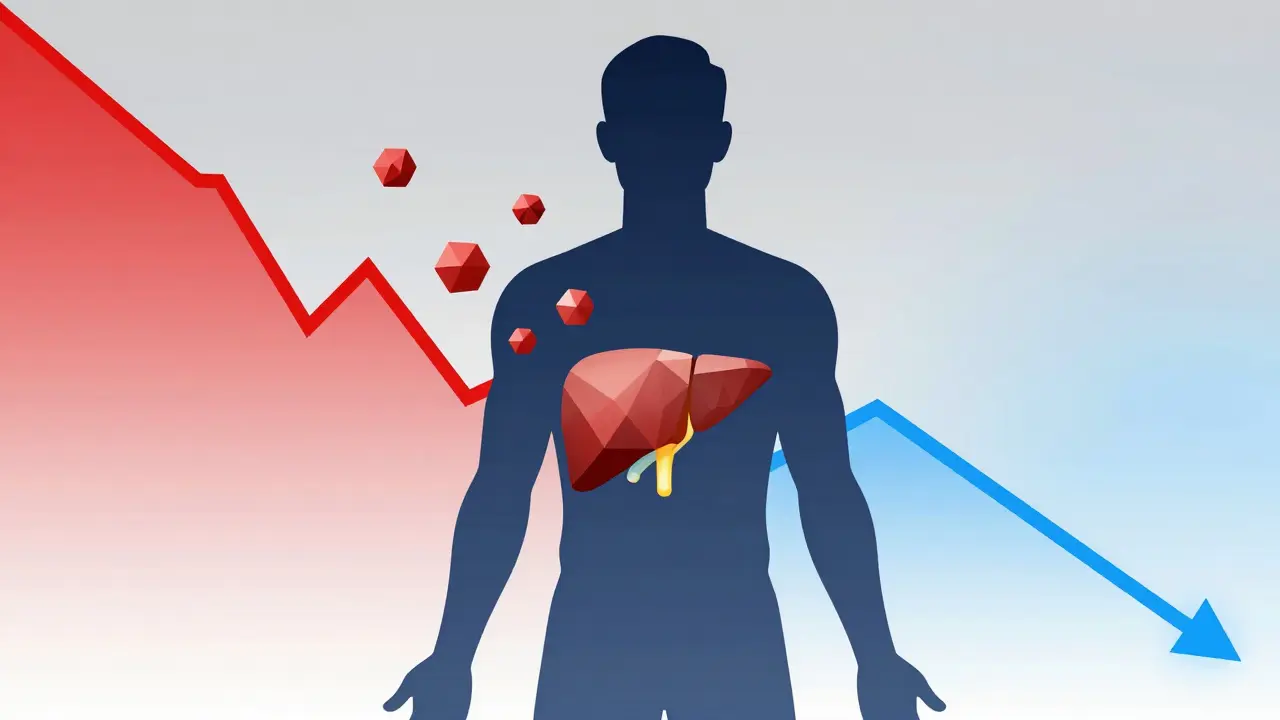
When someone says they’ve reversed their type 2 diabetes, they’re usually talking about remission. But remission isn’t a cure. It’s not magic. It’s not even permanent for everyone. It’s a real, measurable shift in your body - where your blood sugar stays in a normal range without needing pills or insulin, for at least three months. That’s the official definition agreed on by the American Diabetes Association, the European Association for the Study of Diabetes, Diabetes UK, and the Endocrine Society back in 2021. And it’s now being used in clinics across Australia, the UK, and the US.
Here’s the exact standard: your HbA1c - the test that shows your average blood sugar over the last 2-3 months - needs to be below 48 mmol/mol (6.5%). And you can’t be taking any diabetes medications to get there. Not metformin. Not GLP-1 agonists. Not insulin. If you’re still on meds, even if your numbers are perfect, you’re not in remission. You’re just well-controlled. That distinction matters. Remission means your body is managing glucose on its own again. That’s huge.
But here’s what no one tells you: your pancreas didn’t magically heal. Your liver didn’t suddenly stop flooding your bloodstream with sugar. The underlying insulin resistance? It’s still there. You just lowered the pressure enough for your body to catch up. Think of it like turning down the volume on a loud speaker. The speaker’s still broken - you just made it quieter. If you turn the volume back up, the noise returns.
How Much Weight Do You Actually Need to Lose?
Weight loss is the single most powerful tool we have for triggering remission. Not a little weight. Not 5 kilos. Not even 10. The DiRECT trial - a landmark study from the UK - found that people who lost 10 kilograms or more had a 46% chance of being in remission after one year. That’s nearly half. And it wasn’t because they did some fancy diet. They followed a total diet replacement plan: 800 calories a day for 3-5 months, then slowly reintroducing food. It was strict, but it worked.
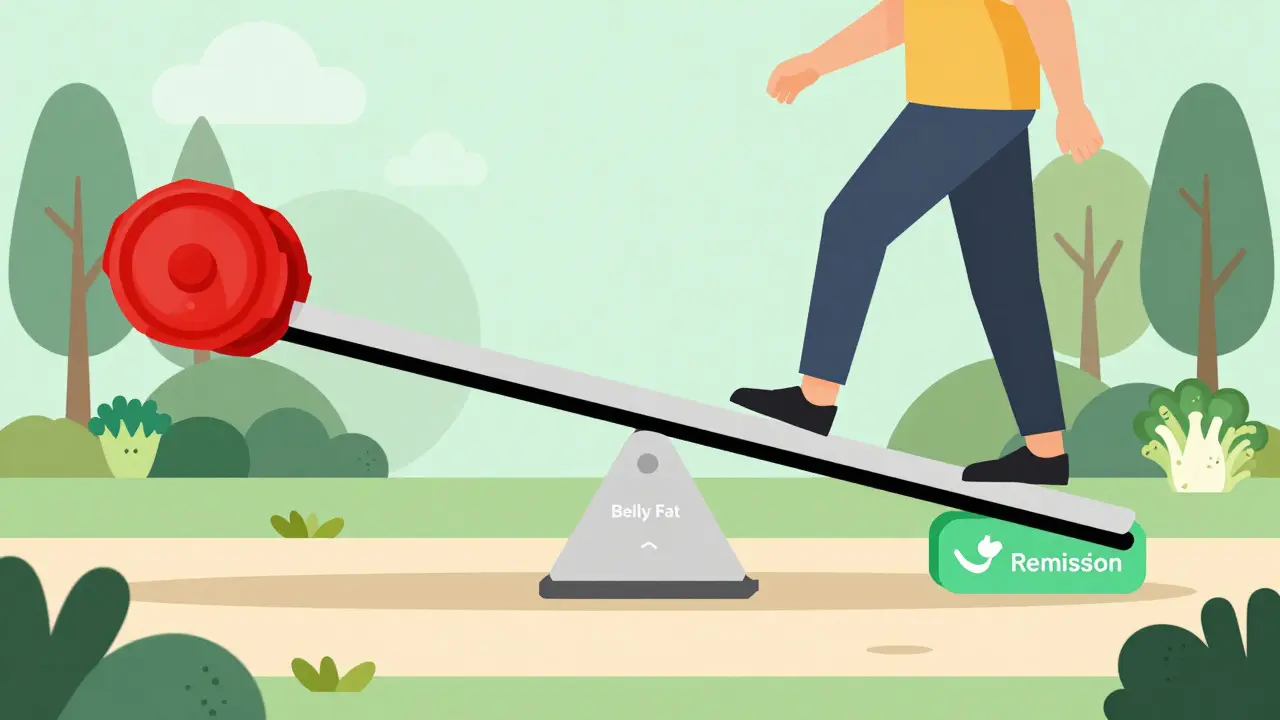
And it wasn’t just about the number on the scale. It was about where the weight came off. Belly fat. Liver fat. Fat inside the pancreas. That’s the dangerous kind. When you lose that fat, your pancreas wakes up. Beta cells - the ones that make insulin - start working again. Your liver stops overproducing glucose. Your muscles get better at soaking up sugar. It’s not a mystery. It’s biology.
The DiRECT-Aus study, done here in Australia, confirmed the same thing: even in diverse populations - including Indigenous Australians and people with long-standing diabetes - significant weight loss led to remission. You don’t need to be 50 kilos overweight. Even people who were only 10-15 kilos over their ideal weight saw results if they lost that excess.
But here’s the catch: the longer you’ve had diabetes, the harder it gets. If you’ve had it for more than five years, your beta cells may be too worn out. If you’re on insulin, your body’s lost too much of its own insulin-making ability. Remission is still possible, but it’s less likely. That’s why timing matters. The sooner you act after diagnosis, the better your shot.
What Happens When You Stop the Medications?
De-escalating meds isn’t just about saving money or avoiding side effects. It’s a sign your body’s changing. But it’s not something you do on your own. You can’t just stop metformin because your fasting sugar is 5.2 mmol/L. That’s dangerous. You need medical supervision.
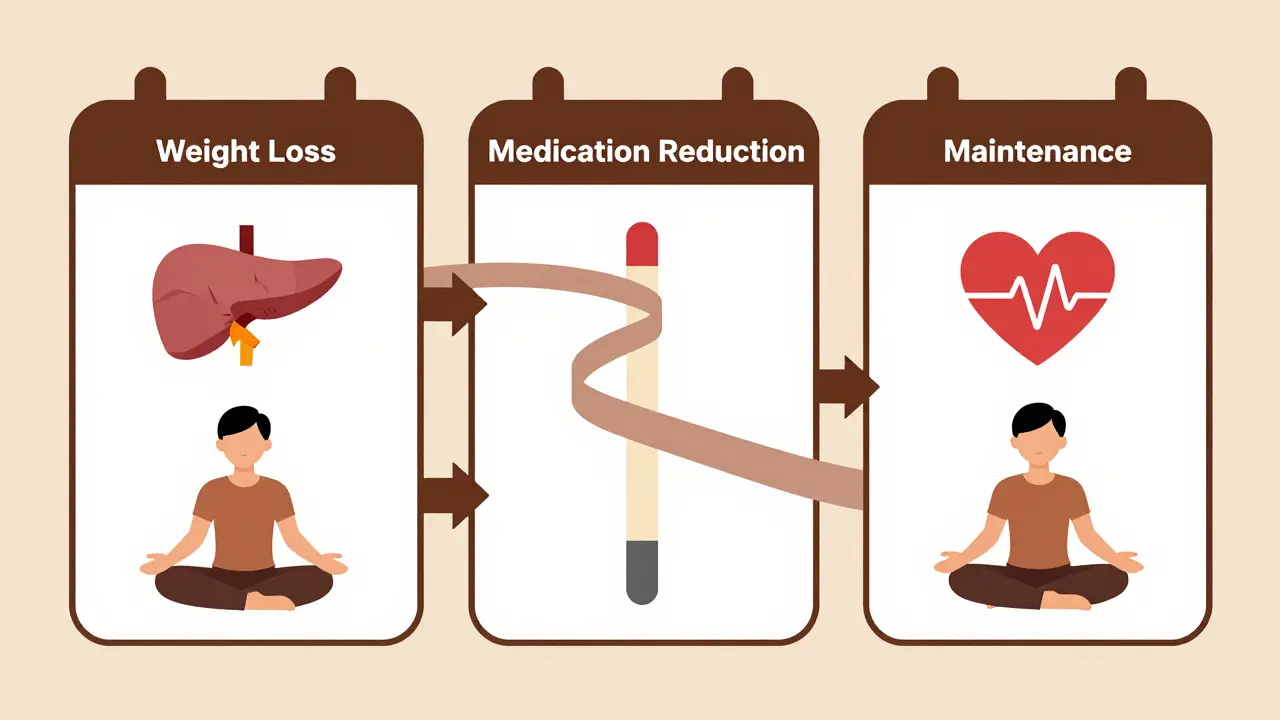
Doctors start by lowering doses slowly. Maybe you go from two pills a day to one. Then maybe you stop the sulfonylurea because it’s pushing your insulin too hard and causing low blood sugar. Then, if your HbA1c stays steady for months, they might take you off metformin. Each step is monitored with blood tests - not just HbA1c, but fasting glucose, sometimes even continuous glucose monitors.
Why not just go cold turkey? Because your body might still need that extra help. If you stop meds too fast and your sugar spikes, you risk damage to your eyes, kidneys, and nerves. Remission isn’t a race. It’s a careful, step-by-step process. And if your sugar starts creeping back up, you might need to restart meds. That’s not failure. It’s management.
Some experts even argue we need a second category: “remission on meds.” That’s when you’re off insulin, your HbA1c is under 6.5%, and you’re only on metformin or a GLP-1 drug - not because you have to, but because it helps you stay there. That’s not the official definition, but it’s what’s happening in real life. And it’s still a win.
Why Remission Doesn’t Last Forever - And What You Can Do About It
The numbers drop after the first year. In DiRECT, 46% were in remission at year one. At year two, it was 36%. At year three? Probably lower. Why? Because weight loss is hard to keep. Life happens. Stress. Holidays. Work. Kids. Sleep. You get busy. You slip. And your body remembers.
Studies show that for every kilogram regained, your chance of relapse goes up. It’s not linear - it’s exponential. Gain 3 kilos? You might be back on meds. Gain 8? You’re likely back to where you started. That’s why maintenance isn’t optional. It’s the whole game.
People who stay in remission don’t go back to eating chips and soda. They don’t stop walking. They don’t skip their check-ups. They keep eating whole foods. They keep moving. They keep sleeping. They keep managing stress. They don’t think, “I’m cured.” They think, “I’m still in charge.”
And here’s the truth: even if your sugar creeps back up, you didn’t fail. You got two, three, five years of lower risk. Fewer heart attacks. Less kidney damage. Better vision. That’s not nothing. That’s a gift.
Who Has the Best Chance at Remission?
Not everyone gets the same shot. Some people have a natural advantage. Here’s who tends to succeed:
- People diagnosed within the last 5 years - their beta cells still have some life left.
- Those with HbA1c under 7.5% at diagnosis - the lower the starting point, the easier the climb.
- People not on insulin - insulin use means your pancreas has given up. It’s harder to restart.
- Men and younger adults - they tend to lose weight more easily and stick to plans longer.
- People with strong support systems - whether it’s family, a coach, or a group, accountability makes the difference.
That doesn’t mean others can’t do it. But if you’re over 60, on insulin, and have had diabetes for 12 years, you’ll need more support, more time, and more patience. Remission isn’t impossible - it’s just harder. And that’s okay. Progress isn’t all or nothing.
What Happens After You Reach Remission?
You don’t get a gold star and walk away. You still need check-ups. Every year, you should get an HbA1c test. You should still get your eyes checked. Your kidneys. Your feet. Your blood pressure. Why? Because even in remission, your risk for heart disease, stroke, and nerve damage doesn’t vanish overnight. You’re still at higher risk than someone who never had diabetes.
And if your sugar starts rising again - even a little - don’t panic. Don’t feel guilty. Go see your doctor. Adjust your diet. Maybe add more walking. Maybe restart a low-dose med. That’s not backsliding. That’s adapting.
Think of remission like being off antidepressants after therapy. You’re not “fixed.” You’ve learned tools. You’ve changed your life. But you still need to keep using them. Otherwise, the old patterns come back.
The goal isn’t to be perfect. It’s to be in control. And that’s something you can do every single day - whether you’re on meds or not.
Is This Just for the Super Motivated?
No. But it does take structure. You don’t need to become a nutritionist. You don’t need to join a gym. You just need to stop eating like you’re still in the thick of it.
Start with this: cut out sugary drinks. Replace white bread with whole grain. Eat vegetables with every meal. Walk 30 minutes a day. Sleep 7 hours. That’s it. That’s the foundation. Then, if you want to go further, try a structured weight loss program - like the one used in DiRECT. These programs give you food, support, and a plan. They’re not magic. But they’re proven.
And if you’re thinking, “I’ve tried diets before and failed,” you’re right. Diets don’t work. Lifestyle changes do. This isn’t about willpower. It’s about creating a life where healthy choices are easy, not hard.
Remission isn’t a destination. It’s a direction. And you can start moving in it today - no pills, no surgery, no miracle cure needed.



lisa Bajram
Okay but let’s be real - if you’re eating a bag of chips and calling it ‘balanced,’ you’re not in remission, you’re in denial. I’ve seen so many people think ‘low carb’ means ‘free pass to cheese and bacon.’ Nope. Remission isn’t a buffet. It’s a daily practice. And yes, I’ve been off metformin for 2 years now - not because I’m special, but because I stopped treating food like a reward system. It’s boring. It’s consistent. And it works.