
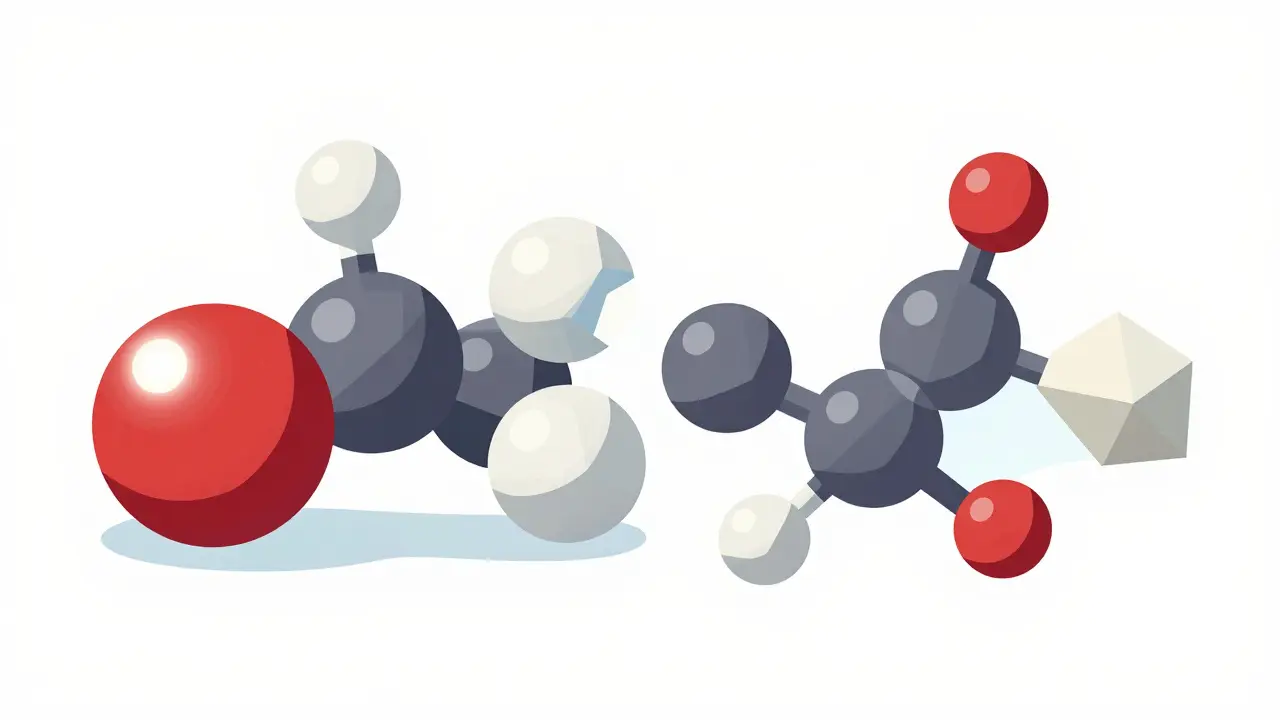
When you pick up a pill, you might think it’s just one thing: the medicine. But inside that little tablet or capsule are two very different kinds of ingredients-and the difference isn’t just technical. It can affect how well your medicine works, whether you have side effects, and even if it’s safe for you at all.
What exactly is an active ingredient?
The active ingredient is the part of the medicine that actually does the job. It’s the component that interacts with your body to treat, cure, or prevent a condition. For example, in Tylenol, the active ingredient is acetaminophen. In Advil, it’s ibuprofen. In Lipitor, it’s atorvastatin. These are the molecules that target pain, inflammation, or cholesterol in your bloodstream.
Every active ingredient has to go through years of testing before it’s approved. The U.S. Food and Drug Administration (FDA) requires proof that it’s both safe and effective. That means clinical trials, safety data, dosage studies-all of it. And even then, more than 90% of new active ingredients fail to make it to market. So when you take a pill, you’re getting something that’s been rigorously vetted.
What are inactive ingredients, really?
Inactive ingredients, also called excipients, are everything else in the pill. They don’t treat your condition. But they’re not useless. In fact, they’re essential.
Think of them as the support crew. They help the medicine stay stable, hold its shape, get absorbed, or even taste better. Common examples include:
- Lactose or microcrystalline cellulose-used as fillers to make small doses of medicine big enough to swallow
- Gelatin or acacia-binders that hold tablets together
- Magnesium stearate-a lubricant that keeps the medicine from sticking to manufacturing machines
- Hydroxypropyl methylcellulose-a coating that helps the pill dissolve in the right part of your gut
- Parabens or benzyl alcohol-preservatives that prevent mold or bacteria from growing in liquid medicines
- D&C Red 7 or other colorants-used to make pills look different so you don’t mix them up
These ingredients make up most of the pill’s weight. In some tablets, inactive ingredients can be 90% of the total mass. Without them, many medicines would be too tiny to handle, too unstable to store, or too bitter to swallow.
Why does the difference matter?
You might assume that since inactive ingredients don’t treat your disease, they’re harmless. But that’s not always true.
Research from the National Institutes of Health (NIH) in 2021 tested 639 FDA-approved inactive ingredients against human proteins linked to disease. They found that about 14% of them-compounds like D&C Red 7 calcium lake and propyl gallate-had unexpected biological activity. That means they weren’t as "inactive" as everyone thought. Some of these compounds bound to proteins involved in inflammation, metabolism, or even hormone regulation.
Even more surprising: 38 of these compounds showed activity at concentrations lower than 100 micromolar-levels you’d actually find in a typical pill. This isn’t theory. It’s real biology.
And then there are the known risks. Lactose, a common filler, can cause bloating, gas, or diarrhea in people who are lactose intolerant-which affects about 65% of the global population. Gluten-containing starches can trigger reactions in people with celiac disease. Sulfites in injectable drugs can cause breathing problems in those with asthma. Benzyl alcohol, used in some IV solutions, can be dangerous for newborns.
According to the FDA’s adverse event database, about 0.5% of all reported drug reactions are linked to inactive ingredients. That might sound small, but when you consider how many people take medication every day, that’s thousands of cases annually.
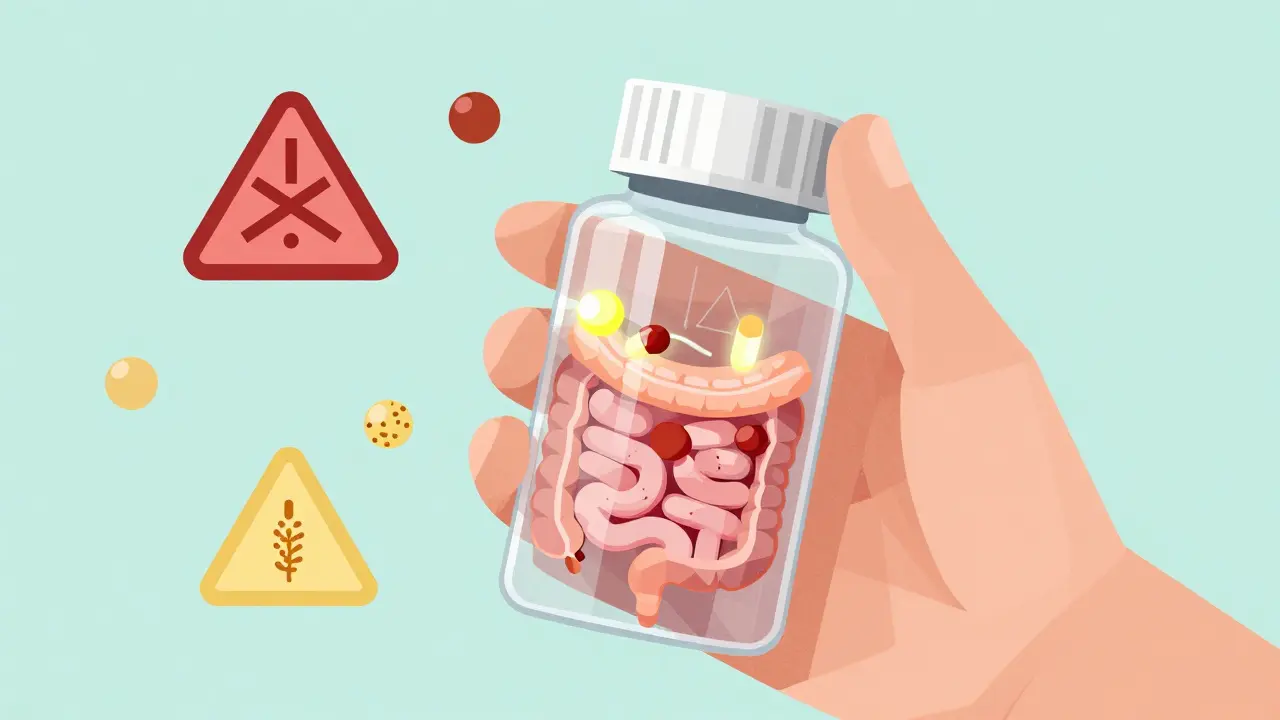
What’s in your medicine? You have a right to know
The FDA requires that over-the-counter medicines list both active and inactive ingredients on the packaging. For prescription drugs, the full list is in the package insert. But most people never check.
If you have allergies, intolerances, or sensitivities, reading the ingredient list isn’t optional-it’s critical. Pharmacists are trained to spot these issues. In fact, about 22% of medication switches in 2022 happened because of concerns over inactive ingredients, not because the active ingredient wasn’t working.
For example, if you’re gluten-sensitive and your generic version of a blood pressure pill uses wheat starch as a filler, you could be at risk-even though the active ingredient is identical to your old brand. Switching to a gluten-free version isn’t about preference. It’s about safety.
Regulations and databases: Who’s watching?
The FDA keeps the Inactive Ingredient Database, updated quarterly. It lists over 1,000 inactive ingredients and the maximum safe amounts allowed in different forms-oral tablets, injections, creams, inhalers, you name it. For example:
- Lactose: up to 50mg per dose in oral tablets
- Benzyl alcohol: max 1mg per dose in IV solutions
- Parabens: up to 0.3% concentration in liquids
These limits are based on decades of safety data. But here’s the catch: the database doesn’t tell you if an ingredient might interact with your body in ways we haven’t fully understood yet. That’s why the FDA launched the Excipient Safety Initiative in 2022, investing $4.2 million to study hidden biological effects.
Pharmaceutical companies are catching on too. Sixty-eight of the top 100 drug makers now use computer screening tools to test excipients for unexpected interactions-just like the NIH study did. It’s no longer enough to say something is "safe because it’s been used for years." We’re learning that "used for years" doesn’t mean "harmless."
What does this mean for you?
Here’s the bottom line:
- Active ingredients treat your condition. They’re the stars.
- Inactive ingredients make the medicine workable. They’re the unsung heroes-or sometimes, hidden risks.
- Just because something is "inactive" doesn’t mean it’s harmless.
- If you have allergies, intolerances, or chronic conditions, always check the full ingredient list.
- Ask your pharmacist: "Is there a version of this medicine without lactose, gluten, or artificial colors?" They can often find alternatives.
And if you’re switching from a brand-name drug to a generic? Don’t assume it’s the same. The active ingredient is identical, but the inactive ones might not be. That’s why some people feel different on a generic-even when the doctor says it’s "the same."
The future of drug ingredients
Scientists are starting to rethink the whole idea of "inactive." Maybe we should stop calling them that. Terms like "functional excipients" or "biologically assessed additives" are being discussed. Some experts even suggest creating an "activity spectrum" for each ingredient-showing not just if it’s safe, but what it might do in your body.
Artificial intelligence is helping too. New tools can predict how an excipient might bind to human proteins before it’s even put into a pill. That means fewer surprises down the line.
For now, the best thing you can do is stay informed. Don’t just swallow the pill. Know what’s in it.
Are inactive ingredients really safe?
Most inactive ingredients are safe for most people at the levels used in medications. But "safe" doesn’t mean "harmless for everyone." Some people react to lactose, gluten, dyes, or preservatives-even if they’ve never had issues before. The FDA requires these ingredients to be "generally recognized as safe," but research shows some may have unexpected biological effects. Always check the label if you have known sensitivities.
Can inactive ingredients affect how well a drug works?
Yes. The right excipients can help your body absorb the active ingredient better. For example, a newer version of the cholesterol drug fenofibrate used special surfactants that boosted absorption by 35%. On the flip side, the wrong filler or coating can slow down or block absorption entirely. That’s why generic drugs must prove they’re bioequivalent-not just chemically identical.
Why do generic drugs sometimes cause different side effects?
The active ingredient is the same, but the inactive ingredients can differ. A generic version might use a different filler, binder, or coating. For people with sensitivities-like lactose intolerance or gluten sensitivity-this can lead to stomach upset, rashes, or other reactions. It’s not the medicine failing; it’s the delivery system changing.
How do I find out what’s in my medicine?
For over-the-counter drugs, check the Drug Facts label on the box. For prescription meds, look in the package insert that comes with the bottle. You can also ask your pharmacist for a full ingredient list. The FDA’s Inactive Ingredient Database is public, but it’s technical. Your pharmacist can translate it into plain language.
Should I avoid generics because of inactive ingredients?
No. Most generics are safe and effective. But if you’ve had a reaction to one generic version, ask your pharmacist for another brand or formulation. Don’t assume all generics are the same. They’re not. Switching to a different manufacturer’s version often solves the problem.



Elaine Douglass
I had no idea lactose could cause issues with meds until I started bloating after switching generics. My pharmacist caught it right away. Now I always check the label. Small thing, huge difference.
Also, the colorants? I used to think they were just for looks. Turns out they can trigger rashes too. Mind blown.