
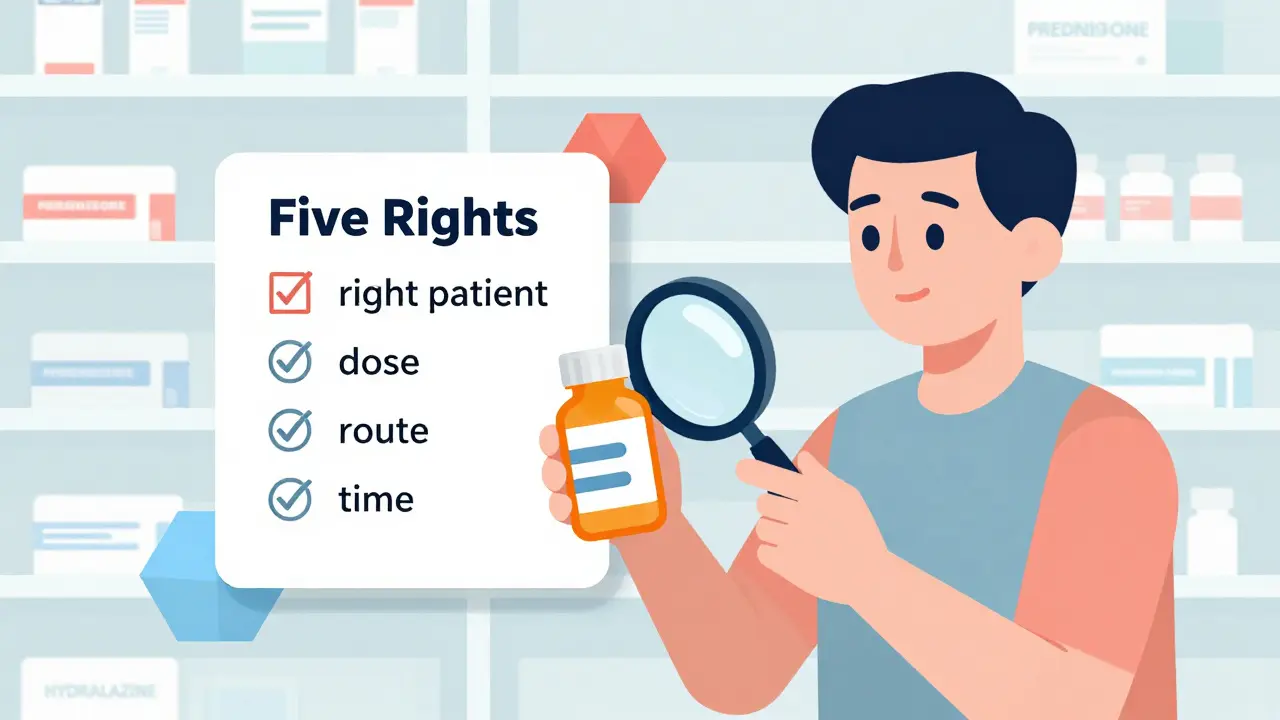
Every year, over 1.3 million people in the U.S. end up in the emergency room because of problems with their medications. Many of these cases aren’t accidents-they’re preventable. You might think, "I’m just taking what my doctor prescribed," but that’s not enough. Medication safety isn’t just about getting the right pill. It’s about knowing how to use it right, when to ask questions, and how to spot danger before it happens.
Why Medication Errors Happen (And How to Stop Them)
Most people don’t realize how easy it is to mess up a prescription. A simple mix-up between two drugs with similar names-like glimepiride and glyburide, both used for diabetes-can cause dangerous blood sugar crashes. In pharmacies, 62% of dispensing errors involve look-alike or sound-alike drugs. That’s why pharmacists use something called Tall Man Lettering: predniSONE instead of prednisone, or hydralaZINE instead of hydralazine. It’s a small change, but it saves lives. The biggest risk comes during transitions-when you move from hospital to home, or switch doctors. About 28% of hospitals still don’t have a standard way to hand off your medication list. If you’re discharged with five new pills and no clear instructions, you’re already at risk. That’s why the CDC says the most important thing you can do is keep an updated list of everything you take: prescriptions, over-the-counter meds, vitamins, supplements-even herbal teas.The 5 Rights of Safe Medication Use
Healthcare workers are trained on the "Five Rights"-right patient, right drug, right dose, right route, right time. But you need to know them too. Here’s how to apply them to your own meds:- Right patient: Always check your name on the bottle. Don’t assume it’s yours just because it looks familiar.
- Right drug: Compare the pill to your last refill. If it looks different-color, shape, markings-ask before taking it.
- Right dose: Don’t guess. If your prescription says "take one tablet twice daily," don’t assume "twice daily" means morning and night. Ask if it should be 8 a.m. and 8 p.m. or 8 a.m. and 2 p.m.
- Right route: Is this meant to be swallowed, injected, or applied to the skin? Mixing these up can be deadly.
- Right time: Taking a pill too early or too late can reduce its effect-or make it dangerous. Antibiotics, for example, need consistent spacing to work. Skipping doses or stopping early causes 23% of antibiotic treatment failures.
High-Risk Medications You Need to Watch Closely
Some drugs are more dangerous than others. These are called "high-alert medications" because even a small mistake can cause serious harm. They include:- Insulin
- Warfarin (a blood thinner)
- Heparin (another blood thinner)
- Intravenous oxytocin (used during labor)
- Know exactly why you’re taking it.
- Ask your doctor or pharmacist to explain the risks.
- Get regular blood tests if required (like INR for warfarin).
- Never change the dose without talking to your provider.
Ask These 8 Questions Before Taking Any New Prescription
The FDA says every patient should ask these eight questions before leaving the pharmacy:- What is the name of this medication?
- What is it supposed to do?
- How and when should I take it?
- How long should I take it?
- What are the possible side effects?
- What should I do if I miss a dose?
- What foods, drinks, or other medications should I avoid while taking this?
- What does this pill look like? (So I can recognize it later.)
What to Do If You’re Taking Five or More Medications
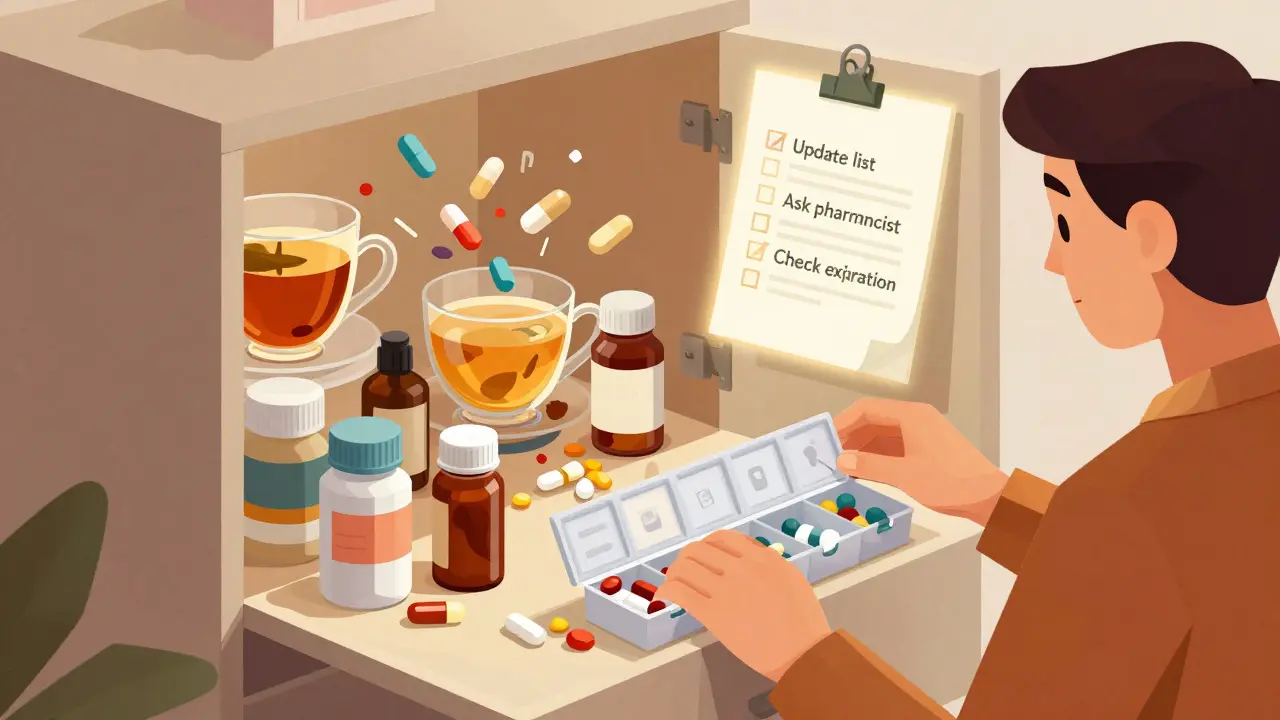
If you’re on five or more drugs, your risk of errors jumps by 3.2 times. That’s not just a number-it’s a real danger. Complex regimens lead to confusion, missed doses, and dangerous overlaps. Here’s what works:- Use a pill organizer with days and times labeled. Studies show it cuts errors by 35% in older adults.
- Set phone alarms for each dose. Don’t rely on memory.
- Keep your list updated-every time you see a doctor, bring it with you.
- Review your meds every six months. Toss expired pills. They lose potency and can be toxic if ingested accidentally.
Medication Reconciliation: The Secret Weapon
This is one of the most powerful tools in medication safety. It’s when your healthcare team compares your current meds to what you’ve been taking. Done right, it reduces adverse events by 20-45%. But here’s the catch: only 58% of U.S. hospitals consistently document over-the-counter drugs and supplements during this process. That means you have to be the one to speak up. Don’t assume your doctor knows you take fish oil, melatonin, or St. John’s wort. These can interfere with blood thinners, antidepressants, and even anesthesia. Write them down. Bring the bottles. Show them to your pharmacist.Teach-Back: The Best Way to Make Sure You Understand
A 2021 study found that patients who used the "teach-back" method had 40% better adherence. Here’s how it works: your doctor or nurse explains something-say, how to take your blood pressure pill. Then they ask, "Can you tell me in your own words how you’ll take this?" If you can’t explain it clearly, they rephrase it. No judgment. No rush. This simple step cuts confusion, prevents mistakes, and builds confidence. Ask for it. If your provider doesn’t offer it, say: "Can you help me make sure I understand this correctly?"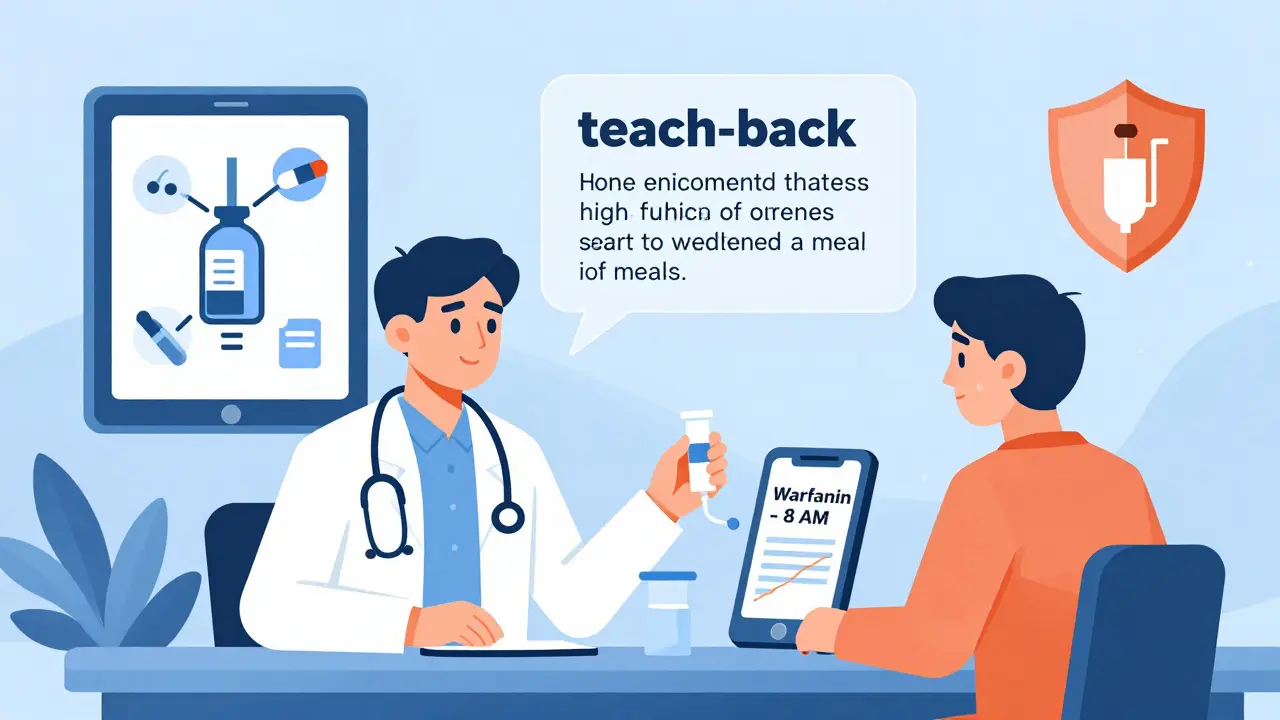
What Not to Do
Avoid these common mistakes:- Don’t share your meds with anyone-even family members with similar symptoms.
- Don’t crush pills unless your pharmacist says it’s safe. Some are designed to release slowly.
- Don’t ignore side effects. If you feel dizzy, nauseous, or get a rash, call your doctor. Don’t wait.
- Don’t refill a prescription without checking the label. Pharmacies make mistakes too.
- Don’t stop a medication because you feel better. Antibiotics, antidepressants, and blood pressure drugs need full courses to work.
What’s New in Medication Safety (2025)
The FDA now requires all Medication Guides to be written at an 8th-grade reading level. That means less jargon, clearer warnings. ISMP expanded Tall Man Lettering to over 200 drug pairs in 2024. And the CDC launched a free mobile app called the "Medication Safety Checklist"-it helps you track doses, side effects, and appointments. AI tools are starting to help too. IBM Watson’s prescription review system reduced dangerous drug interactions by 44% in a 2023 study. While these aren’t widely available yet, they’re the future.Final Tip: You’re the Last Line of Defense
Pharmacists are called the "last line of defense"-but you’re the first. No system is perfect. Electronic records glitch. Doctors get busy. Pharmacies get overwhelmed. But if you know your meds, ask questions, and speak up, you can stop a mistake before it happens. Start today. Write down your list. Check your pills. Ask one question at your next appointment. Small steps add up. Medication safety isn’t complicated. It’s just something you have to care about-and do consistently.What should I do if I think I took the wrong medication?
If you suspect you took the wrong pill, don’t wait. Call your pharmacist or poison control immediately. In Australia, call 13 11 26. Have the pill bottle with you. Note the time you took it, what you think it was, and what it was supposed to be. Don’t try to induce vomiting unless instructed. Most errors are caught early and can be managed safely with prompt action.
Can I take my prescription with alcohol or grapefruit juice?
Some medications react dangerously with alcohol or grapefruit juice. For example, statins for cholesterol can cause muscle damage when mixed with grapefruit. Blood pressure meds and sedatives can become too strong with alcohol. Always check the label or ask your pharmacist. When in doubt, avoid it. Grapefruit juice affects over 85 medications-many of them common.
Why do I need to keep a medication list if my doctor has my records?
Doctors don’t always have access to your full history, especially during emergencies or when switching providers. Your list includes everything-even supplements, herbal remedies, and over-the-counter drugs that aren’t in electronic records. It’s your personal safety net. In fact, 50% of medication errors happen during care transitions because complete lists aren’t available. Keep it updated and bring it to every appointment.
Is it safe to use old prescriptions if I have the same symptoms?
No. Just because you had the same symptom before doesn’t mean it’s the same condition. Antibiotics, painkillers, and even antidepressants can be dangerous if used incorrectly. Your body changes. Other meds you’re taking might interact differently now. Old prescriptions may be expired or improperly stored. Always see your doctor before reusing any medication.
How do I safely dispose of unused or expired medications?
Never flush pills down the toilet or throw them in the trash without mixing them with something unappealing. The safest way is to use a drug take-back program. Many pharmacies and police stations in Australia offer free disposal bins. If none are nearby, mix pills with coffee grounds or cat litter in a sealed bag before tossing them. Remove personal info from bottles first. This prevents accidental ingestion by children or pets.
What should I do if I experience a side effect?
Write down what happened, when, and how severe it was. Then call your doctor or pharmacist. Don’t assume it’s "normal." Some side effects-like swelling, trouble breathing, chest pain, or severe dizziness-are emergencies. Call emergency services immediately. Others, like mild nausea or drowsiness, should still be reported. Your provider may adjust the dose, switch meds, or suggest timing changes.
Can I use a pill organizer for all my medications?
Most can, but not all. Some medications, like sublingual tablets, capsules with special coatings, or liquids, shouldn’t be moved into organizers. Others may degrade if exposed to air. Always ask your pharmacist before using one. If you’re unsure, stick to the original bottles with labeled reminders. Pill organizers are great tools-but only if used correctly.




Janette Martens
this post is fine i guess but why are we even talking about this like its new? weve had pill organizers and pharmacist consultations for decades. canada does this better anyway. stop acting like americans just discovered medication safety.