
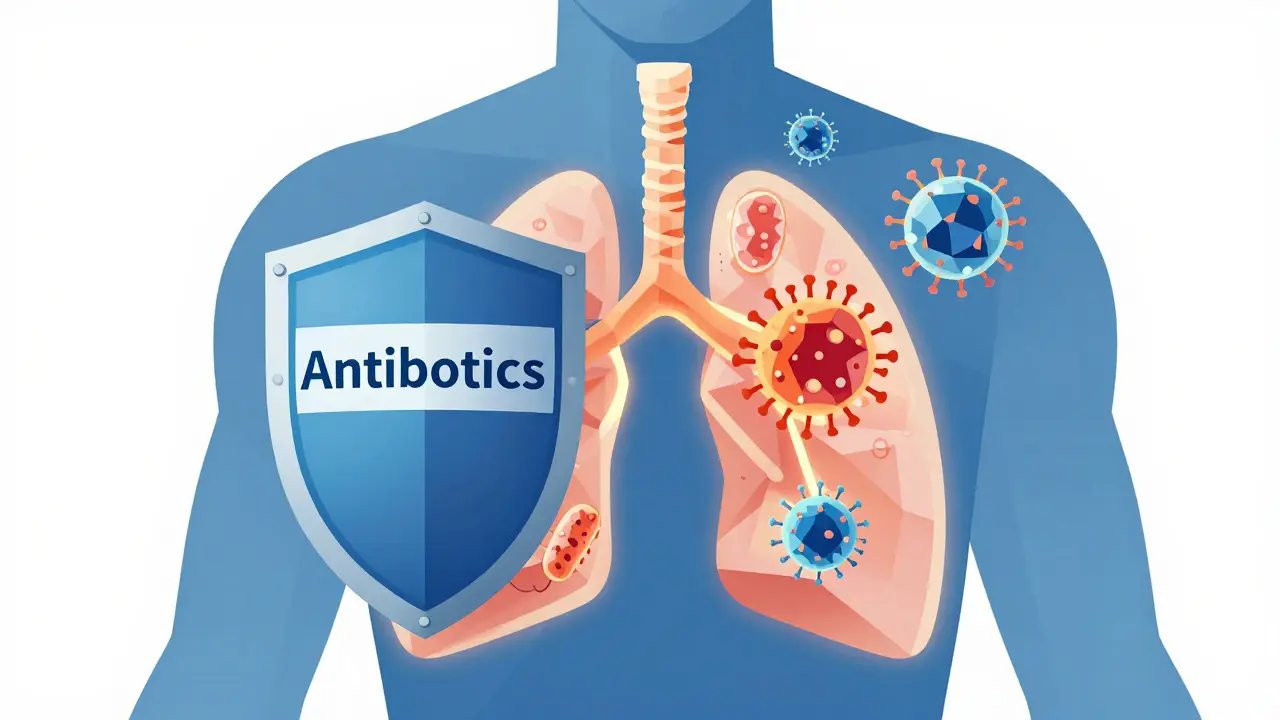
When you have a fever, sore throat, or cough, it’s natural to wonder: is this bacterial or viral? The answer matters more than you think. Taking the wrong treatment won’t just waste time-it could make things worse. Antibiotics don’t work on viruses, yet nearly half of all antibiotic prescriptions in the U.S. are given for viral illnesses like colds or flu. That’s not just ineffective-it’s dangerous.
What’s the Real Difference Between Bacteria and Viruses?
Bacteria are living, single-celled organisms. They can move, eat, and reproduce on their own-even outside the human body. You’ll find them on your skin, in soil, in water, and even in your gut. Some are helpful. Others cause infections like strep throat, urinary tract infections, or tuberculosis.
Viruses aren’t alive in the traditional sense. They’re just genetic material wrapped in a protein shell. They can’t reproduce without hijacking a human cell. Once inside, they take over the cell’s machinery and force it to make more viruses. That’s how the flu, common cold, chickenpox, and COVID-19 spread.
Size matters too. The smallest bacteria are about 200 nanometers wide. The largest viruses? Around 300 nanometers. That’s why you need an electron microscope to see viruses-regular lab microscopes can’t catch them. This structural difference is why antibiotics, which attack bacterial cell walls or protein-making systems, do absolutely nothing to viruses.
How Do Symptoms Differ? (And Why It’s Tricky)
Both bacterial and viral infections can give you fever, fatigue, cough, and sore throat. That’s why so many people get confused. But there are patterns.
Bacterial infections often come with higher fevers-over 101°F (38.3°C). Symptoms tend to stick around longer than two weeks. Sometimes they get better for a few days, then suddenly get worse. That’s a red flag for a secondary bacterial infection, like sinusitis or pneumonia developing after a cold.
Viral infections usually start with a lower fever (under 100.4°F), runny nose, body aches, and a cough. Most improve within 7 to 10 days. The common cold, caused by rhinoviruses, rarely lasts more than a week. If you’re feeling better after five days, it’s likely viral.
But here’s the catch: severe viral pneumonia-like from COVID-19-often leads to bacterial infections in about half of hospitalized patients. That’s why doctors sometimes prescribe antibiotics even when the main problem is viral. It’s not a mistake. It’s prevention.
Common Examples You Should Know
Not all infections are created equal. Here’s what you’re likely to run into:
- Bacterial: Strep throat (Group A Streptococcus), urinary tract infections, tuberculosis, whooping cough, and some types of ear and sinus infections.
- Viral: Influenza (flu), common cold, chickenpox, measles, COVID-19, and most cases of bronchitis and sore throat.
Strep throat is a classic example. It’s bacterial, needs antibiotics, and can lead to serious complications like rheumatic fever if left untreated. But 85% of sore throats are viral. That means most people with a sore throat don’t need antibiotics at all.
Before vaccines, chickenpox affected 4 million people globally each year. Now, it’s rare in countries with high vaccination rates. Flu, on the other hand, still hits 9 to 41 million Americans every year. And COVID-19, a viral infection, has caused over 7 million documented deaths worldwide as of 2024.
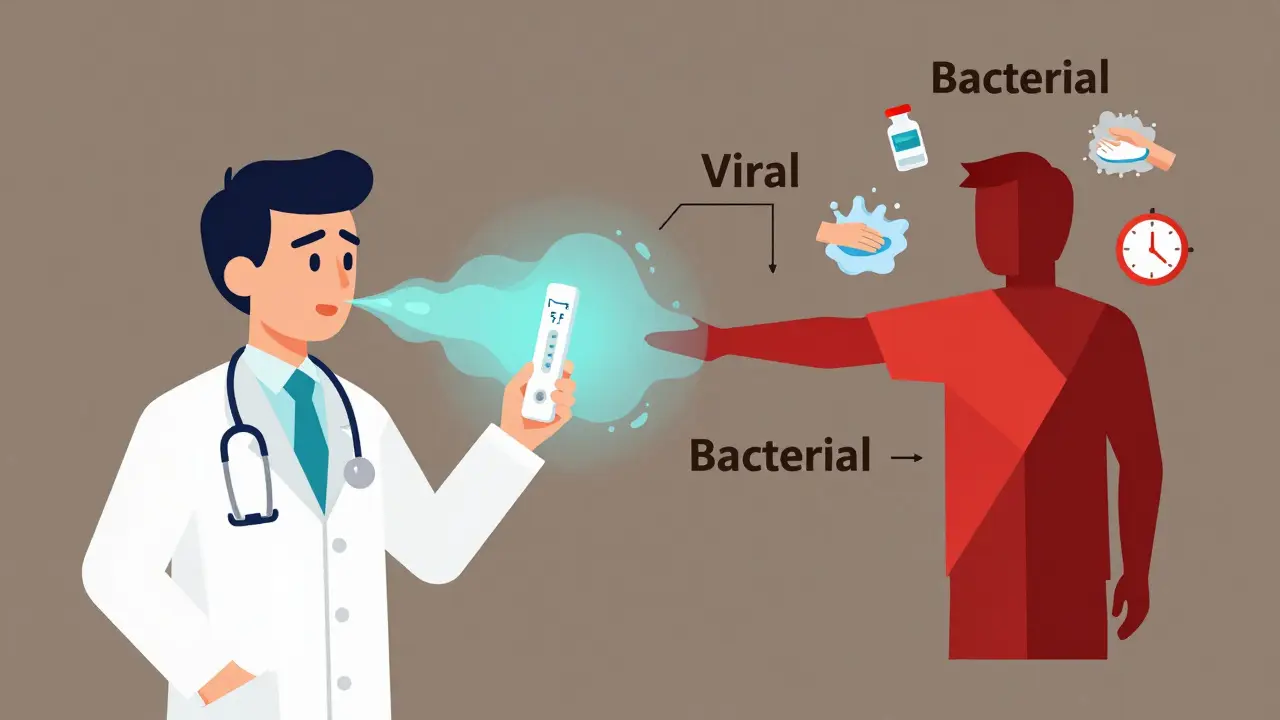
How Doctors Tell Them Apart
Guessing isn’t enough. That’s why tests exist.
For strep throat, a rapid antigen test gives results in minutes with 95% accuracy. If it’s negative but the doctor still suspects strep, they’ll send a throat culture-which is 98% accurate but takes a couple of days.
For viruses, PCR tests are the gold standard. They detect viral DNA or RNA and are 90-95% accurate if done within the first 72 hours of symptoms. For flu, rapid tests are available but less sensitive than PCR.
There’s also a newer tool: the FebriDx test. Approved by the FDA in 2020, it measures two biomarkers-CRP (a sign of inflammation) and MxA (a protein made in response to viruses). It can tell bacterial from viral with 94% sensitivity and 92% specificity in just 10 minutes. It’s not everywhere yet, but it’s changing how doctors decide.
For kids with sore throats, doctors use the Centor Criteria: fever, swollen neck glands, white patches on tonsils, and no cough. Three or more points mean a 50-55% chance of strep-enough to justify testing.
Treatment: Antibiotics vs. Antivirals vs. Rest
If it’s bacterial, antibiotics are the answer. Penicillin or amoxicillin for strep throat, usually taken for 10 days. For urinary tract infections, a 3-7 day course of trimethoprim or nitrofurantoin. These drugs kill bacteria or stop them from multiplying.
If it’s viral? Antibiotics won’t help. Zero benefit. Only risk.
Some viral infections have specific antivirals. Oseltamivir (Tamiflu) for flu can shorten illness by 1-2 days if taken within 48 hours of symptoms. Acyclovir for chickenpox or shingles reduces severity. Remdesivir for severe COVID-19 can speed recovery in hospitalized patients.
But for most viral infections-cold, flu, bronchitis-you don’t need a prescription. You need rest, fluids, and over-the-counter pain relievers like acetaminophen or ibuprofen. Your immune system handles the rest.
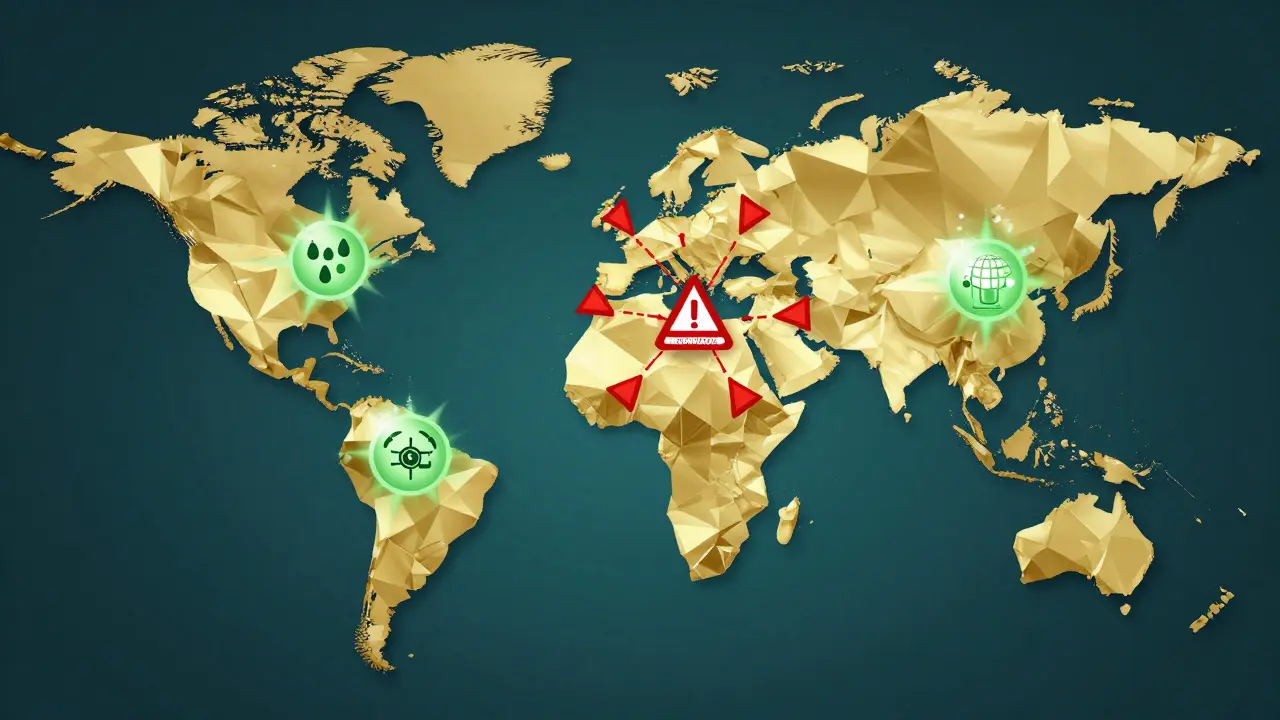
Why Misuse of Antibiotics Is a Global Crisis
Every time you take an antibiotic when you don’t need it, you’re helping bacteria become resistant. That’s not science fiction. It’s happening right now.
Antibiotic resistance causes 1.27 million deaths worldwide each year. By 2050, that number could hit 10 million-more than cancer. In the U.S. alone, resistant bacteria cause 35,900 deaths annually. The CDC says 47 million unnecessary antibiotic prescriptions are written each year in outpatient settings. That’s mostly for viral infections.
It doesn’t just hurt you. It hurts everyone. Resistant bacteria spread. A single person taking antibiotics unnecessarily can contribute to a strain that kills someone else years later.
And it’s not just about death. Antibiotic misuse leads to Clostridioides difficile (C. diff) infections, which cause over 223,000 cases and 12,800 deaths in the U.S. every year. These are nasty, hard-to-treat gut infections that often follow antibiotic use.
Parents are especially vulnerable to pressure. Kids get six to eight viral upper respiratory infections a year. That’s normal. But 70% of sinus infections and 85% of bronchitis cases in children are viral. Yet, antibiotics are still overprescribed. The result? 22 million missed school days and 20 million lost workdays for parents every year in the U.S.
What You Can Do
Don’t demand antibiotics. Don’t pressure your doctor. If they say it’s viral, trust them. Ask: “Is this bacterial or viral?” and “What’s the plan if it gets worse?”
Get vaccinated. Flu shots, COVID boosters, and the pneumococcal vaccine for kids and seniors reduce your risk of both viral and secondary bacterial infections.
Wash your hands. Cover your cough. Stay home when you’re sick. These simple steps stop the spread of both types of infections.
If symptoms last more than 10 days, spike again after improving, or include severe pain, difficulty breathing, or high fever-go back. That’s when bacterial infection becomes likely.
And if you’re prescribed antibiotics? Take them exactly as directed. Don’t stop early just because you feel better. That’s how resistant strains survive.
The Future: What’s Changing
Science is fighting back. Researchers at the University of Queensland are testing two new compounds, IMB-001 and IMB-002, that target bacterial surface activity. They’re in Phase II trials as of late 2024.
Phage therapy-using viruses that infect bacteria-is showing 85% effectiveness in European trials for resistant infections. It’s not mainstream yet, but it’s promising.
Universal coronavirus vaccines are in Phase III trials. If they work, they could prevent future pandemics.
The WHO says resistance to first-line antibiotics has jumped from 5.8% in 2017 to 17.3% in 2023. That’s alarming. But awareness is growing. More clinics are using rapid tests. More doctors are refusing to prescribe unnecessarily. And more patients are learning to ask the right questions.
Understanding the difference between bacterial and viral infections isn’t just about getting better faster. It’s about protecting the next generation from untreatable infections.
Can antibiotics treat a viral infection like the flu?
No. Antibiotics only work on bacteria. The flu is caused by a virus, so antibiotics won’t help. Taking them won’t shorten your illness or make you feel better. Instead, they increase your risk of side effects and contribute to antibiotic resistance.
How do I know if my child’s sore throat is strep or just a virus?
Most sore throats in kids are viral. Strep throat usually comes with a high fever, swollen neck glands, white patches on the tonsils, and no cough. A rapid strep test or throat culture is the only reliable way to tell. Don’t assume it’s strep just because your child is sick.
Why do some doctors still prescribe antibiotics for colds?
Some do because patients ask for them, or because they’re unsure. But guidelines from the CDC and WHO clearly say not to. Pressure from worried parents or time constraints in clinics can lead to overprescribing. That’s why rapid tests and patient education are so important.
Can a viral infection turn into a bacterial one?
Yes. A viral cold or flu can weaken your airways, making it easier for bacteria to take hold. That’s why some people develop bacterial sinusitis, ear infections, or pneumonia after a viral illness. Signs include symptoms that get better, then suddenly worsen, or last longer than 10-14 days.
Is it safe to wait and see if a viral infection gets better on its own?
For most healthy people, yes. Viral infections like colds and flu usually resolve in 7-10 days. Rest, fluids, and symptom relief are the best approach. But if you have trouble breathing, chest pain, high fever lasting more than 3 days, or worsening symptoms after a week, see a doctor. That’s when it might be something else.




Kimberly Reker
Finally, someone broke this down without jargon. I used to beg my doctor for antibiotics when I had a cold-now I just drink tea and sleep. My kid got strep last winter, and the rapid test saved us so much stress. Seriously, if you feel better in 5 days, you probably had a virus. No shame in that.
Also, handwashing isn’t just for hospitals. I do it before I touch my face, and honestly? I haven’t been sick in over two years. Small habits, huge impact.