
When you pick up a prescription at the pharmacy, you might not realize that the price you pay isn’t just set by the drugmaker. It’s the result of a quiet but powerful battle between buyers-like Medicare, insurance companies, and government health systems-and drug manufacturers. And the biggest weapon buyers have? Generic drug competition.
Why Generic Drugs Change Everything
Generic drugs aren’t just cheaper versions of brand-name pills. They’re legally identical in active ingredients, dosage, safety, and effectiveness. The only difference? They cost a fraction of the price. When a brand-name drug’s patent expires, generic manufacturers can step in. And when more than one generic enters the market, prices don’t just drop-they collapse. Data from the FDA shows that when six generic versions of a drug are available, the price falls by an average of 90.1%. With nine or more generics, that drop jumps to 97.3%. That’s not a rumor. That’s what happens in real markets. In the U.S., generics make up 90% of all prescriptions filled, but only 22% of total drug spending. That’s the power of competition.How Buyers Use Competition to Negotiate
Buyers don’t just wait for generics to appear. They actively use the threat-or reality-of generic competition to push prices lower. The most powerful example is Medicare’s new drug price negotiation program, launched under the 2022 Inflation Reduction Act. Even though the law says Medicare can’t negotiate prices for drugs that already have generic competitors, it can-and does-use those generic prices as a benchmark. Here’s how it works: When Medicare picks a brand-name drug to negotiate, it doesn’t start from scratch. It looks at the average price of all similar drugs that are already on the market, including generics. If five generic versions of a drug sell for $15 a month, Medicare won’t offer the brand-name maker $100. It starts at $15 and works up from there. This isn’t guesswork. It’s based on real data from Prescription Drug Event (PDE) records and Average Manufacturer Prices (AMP) reported to CMS. This strategy has been quietly used for years by private insurers and pharmacy benefit managers (PBMs). Now, the federal government is doing it too. And it’s working. CMS estimates that the first 10 negotiated drugs will save Medicare beneficiaries $6.8 billion a year.Global Models: What Other Countries Do
The U.S. isn’t the only country using generic competition to control costs. Canada has a tiered pricing system that’s been in place since 2014. The more generic competitors a drug has, the lower the maximum price the government will pay. If only one generic exists, the price cap might be $50. With five generics, it drops to $15. This system rewards competition and gives manufacturers a clear signal: the more you enter, the more you save patients. In Europe, countries like Germany and the UK use reference pricing. They pick a group of similar drugs-brand and generic-and set a single reimbursement price. If your drug costs more than that benchmark, you pay the difference. This forces manufacturers to compete on price from day one. These systems work because they don’t try to control prices by fiat. They let competition do the heavy lifting. The government just sets the rules of the game.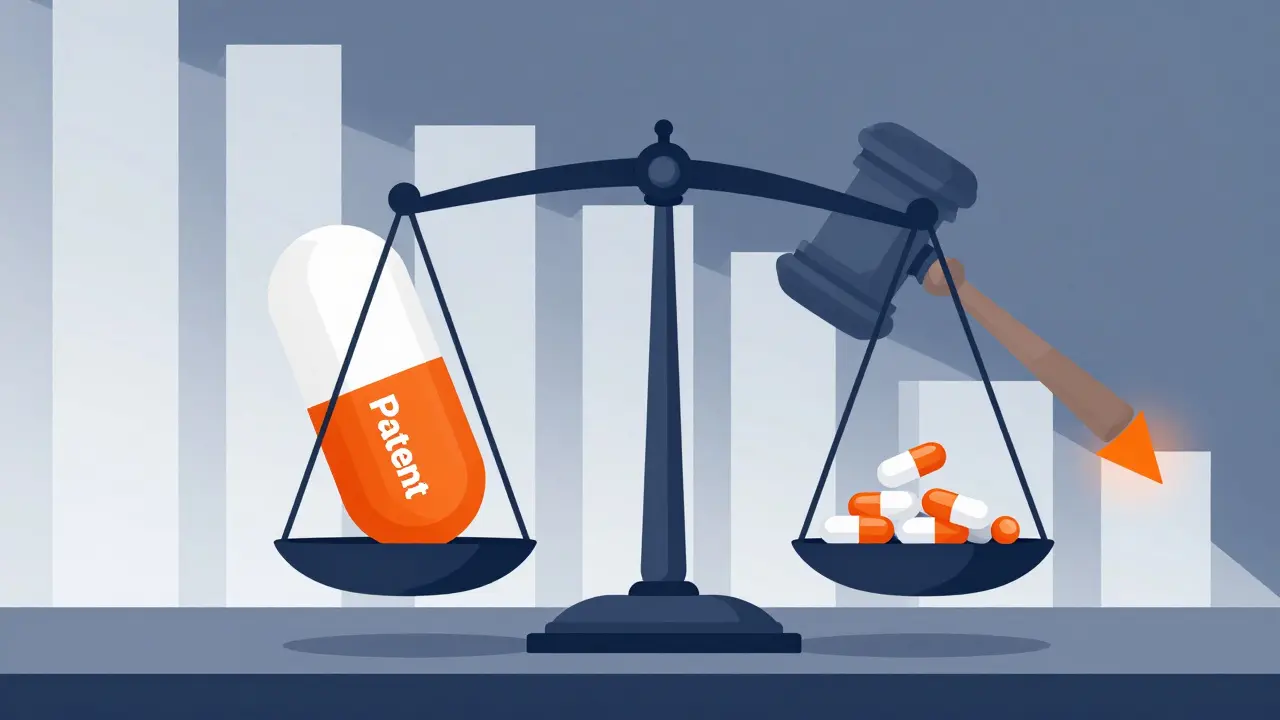
The Hidden Obstacles: How Brand Companies Fight Back
You’d think more generics would mean lower prices. But brand-name drugmakers have spent decades building defenses. One of the most common tactics? “Product hopping.” That’s when a company slightly changes a drug-maybe switches from a pill to a capsule-and pushes doctors to prescribe the new version. Then they file new patents. This delays generics by years. Between 2015 and 2020, there were over 1,200 product-hopping maneuvers, according to the FTC. Another tactic? Reverse payments. A brand company pays a generic manufacturer to stay out of the market. Between 2010 and 2020, this happened with 106 drugs. The FTC calls it “pay-for-delay.” Courts have ruled it illegal, but it still happens. Even the patent system itself is weaponized. Generic companies file “Paragraph IV” challenges to break patents early. On average, these challenges speed up generic entry by 62 months. But the legal battles cost millions. Smaller generic makers often can’t afford to play.The New Threat: Complex Generics and Biosimilars
Not all generics are the same. Simple pills-like metformin or lisinopril-are easy to copy. But complex drugs, like inhalers, injectables, or topical creams, require advanced manufacturing. These “complex generics” cost more to produce, so they don’t drop in price as fast. Then there are biosimilars-generic versions of biologic drugs like Humira or Enbrel. These aren’t chemical copies. They’re made from living cells. That makes them harder and more expensive to produce. Even after approval, biosimilars only capture about 45% of the market, compared to 90% for traditional generics. Why? Because doctors and patients are hesitant. Insurance plans don’t always push them. And the original makers still have strong marketing power. This is the next frontier. Buyers need new strategies to handle these drugs. Simple price benchmarks won’t work. They’ll need to evaluate real-world outcomes, manufacturing quality, and patient access.
Who Wins? Who Loses?
Patients win. Medicare wins. Taxpayers win. In 2024, the Association for Affordable Medicines reported that generics have saved U.S. patients over $3.4 trillion since 2000. That’s more than the entire GDP of Australia. But not everyone benefits. Brand-name manufacturers argue that if prices are too low, they won’t have money to develop new drugs. They spend over $2 billion on R&D for each new drug. That’s true. But most of that money goes into marketing, not innovation. The average brand-name drug spends 10 times more on advertising than on research. Generic manufacturers are caught in the middle. They want to enter the market, but if CMS sets a low price for a brand drug before generics even launch, there’s no room for them to compete. Avalere Health found that in some cases, generic companies can’t recover their costs because they’re competing against a government-set price, not just a brand. That’s a chilling effect. It could mean fewer generics in the future.What’s Next? The Future of Drug Pricing
The next big move might be the EPIC Act-Enhancing Generic and Incentivizing Competitive Drugs Act. It would delay Medicare price negotiations for small-molecule drugs until after generics have already entered the market. That way, competition sets the baseline, and the government just makes sure prices don’t spike. Health systems are also starting to use real-world data more. Instead of just looking at price, they’re asking: Does this drug actually help patients live longer or avoid hospital visits? By 2025, 73% of health technology agencies plan to use this kind of data in pricing decisions. The goal isn’t to kill innovation. It’s to stop paying for monopolies. When a drug has five generic competitors, it shouldn’t cost $500 a month. It should cost $15. That’s not radical. That’s basic economics.What You Can Do
If you’re on Medicare or have insurance, ask your pharmacist: “Is there a generic version?” If there is, and it’s not being offered, ask why. Ask your doctor to prescribe the generic. It’s legal, safe, and saves money. If you’re a patient advocate or work in healthcare, push for transparency. Demand that insurers and PBMs share how they negotiate. Ask your state or federal representatives to support policies that speed up generic approval and block pay-for-delay deals. The system works best when competition is real. And right now, the biggest force lowering drug prices isn’t a law. It’s not a protest. It’s a pill made by a company you’ve never heard of, selling for $3 a month, because there are six others just like it.How do generic drugs lower prices so dramatically?
When multiple generic manufacturers enter the market, they compete on price. Each one tries to undercut the others to win contracts from insurers and pharmacies. This drives prices down fast. With just two generics, prices often drop 50-70%. With six or more, they fall by 90% or more. The cost to make these pills is low-often under $1 per dose-so manufacturers can afford to sell them cheaply and still make a profit through volume.
Can Medicare negotiate prices for drugs that already have generics?
No, Medicare cannot directly negotiate the price of a drug if generic versions are already on the market. But it can-and does-use the prices of those generics as a benchmark. For example, if five generic versions of a drug sell for $10 a month, Medicare will start its negotiation with the brand-name drug at around that price. This means even brand-name drugs face downward pressure because buyers have cheaper alternatives to choose from.
Why don’t all drugs have generic versions?
Some drugs can’t be copied easily. Complex formulations like inhalers, injectables, or topical creams require advanced manufacturing and testing. Others are protected by patents that are extended through legal tactics like “product hopping” or “evergreening.” Some brand companies even pay generic makers to delay entry-a practice called “pay-for-delay.” These tactics keep prices high even after the original patent expires.
Do generics work as well as brand-name drugs?
Yes. The FDA requires generic drugs to have the same active ingredient, strength, dosage form, and route of administration as the brand-name version. They must also meet the same strict quality and safety standards. Studies show they are equally effective and safe in over 99% of cases. The only differences are in inactive ingredients like fillers or dyes, which rarely affect how the drug works.
What’s the difference between a generic and a biosimilar?
Generics are exact chemical copies of small-molecule drugs, like pills for blood pressure or diabetes. Biosimilars are copies of large, complex biologic drugs made from living cells-like insulin or cancer treatments. Because they’re more complex, biosimilars aren’t identical to the original. They’re “similar enough” to be approved. They’re also more expensive to make and harder to get approved, which is why they only capture about 45% of the market, compared to 90% for traditional generics.
Why don’t pharmacies always offer the cheapest generic?
Pharmacies often stock the version that pays them the highest rebate from the pharmacy benefit manager (PBM), not necessarily the cheapest one. Some PBMs have secret contracts with drugmakers that favor certain brands or generics. This is why you might be offered a more expensive version even when a cheaper one exists. Always ask your pharmacist: “Is there a lower-cost generic available?”



Vinaypriy Wane
Wow. Just... wow. This is the kind of clarity we need in healthcare policy-no fluff, no corporate spin. The 97.3% price drop with nine generics? That’s not economics-that’s justice. And yet, we let pharma play chess while patients lose pawns every single day.