
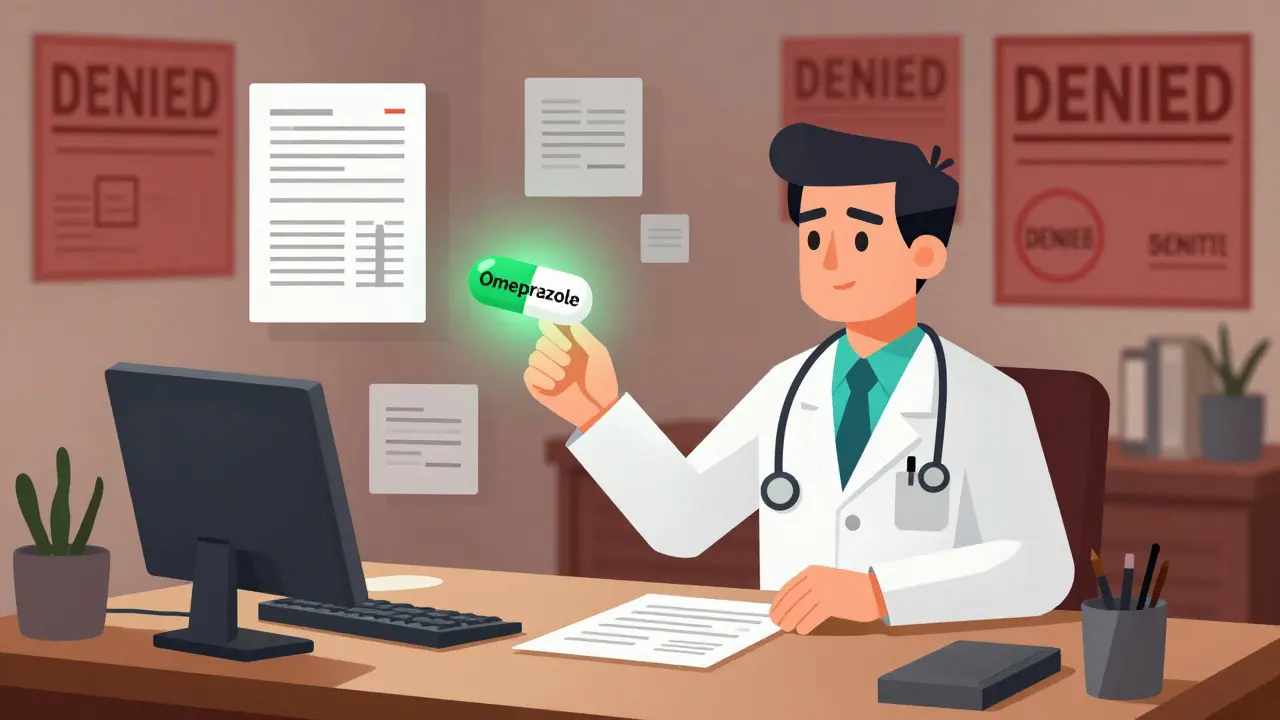
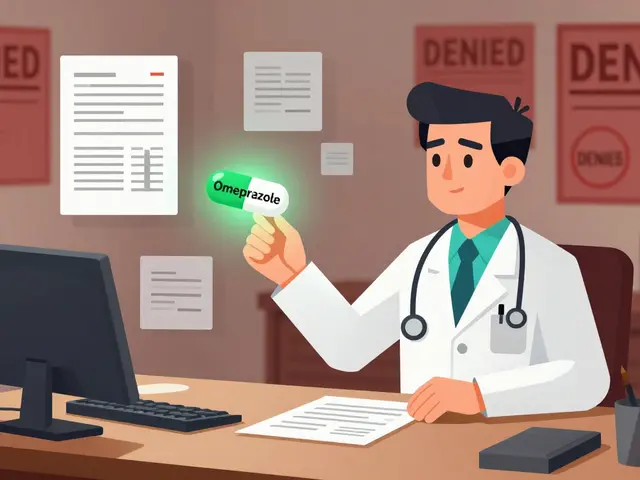
When a doctor prescribes a generic medication, many assume it’s a simple step - fill the script, pick it up, and go. But for providers across the U.S., that’s rarely the case. Even for low-cost generics, prior authorization is now a routine barrier. It’s not about stopping patients from getting medicine. It’s about controlling costs, managing risk, and enforcing formulary rules - often with frustrating delays and confusing paperwork.
Why Generics Still Need Approval
You might think generics, being cheaper and proven copies of brand-name drugs, would fly through the system. But insurers and pharmacy benefit managers (PBMs) use prior authorization to control which version of a generic a patient gets. If there are five different manufacturers making omeprazole, the plan might only cover one. Why? Because they negotiated a better price with that one. So if your patient needs a different generic - maybe because they had a reaction to the preferred one - you need approval. Prior authorization for generics isn’t about whether the drug works. It’s about which version. Common triggers include:- Quantity limits: Requesting a 90-day supply when the plan allows only 30 days.
- Duration limits: Prescribing proton pump inhibitors longer than 8 weeks without documentation.
- Therapeutic interchange: The plan wants Generic A, but the patient needs Generic B due to intolerance.
- Off-label use: Even generics can’t be used for unapproved conditions without proof.
According to the Academy of Managed Care Pharmacy, 28% of all prior authorization requests involve generic drugs. That’s not a small number - it’s nearly one in every three.
The Step-by-Step Process
Securing approval isn’t guesswork. It’s a system with clear steps - if you know them.- Check the formulary. Every insurer has a list of preferred generics. If the one you prescribed isn’t on it, you’ll need to justify why.
- Gather clinical evidence. This isn’t just a note. You need chart entries, lab results, or diagnostic reports that show why the requested generic is necessary. For example: a patient’s endoscopy report proving Barrett’s esophagus justifies long-term omeprazole use.
- Submit electronically. Over 78% of commercial insurers and 63% of Medicare Part D plans require electronic submissions through platforms like CoverMyMeds or Surescripts. Fax is fading fast - and phone requests? Those are rare and slow.
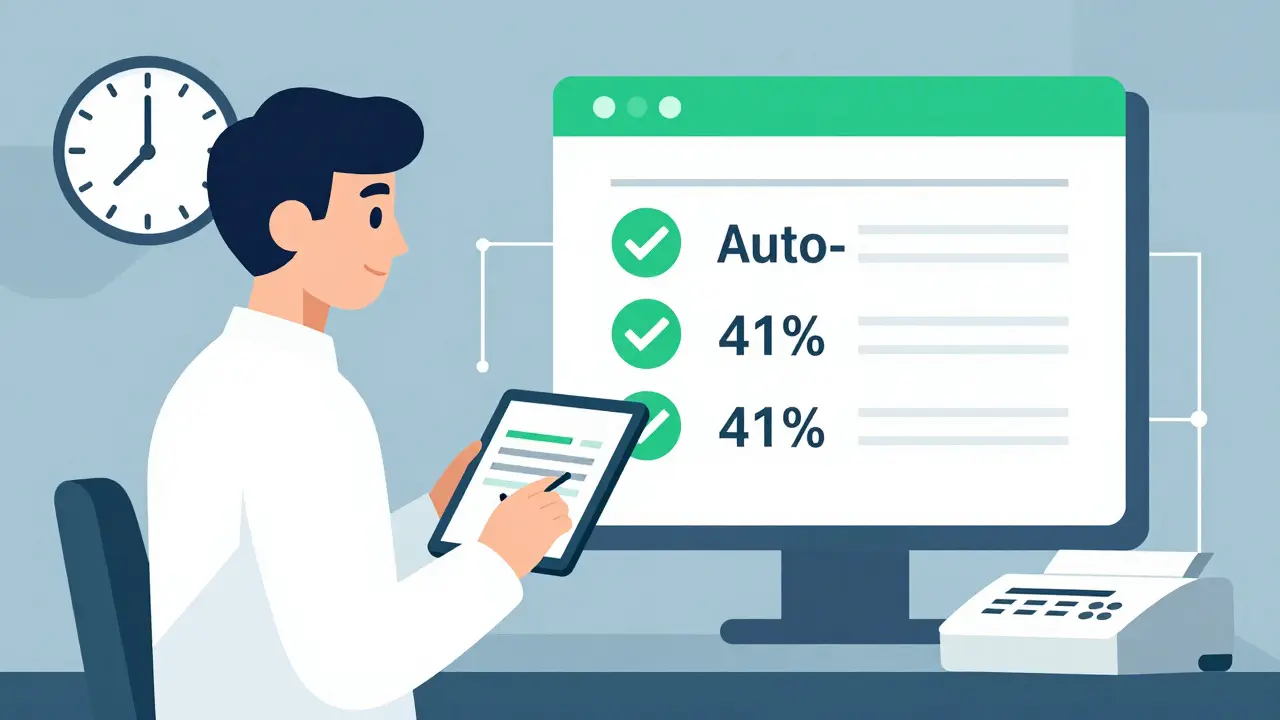
- Wait for response. Medicaid must respond within 24 hours for urgent cases and 14 days for standard. Commercial insurers? Usually 5-10 business days. But here’s the kicker: if the request meets auto-approval criteria (like staying under quantity limits), 41% of generic requests get approved automatically.
Providers who use standardized templates for common scenarios - like diabetes or acid reflux - see approval times drop by 32%, according to Capital Rx. That’s not luck. It’s system.
Who Decides What Gets Approved?
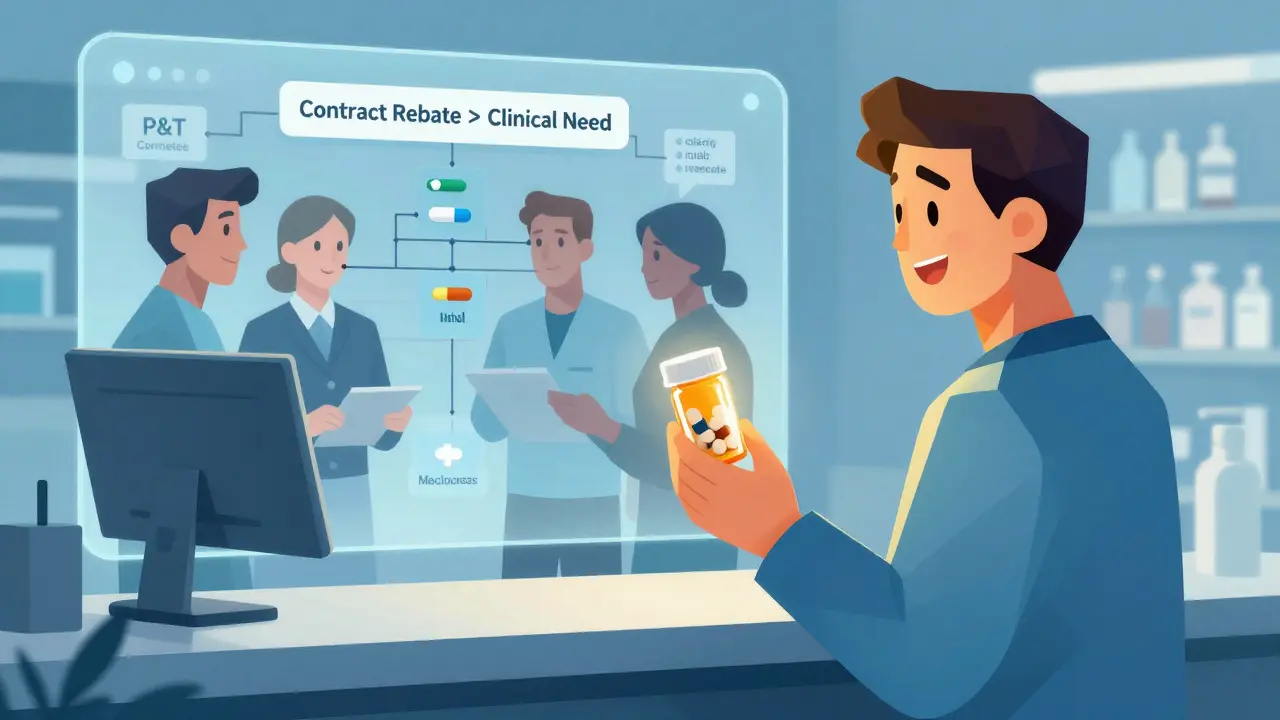
Behind every prior authorization rule is a Pharmacy and Therapeutics (P&T) committee. These are groups of doctors, pharmacists, and health economists who review clinical data and negotiate with drug manufacturers. Their decisions aren’t arbitrary. They’re based on national guidelines, cost-effectiveness studies, and real-world outcomes.For example, if a generic has been on the market for over five years with multiple manufacturers, the American Academy of Family Physicians says it shouldn’t require prior authorization - unless there’s a documented safety concern. But many insurers still require it anyway.
Some PBMs are now restricting which generic manufacturers they cover - even if they’re chemically identical. So if a patient has been taking Generic A from Manufacturer X for years, and the plan switches to Generic B from Manufacturer Y, you may need to prove the switch isn’t safe. That’s not about clinical need. That’s about contract deals.
How Long Does It Really Take?
Time matters. A delay isn’t just paperwork - it’s a patient without medicine.MGMA data shows that when documentation is complete, 68% of generic prior authorizations are approved in 1-3 days. But if the payer asks for more info? That jumps to 7-14 days. And in that gap, patients face tough choices: pay out of pocket, skip doses, or go without.
One survey found 83% of pharmacists have had patients who couldn’t afford to pay for a generic while waiting for approval. That’s not just inconvenient - it’s dangerous. A missed dose of a blood pressure med, a skipped diabetes pill - these aren’t theoretical risks. They’re real hospital admissions.
What’s Working - And What’s Not
There are wins. Electronic systems have cut processing times by 35-50%. Auto-approvals are growing. Express Scripts reported a 40% increase in automatic approvals for generics in 2023. And starting July 1, 2024, Medicaid managed care plans must use standardized electronic transactions - a move expected to cut delays by 25%.But the system still breaks down in predictable ways:
- Documentation mismatch. 89% of providers say requirements vary wildly between insurers. One plan wants a lab result; another wants a signed form.
- Denials without reason. The AMA reports 42% of denials are due to “lack of required documentation” - even when the provider submitted everything.
- Bridge prescriptions. 56% of physicians have had to write short-term prescriptions to keep patients covered while waiting.
Dr. Lisa Rodriguez, a physician on Sermo, described a denial for generic sitagliptin after a patient had GI issues with metformin - even though ADA guidelines say metformin intolerance alone is enough to switch. The insurer demanded proof of three failed drugs. That’s not evidence-based. That’s bureaucracy.
How Providers Can Fight Back
You can’t eliminate prior authorization. But you can make it work for you.- Create templates. Build fill-in-the-blank forms for common scenarios: GERD, hypertension, diabetes, asthma. Save them in your EHR.
- Train your team. Medical assistants handle 78% of routine prior auth requests under physician supervision. Give them clear checklists and access to payer portals.
- Build relationships. Call the payer’s prior auth line. Get the name of the rep who handles your practice. A human connection cuts through red tape.
- Track everything. Use software that logs submission dates, response times, and denial reasons. You’ll spot patterns - and have data to push back.
- Advocate. The AMA is pushing state laws to eliminate prior auth for generics that have been on the market over five years. Support those efforts. Your voice matters.
The Future: AI and Reform
By 2026, McKinsey predicts 75% of generic prior authorization decisions will be handled by AI systems. That means faster approvals - and fewer human errors. But it also means tighter rules. If the algorithm says “no,” you’ll need even clearer documentation to override it.Meanwhile, regulatory pressure is building. The Improving Seniors’ Timely Access to Care Act of 2023 requires Medicare Advantage plans to respond within 72 hours for standard requests. That’s a big step. And Congress is now warning that prior auth could cost providers $1.2 billion in administrative expenses by 2026 if nothing changes.
Generics are meant to save money - not create more work. The system is supposed to prevent misuse, not block access. Right now, it’s doing both. But providers who adapt, document, and advocate are finding ways to get through.
Do all insurance plans require prior authorization for generics?
No, but most do. As of 2024, 93% of commercial insurance plans, 89% of Medicare Part D plans, and 67% of Medicaid fee-for-service programs require prior authorization for at least some generic medications. The exact list varies by plan, but it’s rare to find a major insurer that doesn’t use it for at least a few generics.
Why do insurers care which generic manufacturer a patient gets?
It’s about contracts. Pharmacy benefit managers (PBMs) negotiate rebates and discounts with specific generic manufacturers. If a patient gets a different version, the plan doesn’t get the discount. So they restrict which one is covered - even if the drugs are chemically identical. This isn’t about safety. It’s about cost.
Can a patient pay out of pocket instead of waiting for approval?
Yes - but many can’t afford it. A 30-day supply of a generic might cost $5-$15 with insurance. Without it, the cash price can be $40-$100. A survey of 1,200 pharmacists found 83% have had patients who skipped doses because they couldn’t pay upfront. For chronic conditions, that’s not an option.
How long should I wait before following up on a prior auth request?
For Medicaid, follow up after 24 hours for urgent cases and 14 days for standard. For commercial insurers, wait 5 business days before calling. Many requests get approved faster - but if you haven’t heard back by day 7, call the payer directly. Use the name of the rep you’ve built a relationship with.
What documentation is most effective for generic prior auth approvals?
Specific clinical evidence works best. For example: a lab result showing elevated liver enzymes to justify switching from one generic statin to another; a documented allergic reaction in the chart; a specialist’s note confirming off-label use is medically necessary. Generic formulary lists alone won’t cut it. You need proof the patient can’t use the preferred option.
Are there any generics that never require prior authorization?
Some do. Many states are moving toward eliminating prior auth for generics that have been on the market for over five years with multiple manufacturers. The AMA is pushing this nationwide. For now, it’s rare - but it’s happening. Check your state’s regulations and your payer’s formulary updates regularly.
If you’re a provider, your job isn’t just to prescribe. It’s to navigate a system designed to slow you down. But with the right tools, documentation, and persistence, you can get your patients the medication they need - even if it’s just a generic pill.



William Minks
I can't believe we're still doing this in 2024. I just prescribed metformin for a diabetic patient and got stuck in a 10-day approval loop.
It's not about cost control anymore - it's about bureaucracy winning. 😒