
Why Pediatric Medication Errors Are So Dangerous
Children aren’t just small adults. Their bodies process drugs differently, and even a tiny mistake in dosage can lead to serious harm-or death. A child weighing 5 kg might need 10 mg of a medication, while a 20 kg child needs 40 mg. That’s not a small difference. It’s life or death. And here’s the scary part: weight-based dosing errors are the leading cause of preventable medication mistakes in kids. According to the World Health Organization, children are three times more likely to suffer a medication error than adults. Most of these errors happen because someone misread, miscalculated, or ignored the child’s weight.
Imagine this: A nurse gets a prescription for amoxicillin at 15 mg/kg. The child weighs 18 pounds. If the nurse converts that to kilograms wrong-say, they divide by 2 instead of 2.2-they’ll think the child weighs 9 kg instead of 8.2 kg. That’s a 10% overdose. For a young child, that’s enough to cause seizures, liver damage, or worse. And it happens more often than you’d think. A 2021 study of 63 pediatric hospitals found that over 32% of dispensing errors were tied to weight calculation mistakes. Eight percent of those led to actual harm.
The Three Critical Points Where Errors Happen
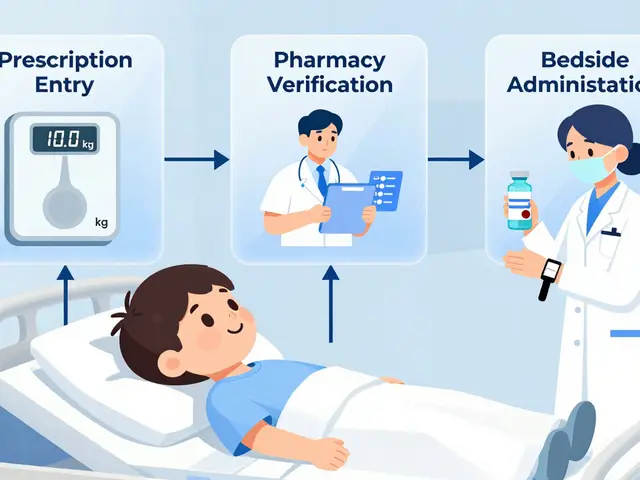
Medication errors don’t happen in one place. They creep in at three key moments: when the doctor writes the order, when the pharmacist fills it, and when the nurse gives it to the child. Each step needs a weight-based check. Skipping any one of them leaves the child at risk.
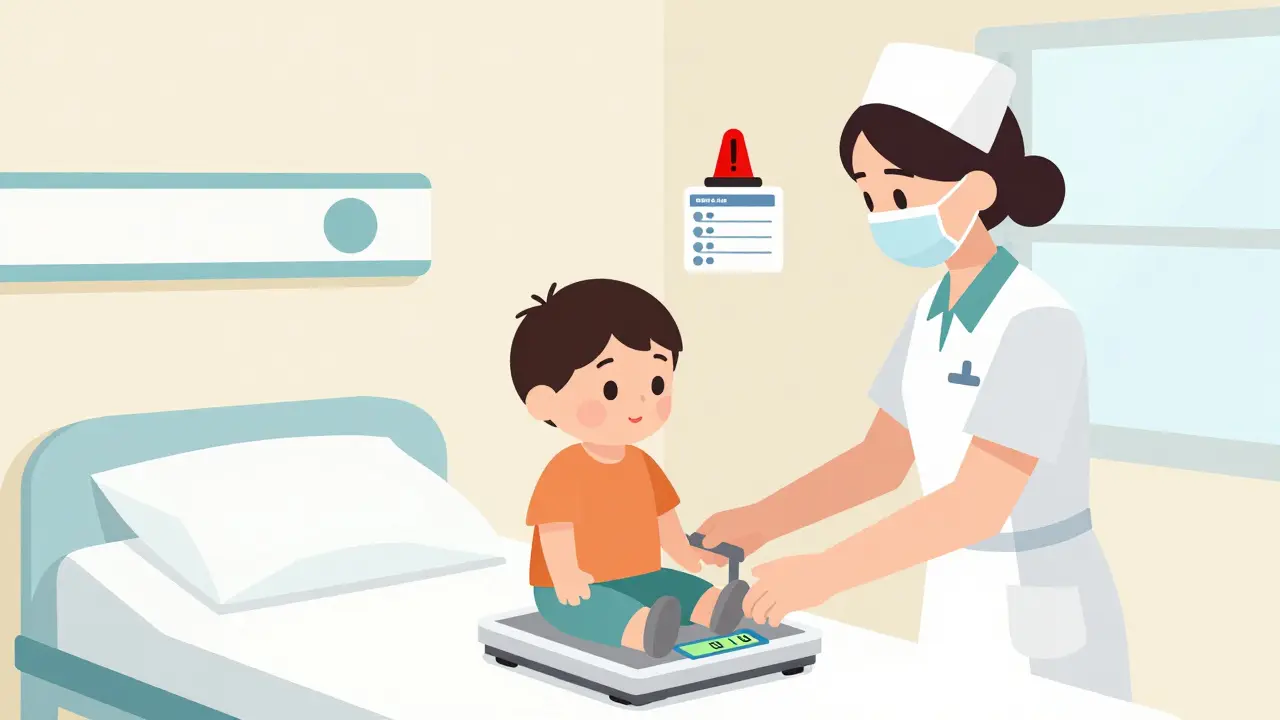
First, at prescription entry. Many EHR systems still let doctors type in doses without forcing them to enter the child’s weight. That’s a red flag. The system should block the order unless weight is entered in kilograms. No pounds. No stones. Just kilograms. Why? Because 12.6% of all pediatric dosing errors come from converting pounds to kilograms manually. That’s a number you can’t afford to ignore.
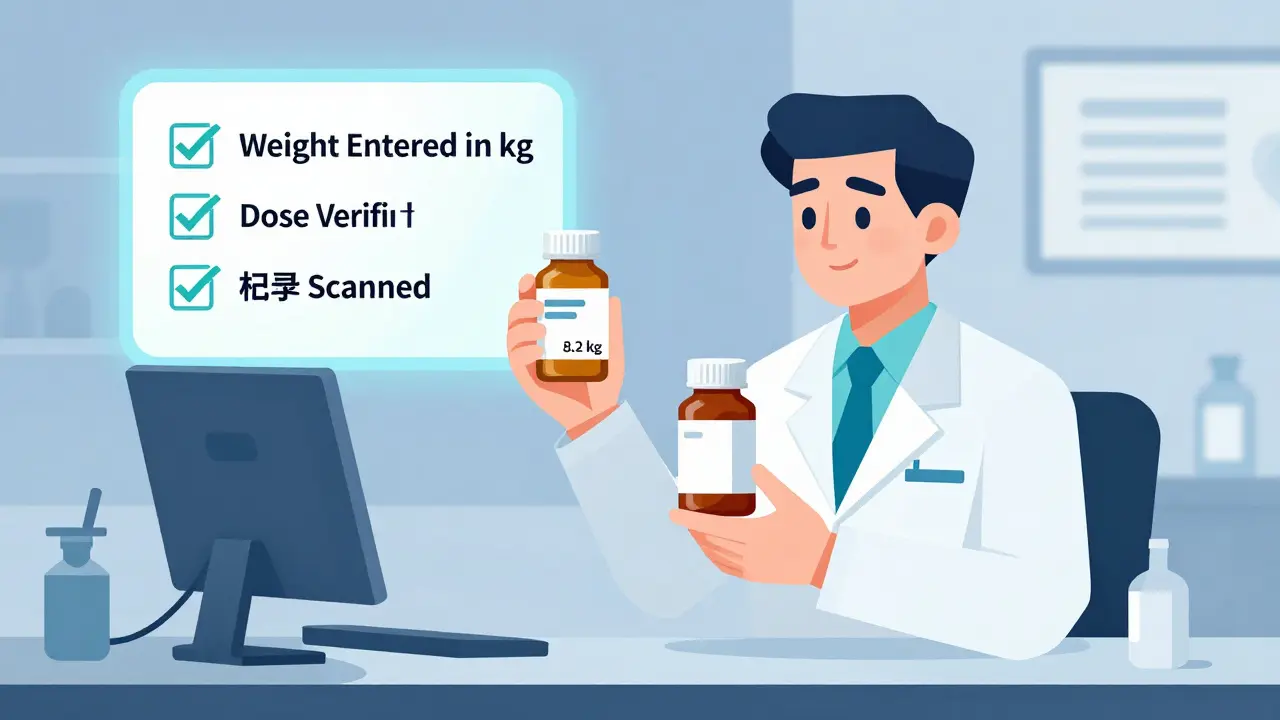
Second, at pharmacy verification. Pharmacists are the last line of defense. But if they’re not trained to double-check every weight-based calculation, they’ll miss it. A 2022 study in Boston Children’s Hospital showed that after requiring pharmacists to verify weight and dose manually before dispensing, weight conversion errors dropped from 14.3 per 10,000 doses to just 0.8. That’s a 94% reduction. But here’s the catch: it only worked because pharmacists were given time to do it right. No rush. No shortcuts.
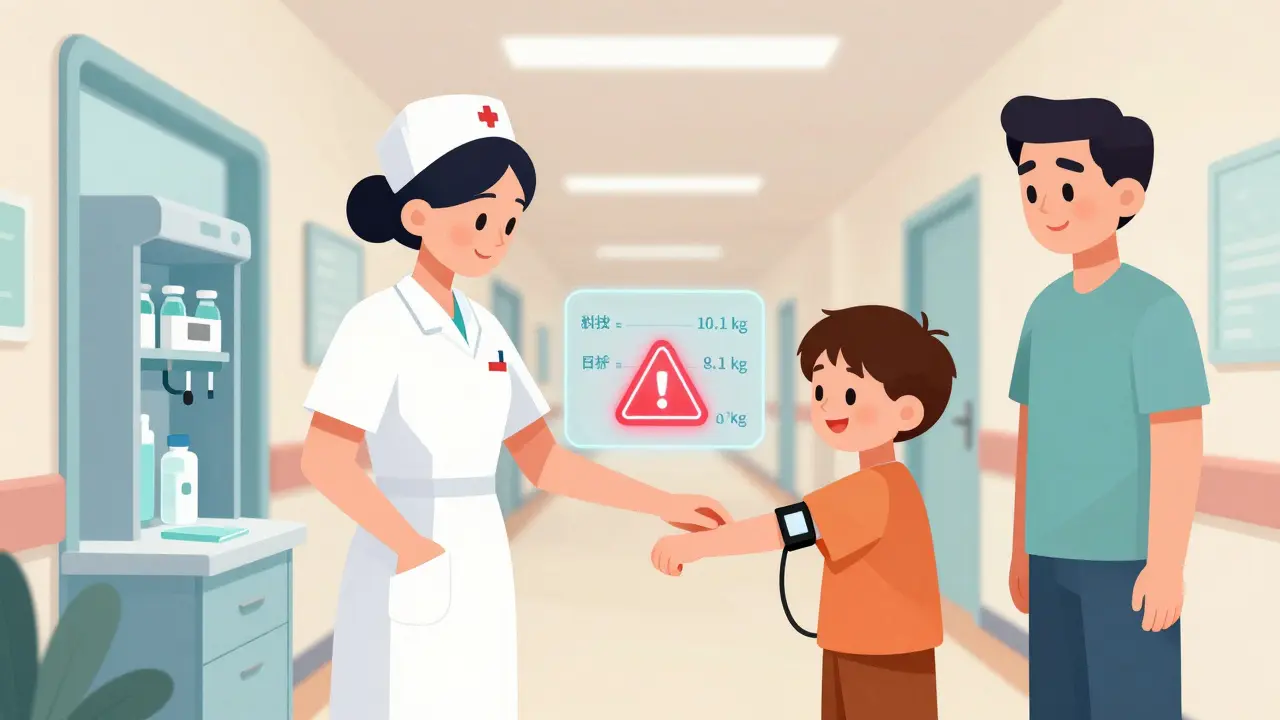
Third, at bedside administration. Nurses often rely on labels and EHR alerts. But if the weight in the system is outdated-say, from a clinic visit six months ago-the alert won’t help. A 2022 survey of pediatric nurses found that 63% had seen weight documentation errors in the past year. And 42% said those errors caused delays in giving meds. That’s not just a paperwork issue. It’s a safety crisis.
What a Real Weight-Based Verification System Looks Like
A good system doesn’t just add a field to an EHR. It changes how care is delivered. Here’s what works:
- Weight must be entered in kilograms only. No exceptions. No conversions. Digital scales in hospitals should display only kilograms-with precision to 0.1 kg for infants and 0.5 kg for older kids. The American Academy of Pediatrics made this a standard in 2021. It’s not optional.
- Computerized decision support must trigger alerts. If a dose falls outside the safe range for the child’s weight, the system should stop everything. Not just beep. Not just flash. It should require a second person to override it. A 2022 study showed this cut errors by 87%.
- Barcodes must include weight data. When a nurse scans a medication, the system should cross-check the dose against the child’s current weight. If it doesn’t match, the scan won’t work. This isn’t science fiction. It’s standard in top children’s hospitals.
- Standardized concentrations. Instead of letting each drug come in different strengths (e.g., 125 mg/mL, 250 mg/mL, 500 mg/mL), hospitals should use one standard concentration per drug class. For example, vancomycin should always be 5 mg/mL for pediatric use. A 2023 study found this cut calculation errors by 72%.
These aren’t suggestions. They’re requirements. The Leapfrog Group now demands weight-based verification for hospitals to earn an ‘A’ safety rating. The CDC, FDA, and CMS have all tied reimbursement and compliance to these practices. Ignoring them isn’t negligence-it’s negligence with consequences.
Why Technology Alone Isn’t Enough
You can install the best EHR in the world, but if your staff doesn’t trust it-or ignores it-you’re still in danger. A 2021 study found that 41.7% of weight-based alerts were overridden. And 18.3% of those overrides were actual errors that should’ve been caught. Why? Alert fatigue. Too many false alarms. Too many pop-ups. Nurses start clicking ‘OK’ without reading.
That’s why training matters more than software. A 2022 survey found that 37.8% of pharmacy staff had inadequate training in pediatric pharmacokinetics. They didn’t understand how weight affects absorption, metabolism, or excretion in kids. Without that knowledge, even the smartest system can’t help.
Successful hospitals don’t just roll out tech. They run 40 hours of mandatory training per clinician. They do quarterly competency checks. They require 90% accuracy on dose-calculation tests before staff can work independently. And they make it safe to speak up. If a nurse sees a wrong weight, they should be praised for catching it-not blamed for slowing things down.
The Hidden Problem: Outdated Weights
One of the biggest blind spots in pediatric safety? Weights that aren’t current. A child admitted to the ER might have a weight on file from a well-child visit six months ago. That weight might be off by 2 kg-or more. For a 10 kg infant, that’s a 20% error in dosing.
The Institute for Safe Medication Practices says this clearly: ‘Weight-based verification systems fail when patient weights are outdated.’ Their 2023 guidelines say hospitals must measure weight within 24 hours for acute care and every 30 days for outpatient visits. No exceptions.
At one rural hospital in Iowa, they started requiring nurses to weigh every child on admission-even if they’d been seen last week. Within three months, they cut their medication error rate by 31%. The cost? A $200 digital scale and 30 extra seconds per patient. The payoff? Zero preventable overdoses.
What’s Changing in 2026
Technology is getting smarter. In January 2024, Epic Systems released a new module that doesn’t just check weight-it checks growth percentiles. If a 12-year-old weighs 40 kg, but their height suggests they should weigh 55 kg, the system flags it. It’s not guessing. It’s using growth curves from CDC data. Beta tests cut false alerts by 63%.
The FDA is pushing for EHRs to integrate growth charts directly into dosing engines. The Institute for Safe Medication Practices is testing AI that predicts a child’s weight based on age, sex, and past measurements-with 92% accuracy. And blockchain systems are being piloted to lock weight data into a tamper-proof record.
But here’s the truth: none of this matters if we don’t fix the culture. As Dr. Robert Wachter from UCSF said in early 2024: ‘Technology alone cannot prevent errors; a culture of safety with non-punitive error reporting is essential.’ That means if a pharmacist spots a wrong dose and speaks up, they get a thank-you-not a reprimand. If a nurse notices a weight mismatch, they’re empowered to pause the med. That’s the real win.
What You Can Do Today
If you work in a pediatric setting, here’s your checklist:
- Confirm every child’s weight is measured in kilograms within 24 hours of admission or visit.
- Ensure your EHR blocks prescription submission without weight entry.
- Require pharmacists to manually verify every weight-based calculation-no auto-fill.
- Standardize liquid medication concentrations to one strength per drug.
- Train all staff on pediatric dosing principles, not just how to use the system.
- Measure weight again before giving any IV medication, even if it’s ‘just a refill’.
It’s not about adding more steps. It’s about making sure each step counts. One wrong number. One missed kilogram. One outdated weight. That’s all it takes.
Why This Matters Beyond the Hospital
Most pediatric medication errors happen in hospitals. But many happen in pharmacies, too. Community pharmacists without access to EHRs often guess weights based on age or parent reports. A 2023 survey found that 28.4% of community pharmacists had a near-miss due to incorrect weight every month. That’s one in three. Imagine if your child got a dose meant for a 30-pound child, but they weighed 50. You wouldn’t just be worried. You’d be furious.
That’s why every parent should ask: ‘Have you checked my child’s weight today?’ It’s not rude. It’s necessary. You’re not overstepping. You’re saving a life.



Jonathan Noe
This is why I hate when hospitals still use pounds. I work in ER and saw a kid get 2x the dose because the chart said '44 lbs' and the nurse just divided by 2. No one checks the math. It's wild. We need to ban pounds from EHRs yesterday.