Delayed Sleep Phase Disorder: Causes, Signs, and How to Reset Your Clock
When you’re the person who can’t fall asleep until 2 a.m. and still feels groggy at 8 a.m., you might not realize it’s not just laziness—it could be delayed sleep phase disorder, a circadian rhythm sleep disorder where the body’s internal clock is shifted later than typical societal norms. Also known as delayed sleep-wake phase disorder, it’s not a choice or poor discipline. It’s biology. And it’s more common than you think—especially in teens and young adults. Unlike regular insomnia, where you struggle to fall asleep no matter what, people with this condition sleep just fine—if they’re allowed to follow their natural rhythm. The problem is the world doesn’t run on their schedule.
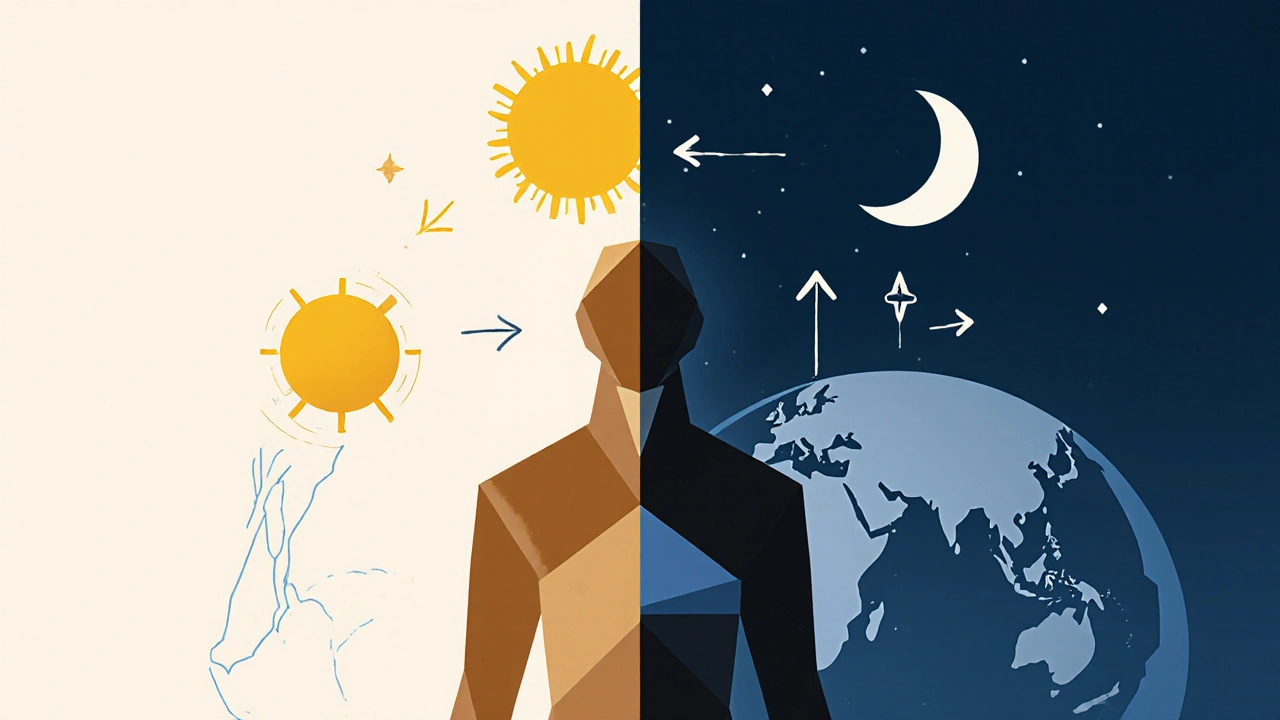
This disorder doesn’t just mess with your mornings. It drags into work, school, relationships, and mental health. Missing morning meetings, skipping breakfast, feeling exhausted all day—these aren’t just inconveniences. They’re symptoms. And they’re linked to bigger issues: higher risk of depression, poor academic performance, and even metabolic problems. It’s not about being a night owl who likes to binge shows. It’s about a biological clock that refuses to sync with sunrise. circadian rhythm, the body’s 24-hour internal clock that regulates sleep, hormone release, and body temperature is the core player here. When it’s off, everything else gets tangled. Your melatonin levels rise too late. Your cortisol spikes too late. Your body thinks it’s time to wake up when the world is already moving on.
What causes this shift? Genetics play a big role—some people are just wired to be late sleepers. But environment matters too. Too much screen time at night, inconsistent sleep times even on weekends, and lack of morning light can lock the rhythm in place. It’s not just about sleep hygiene—it’s about chronotype, a person’s natural preference for when they feel alert and sleepy. If you’re a true evening type, forcing yourself into a 6 a.m. routine is like asking a fish to climb a tree. The fix isn’t willpower. It’s resetting the clock with light, timing, and sometimes medication. And yes, there are proven strategies that work: bright light therapy in the morning, avoiding blue light after sunset, and melatonin taken at the right hour. These aren’t quick fixes, but they’re the only things that actually shift the rhythm long-term.
Below, you’ll find real-world guides on how to manage this condition without relying on sleeping pills. You’ll see how light exposure affects your sleep cycle, what supplements actually help (and which ones don’t), and how lifestyle changes—from exercise timing to meal schedules—can gently nudge your body back into alignment. These aren’t theoretical tips. They’re what people with this disorder have tested and lived with. If you’ve been told you’re just lazy or need to "try harder," this collection is for you. You’re not broken. Your clock is just out of sync. And it can be fixed.
Jet lag and delayed sleep phase disorder are two common circadian rhythm disorders that disrupt sleep timing. Learn how they differ, why they happen, and how to fix them with light, melatonin, and schedule control.
Continue reading...