
Switching between different generic versions of levothyroxine is common-over 89% of prescriptions in the U.S. are filled with generics. But if you’ve ever felt off after a pharmacy swap, you’re not imagining it. Some people do experience symptoms like fatigue, heart palpitations, or unexplained weight changes when their levothyroxine brand changes-even if the dose stays the same. The big question is: Do you need a TSH test every time you switch? The answer isn’t simple, but the latest evidence is changing how doctors think about it.
Why Levothyroxine Is Different
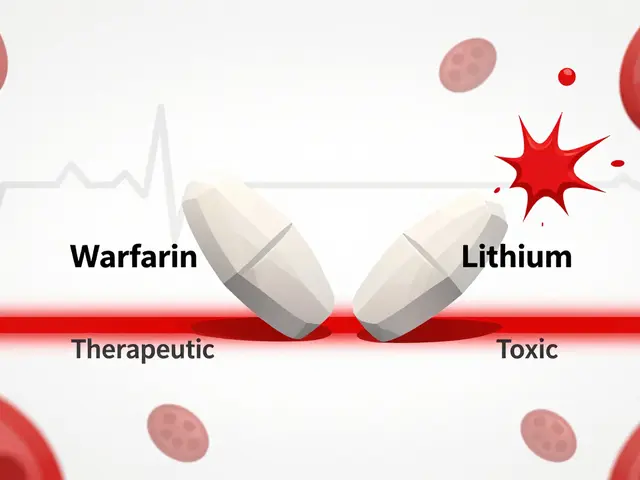
Levothyroxine isn’t like your average pill. It’s a narrow therapeutic index (NTI) drug, meaning tiny changes in blood levels can throw your whole system out of balance. Too little, and you’re still tired, cold, and gaining weight. Too much, and you might feel jittery, lose weight without trying, or risk heart rhythm problems. That’s why your doctor checks your TSH (thyroid-stimulating hormone) regularly. It’s the best way to know if your dose is just right.
The standard target range for most adults is 0.4 to 4.0 mIU/L. For older adults or people with heart conditions, the upper limit might stretch to 6.0 mIU/L. The goal isn’t to hit a number-it’s to feel normal. And that’s where switching generics gets tricky.
What the FDA Says
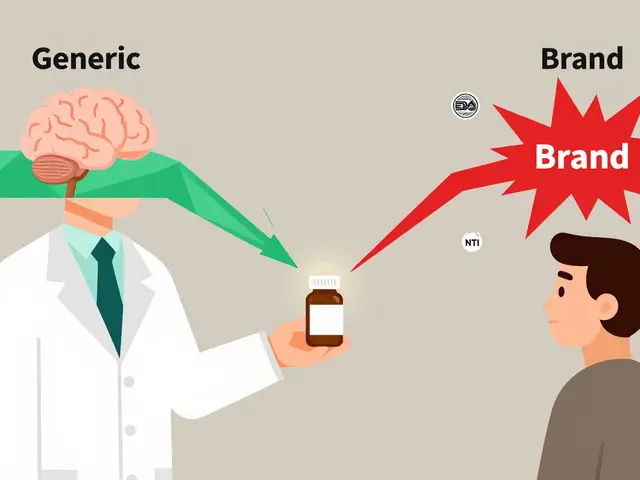
The FDA says approved generic levothyroxine products are interchangeable. They require manufacturers to prove their version is bioequivalent to the brand-name version-meaning the amount of drug absorbed into your bloodstream falls within 80% to 125% of the original. That sounds strict, but for most drugs, it’s enough.
But levothyroxine isn’t most drugs. Experts have argued for years that NTI drugs like this need tighter standards-closer to 90% to 111%. The FDA considered it in 2014 but never made it official. So right now, a generic made by Mylan, Teva, or Pfizer can legally differ by up to 25% in absorption and still be called equivalent.
Still, the FDA stands by its position. In a major 2022 study of over 15,000 patients, researchers found no meaningful difference in TSH levels between people who switched generics and those who didn’t. The average TSH was 2.7 in both groups. That’s strong evidence that, for most people, switching doesn’t matter.
What Doctors Used to Believe
Back in 2014, the American Thyroid Association and the American Association of Clinical Endocrinologists recommended staying on the same brand. If you switched, they said: check your TSH in six weeks. Why? Because even small shifts in absorption could push someone from a stable TSH of 2.0 to an unstable 6.5-enough to cause symptoms.
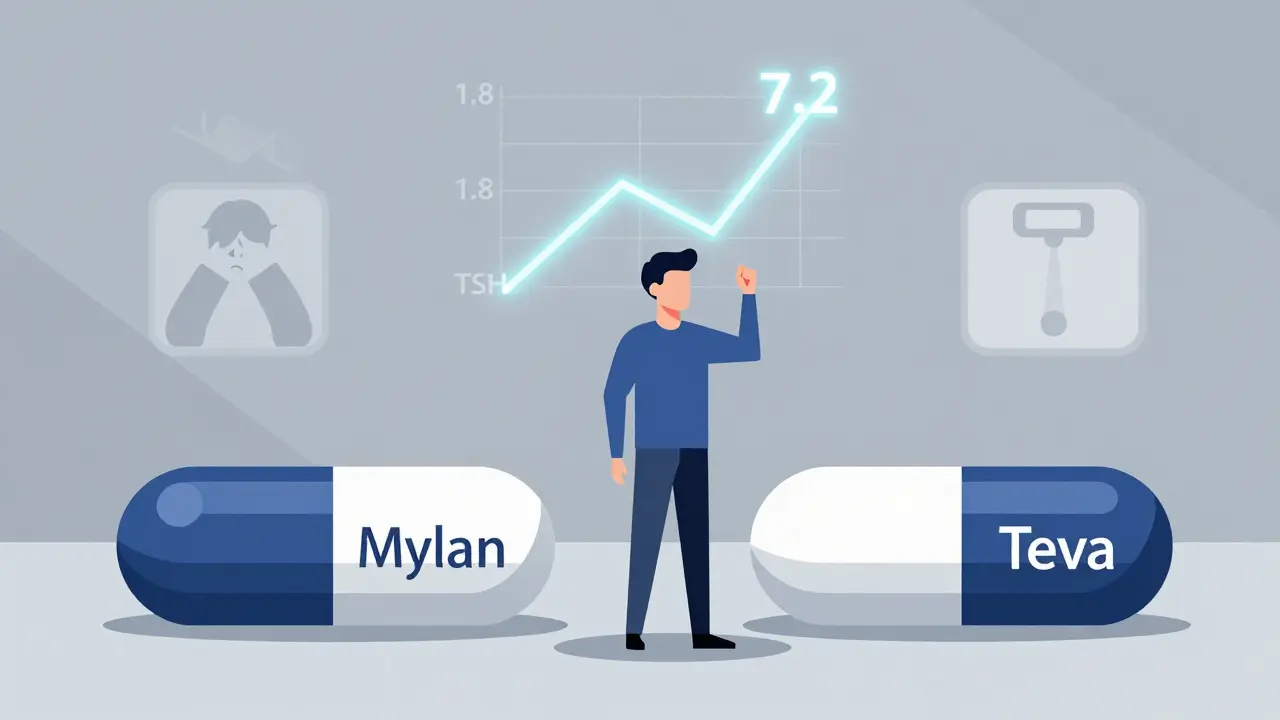
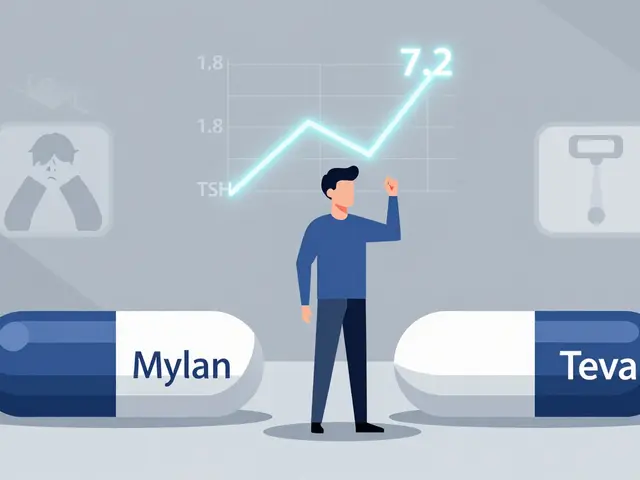
Some studies backed that up. A Dutch study found that patients taking more than 100 mcg of levothyroxine had abnormal TSH levels in 63% of cases after switching, compared to 24% in those who didn’t. And patient stories online are full of similar experiences. One person reported their TSH jumped from 1.8 to 7.2 after switching from Mylan to Teva. Another had no issues at all after three switches.
That’s the problem: it’s not the same for everyone.
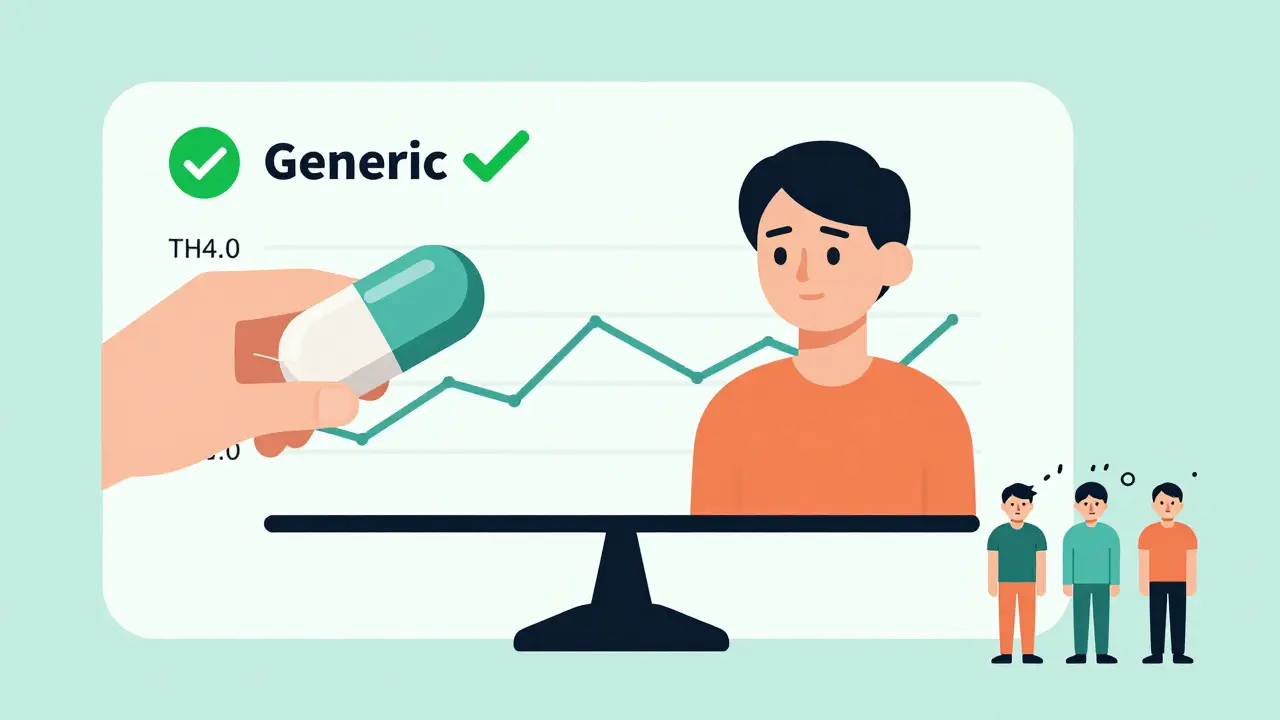
Who Really Needs a TSH Test After a Switch?
You don’t need to panic every time your pharmacist hands you a different pill. But some people are more sensitive. Here’s who should get a TSH test 6 to 8 weeks after switching:
- People with thyroid cancer-they need precise hormone control to prevent recurrence.
- Pregnant women-even small changes in thyroid levels can affect fetal brain development.
- People with heart disease-too much thyroid hormone can stress the heart.
- Those with a history of unstable TSH-if your levels have swung before, you’re more likely to swing again.
- Anyone who feels different after a switch-fatigue, palpitations, weight changes, or brain fog are red flags.
For everyone else-healthy adults with stable hypothyroidism-routine TSH testing after a generic switch isn’t necessary. The 2023 American Association of Clinical Endocrinologists updated its guidelines to reflect this: “Routine monitoring after generic-to-generic switching is not necessary for most patients.”
What the Data Shows About Symptoms
It’s not just about TSH numbers. People report real symptoms.
The UK’s Medicines and Healthcare products Regulatory Agency (MHRA) collected over 1,200 reports of adverse reactions linked to levothyroxine switches between 2015 and 2021. The top symptoms? Fatigue (327 cases), palpitations (289), and weight changes (215). A 2021 survey by Paloma Health found 18.7% of 1,500 users noticed changes after switching, with 6.2% needing a dose adjustment.
Reddit threads are full of stories. One user wrote: “Switched from Mylan to Teva and my TSH jumped from 1.8 to 7.2 in 8 weeks. I had to increase my dose.” Another said: “I’ve switched three times in two years. Zero changes. My doctor says I’m in the 70% who don’t react.”
That split tells you everything. For most, it’s fine. For a small group, it’s a big deal.
Why Some People React Differently
Why do some people react and others don’t? Researchers are looking at a few possibilities:
- Excipients-the inactive ingredients like dyes, fillers, or preservatives. One study found 1.7% of switchers had reactions likely tied to these.
- Genetics-a small percentage of people have gene variants (like DIO2) that affect how their body converts T4 to T3, the active hormone. This affects about 0.8% of users.
- Thyroid reserve-people with very low natural thyroid function (about 3.2% of hypothyroid patients) may be more sensitive to absorption changes.
- Thyroid receptor sensitivity-some people’s cells respond differently to hormone levels, even if blood levels look normal.
Right now, we can’t test for most of these easily. But if you’re one of the 8-12% who reacts badly, knowing you’re in that group can save you months of feeling off.
What Different Countries Do
Guidelines aren’t the same everywhere:
- United States: FDA says no routine testing needed. Kaiser Permanente and other large health systems dropped mandatory TSH checks after their own data showed no benefit. But the Veterans Health Administration still requires testing within 60 days of a switch.
- United Kingdom: NHS advises testing only if you have symptoms. If you’re consistently symptomatic after switching, ask for a specific brand.
- Europe: The European Medicines Agency still recommends TSH monitoring 6-8 weeks after any switch.
The U.S. is moving toward a less cautious approach. The FDA updated its labeling in January 2024 to say: “For most patients, switching between different levothyroxine products does not require additional TSH monitoring beyond routine follow-up.” The American Thyroid Association is expected to update its guidelines later in 2024 to reflect this shift.
What You Should Do
Here’s your practical checklist:
- If you’re stable, healthy, and feel fine-no need to panic when your pharmacy switches your generic. Keep your regular TSH checkups (usually once a year).
- If you notice new symptoms-fatigue, heart racing, weight gain or loss-get your TSH tested. Don’t wait.
- If you’ve had unstable TSH levels before, or you’re pregnant, have heart disease, or thyroid cancer-ask your doctor to test TSH 6-8 weeks after any switch.
- If you’ve switched three times and never had an issue-you’re likely in the majority who don’t react.
- If you keep having problems, ask for a consistent brand. Some pharmacies will honor that request.
There’s no one-size-fits-all. But the science is clear: most people can switch safely. A small group needs attention. Pay attention to how you feel. Your body knows before the lab does.
Cost vs. Safety
Switching to generics saves money-big time. Brand-name Synthroid costs over $45 for a 90-day supply. Generic versions? As low as $4.37. In 2023, generic substitution saved U.S. healthcare $2.1 billion. That’s real savings. But it shouldn’t come at the cost of patient well-being.
The goal isn’t to stop generics. It’s to make sure the system works for everyone, not just the majority. If you’re one of the few who reacts, you deserve to be heard. And if you’re not? You can keep saving money without worry.
Do I need to get my TSH tested every time I switch generic levothyroxine brands?
No, not for most people. If you’re healthy, stable, and feel fine, routine TSH testing after a switch isn’t needed. The FDA and major medical groups now agree that generic-to-generic switches are safe for the majority. But if you have symptoms like fatigue, palpitations, or weight changes-or if you fall into a high-risk group (like thyroid cancer, pregnancy, or heart disease)-get your TSH checked 6 to 8 weeks after the switch.
Why do some people feel worse after switching generics?
Even though generics are required to be bioequivalent, small differences in how the drug is absorbed can matter for people with narrow therapeutic windows. Factors like inactive ingredients (fillers, dyes), genetic differences in hormone conversion, or very low natural thyroid reserve can make some individuals more sensitive. Studies show about 8-12% of patients may experience noticeable changes, even if their TSH levels stay in range.
Can I ask my pharmacist to give me the same generic brand every time?
Yes. While pharmacies often switch generics to reduce costs, you can request a specific manufacturer. Some pharmacies will honor this if you explain you’ve had symptoms with previous switches. Your doctor can also write “Dispense as written” or “Do not substitute” on the prescription, though this may increase your out-of-pocket cost.
Is brand-name levothyroxine (Synthroid) better than generics?
For most people, no. Large studies show no significant difference in TSH control between brand-name and generic levothyroxine. The main difference is cost-brand-name can be 10 times more expensive. But if you’ve had repeated issues switching generics, staying on one brand-even if it costs more-may be worth it for your quality of life.
How long does it take for TSH to stabilize after switching levothyroxine?
TSH levels usually take 4 to 8 weeks to reflect changes in levothyroxine absorption because the hormone has a long half-life. That’s why doctors recommend waiting 6-8 weeks before retesting after a switch. Testing too soon won’t give you an accurate picture.



Greg Scott
Been on levothyroxine for 12 years. Switched generics like 5 times. Zero issues. My TSH is always spot on. I think the panic is overblown for most people. Just don’t overthink it unless you’re feeling off.