Circadian Rhythm: How Your Body Clock Affects Sleep, Meds, and Health
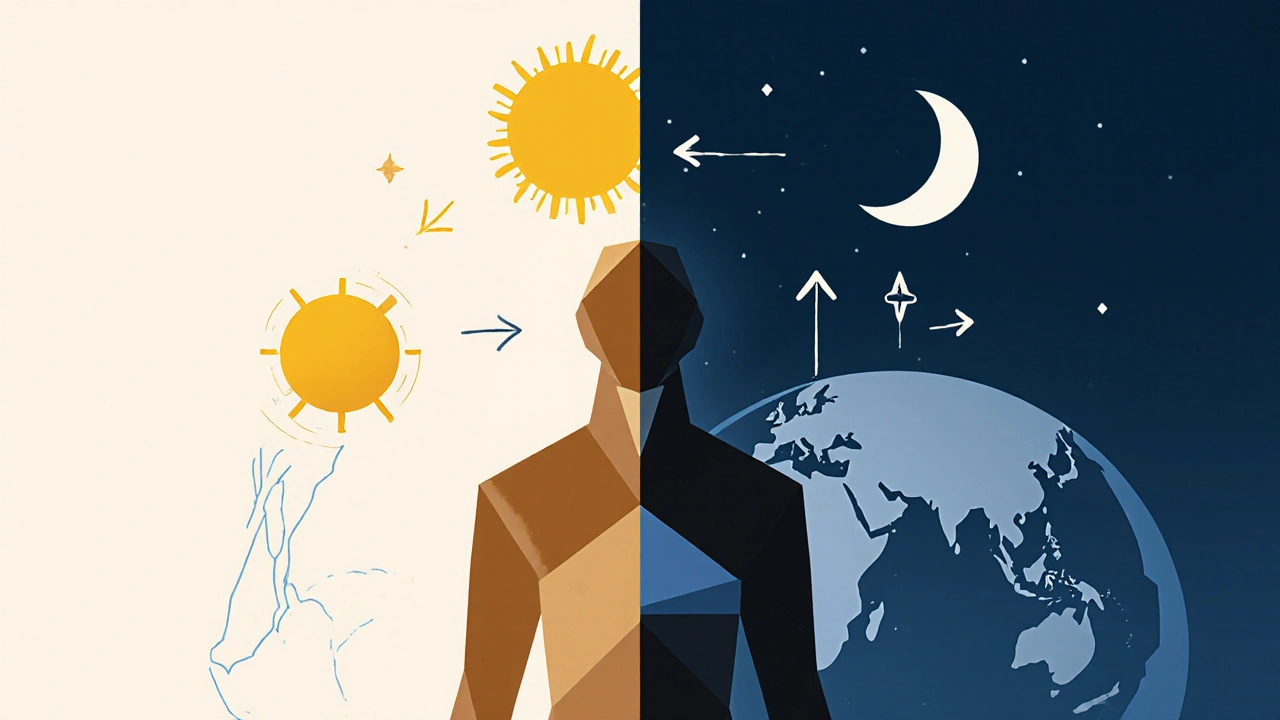
When you feel tired at night and wide awake in the morning, that’s your circadian rhythm, a 24-hour internal clock that regulates sleep, hormone release, and body temperature. Also known as your biological clock, it doesn’t just tell you when to sleep—it tells your liver when to process drugs, your stomach when to digest food, and your heart when to slow down.
This rhythm isn’t just about sleep. It’s tied to how your body absorbs and reacts to medication. For example, blood pressure pills work better when taken at night for some people because their blood pressure naturally dips during sleep. Antidepressants, steroids, and even painkillers can have stronger effects—or worse side effects—depending on the time of day you take them. Studies show that taking certain drugs at the wrong time can cut their effectiveness by half. Your melatonin, the hormone that signals your brain it’s time to sleep drops as daylight hits your eyes, and if you’re scrolling in bed at midnight, you’re basically telling your body it’s still noon.
Disrupt your rhythm—through shift work, jet lag, or late-night screen use—and you don’t just feel groggy. You raise your risk for diabetes, heart disease, and even depression. People who work nights have a higher chance of developing metabolic disorders because their bodies are constantly out of sync. Even something as simple as eating dinner at 2 a.m. can mess with your insulin response. And if you’re on long-term meds, not aligning your doses with your natural rhythm might mean you’re not getting the full benefit.
You’ll find articles here that connect this hidden clock to real-world health issues. Some explain how fentanyl patches become dangerous when heat throws off your body’s temperature rhythm. Others show why taking probiotics with antibiotics at the wrong time can backfire. There’s even a piece on how stress messes with your circadian signals, leading to higher clotting risks. You’ll see how doctors are starting to time prescriptions around your body’s natural cycles—not just the clock on the wall.
This isn’t theory. It’s daily biology. Whether you’re managing chronic pain, sleep issues, or just trying to feel less tired, understanding your circadian rhythm changes everything. The posts below don’t just talk about it—they show you how it affects your meds, your sleep, and your health in ways you might never have noticed.
Time-released melatonin doesn't help with jet lag - it makes it worse. Learn why immediate-release melatonin, taken at the right time, is the only effective option for resetting your body clock across time zones.
Continue reading...
Jet lag and delayed sleep phase disorder are two common circadian rhythm disorders that disrupt sleep timing. Learn how they differ, why they happen, and how to fix them with light, melatonin, and schedule control.
Continue reading...