Hatch-Waxman Act: How It Changed Generic Drugs and Drug Prices
When the Hatch-Waxman Act, a 1984 U.S. law that created the modern pathway for generic drug approval. Also known as the Drug Price Competition and Patent Term Restoration Act, it changed everything about how medicines are made, priced, and sold. Before this law, brand-name companies held a monopoly for years—even after their patents expired—because copying their drugs was slow, expensive, and legally risky. Generic manufacturers couldn’t prove their versions worked the same without repeating the full clinical trials the original company had already done. The Hatch-Waxman Act fixed that by letting generics file an abbreviated application with the FDA, using the brand’s safety data as long as they showed bioequivalence. That single change slashed drug prices and opened the door for millions to afford their meds.
It wasn’t all one-sided. The law also gave brand-name companies a way to extend their patents by up to five years to make up for time lost during FDA review. That’s why some drugs still cost a fortune years after their patent should’ve expired—companies tweak the formula slightly, file a new patent, and reset the clock. This trick, called evergreening, is why you’ll see posts here about evergreening, pharmaceutical tactics that delay generic competition by making minor changes to existing drugs, and how it clashes with the original intent of Hatch-Waxman. The law also created the first real system for generic drug approval, the FDA process that proves a generic medicine performs the same as the brand-name version. That’s why today, 9 in 10 prescriptions are filled with generics—they’re not cheaper because they’re weaker, but because they don’t need to repeat the same billion-dollar trials.
The Hatch-Waxman Act didn’t just change drug prices. It shaped how doctors prescribe, how pharmacies stock shelves, and how patients think about their meds. That’s why you’ll find posts here about generic prescribing incentives, programs that reward doctors for choosing generics to cut healthcare costs, and why some still hesitate—even when science says generics are just as good. It’s also why you’ll see articles on compulsory licensing, when governments override patents to make life-saving drugs affordable, a tool used in other countries when Hatch-Waxman’s balance fails patients. This law didn’t solve everything, but it created the foundation for affordable medicine in America. What comes next—whether it’s more patent challenges, better education for doctors, or stronger FDA oversight—depends on how we use the system it built.
The FDA Office of Generic Drugs ensures safe, affordable generic medications reach patients by reviewing applications, enforcing bioequivalence standards, and managing patent exclusivity under GDUFA and the Hatch-Waxman Act.
Continue reading...
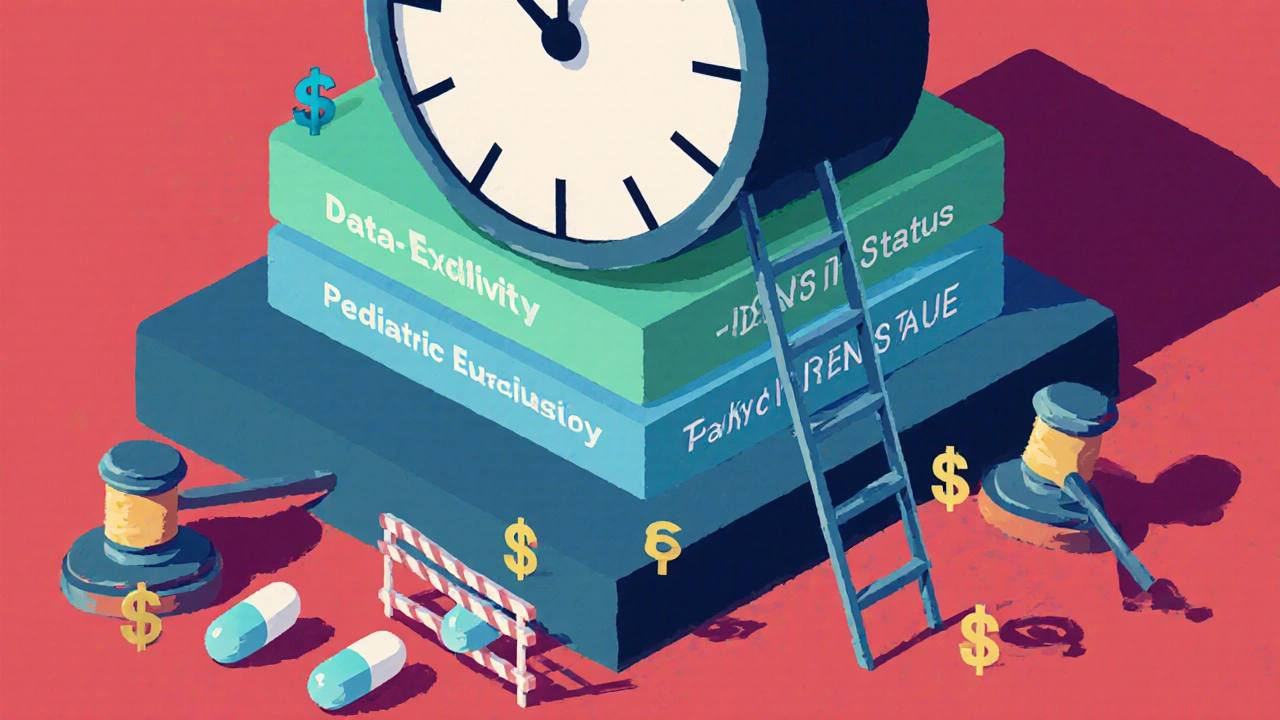
Generic drug exclusivity periods vary widely by country, affecting how quickly affordable versions become available. Learn how the U.S., EU, Canada, Japan, and others protect brand drugs - and who pays the price.
Continue reading...