Compulsory Licensing: How Governments Allow Cheap Generic Drugs to Save Lives
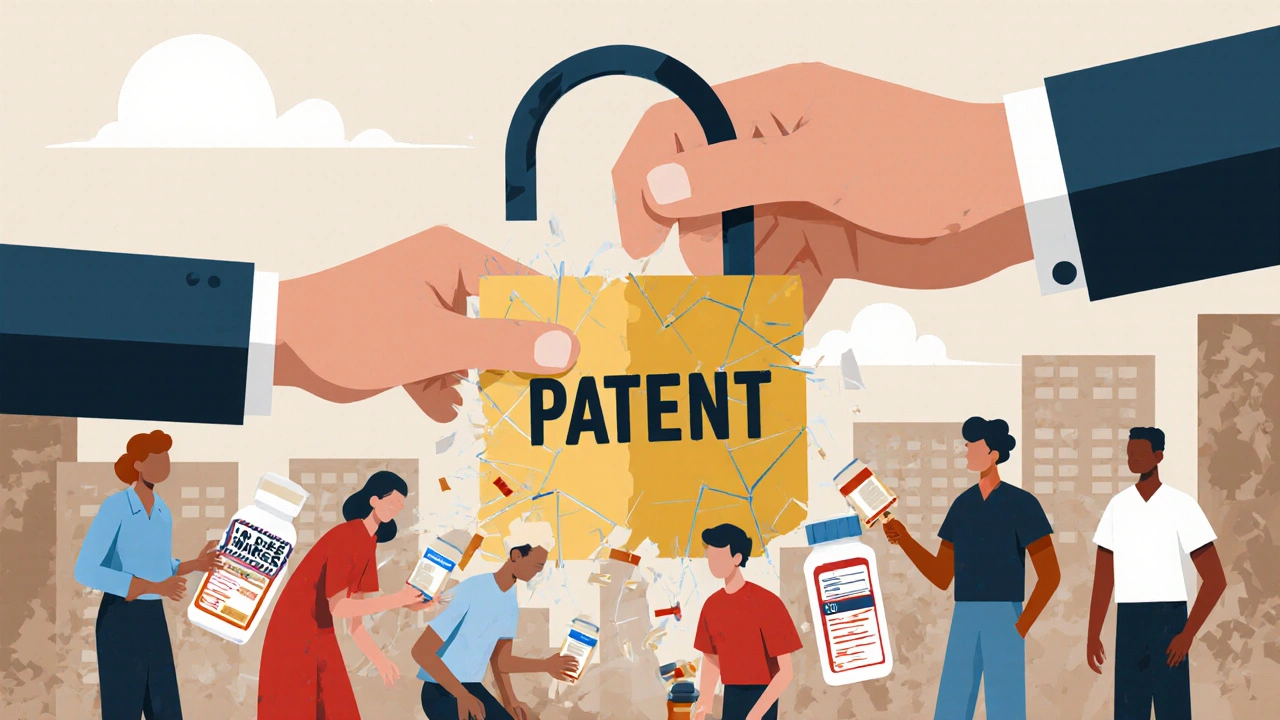
When a life-saving drug costs thousands of dollars and no one can afford it, compulsory licensing, a legal tool that lets governments authorize generic versions of patented drugs without the maker’s consent. Also known as government use licenses, it’s not a loophole — it’s a right written into global health agreements like TRIPS. This isn’t about stealing IP. It’s about saving lives when the patent holder won’t make the drug accessible.
Pharmaceutical companies hold patents to recoup research costs, but those patents aren’t absolute. In a public health emergency — like HIV in Africa, hepatitis C in Egypt, or cancer drugs in India — countries can issue compulsory licensing to let local manufacturers produce cheaper copies. Brazil did it for HIV meds. Thailand did it for heart and cancer drugs. South Africa used it during the AIDS crisis. These weren’t acts of rebellion. They were acts of survival. And they worked. Prices dropped by 80% or more. People lived. Meanwhile, the original makers lost profits, but not market share — because generics filled the gap they refused to serve.
It’s not just about low-income countries. Even wealthy nations like Canada and Germany have used compulsory licensing when drug prices became unreasonable. The U.S. has the legal power too, but rarely uses it — partly because big pharma lobbies hard to keep prices high. But when the cost of a single course of a drug hits $100,000, and thousands die waiting, the moral and legal case for compulsory licensing gets louder. It’s not anti-innovation. It’s pro-access. And it’s backed by the World Health Organization, the UN, and dozens of public health studies.
Related tools like patent evergreening — where companies tweak a drug just to extend exclusivity — directly fight against compulsory licensing. That’s why posts here cover how generic drug patents vary by country, how patent term extension delays affordability, and why doctors still don’t fully trust generics even when they’re proven safe. All these threads connect back to the same question: Who controls access to medicine — the market, or the people?
Below, you’ll find real-world examples of how governments, patients, and manufacturers have used compulsory licensing and related tools to fight high drug prices. You’ll see how patent rules shape what’s available, how pricing battles play out, and why your next prescription might be cheaper than you think — not because of luck, but because someone fought for the right to make it so.
Compulsory licensing lets governments override patents to make life-saving drugs affordable. Used in emergencies like HIV and COVID-19, it balances innovation with access - and has slashed drug prices by up to 90%.
Continue reading...