FDA Recalls: What You Need to Know About Drug Safety and Withdrawals
When the FDA recalls, a formal action by the U.S. Food and Drug Administration to remove unsafe or mislabeled drugs from the market. Also known as drug withdrawals, it’s not just bureaucracy—it’s a direct line between you and your safety. Every recall means someone, somewhere, could’ve been harmed. And while most people never hear about them until it’s too late, the system that catches these problems is called MedWatch, the FDA’s official system for collecting reports of side effects, errors, and safety issues with medications and medical devices. Your report, even if it seems small, can trigger a recall. That’s how the system works: real people noticing something wrong, then the FDA stepping in.
Not all recalls are the same. Some are Class I—meaning the drug could cause serious injury or death. Others are Class III, where the problem is mostly about labeling or packaging. But here’s the thing: even a Class III recall can be dangerous if you’re taking a drug that’s been mixed up with another. We’ve seen pills switched, batches contaminated with mold, and generics that didn’t dissolve right. One recall in 2022 pulled over 100,000 bottles of blood pressure medicine because it contained a cancer-causing impurity. That wasn’t a mistake—it was a failure in quality control. And it happened because no one checked. That’s why knowing how to verify your pharmacy matters. Licensed pharmacies, pharmacies certified by state boards and verified through programs like VIPPS or NABP Verify. Also known as legitimate pharmacies, they’re your first defense against fake or unsafe drugs. If you buy online, don’t just trust a pretty website. Check the NABP seal. Look for a physical address. If they don’t require a prescription, walk away.
FDA recalls aren’t random. They often follow patterns. Drugs with narrow therapeutic windows—like warfarin or levothyroxine—are more likely to be pulled because even tiny differences in potency can cause harm. That’s why some doctors write "Do Not Substitute" on prescriptions. It’s not about brand loyalty—it’s about control. And when a drug is recalled, the next step isn’t just throwing it out. You need to know what to do next: contact your doctor, check the FDA’s official site, and report any side effects through MedWatch. The system only works if you use it.
What you’ll find below are real stories and guides from people who’ve been affected—whether it’s a parent who caught a recalled children’s medicine, a patient who switched to a generic and had a bad reaction, or a pharmacist who spotted a counterfeit batch before it reached shelves. These aren’t theoretical risks. They’re lived experiences. And they’re why this matters.
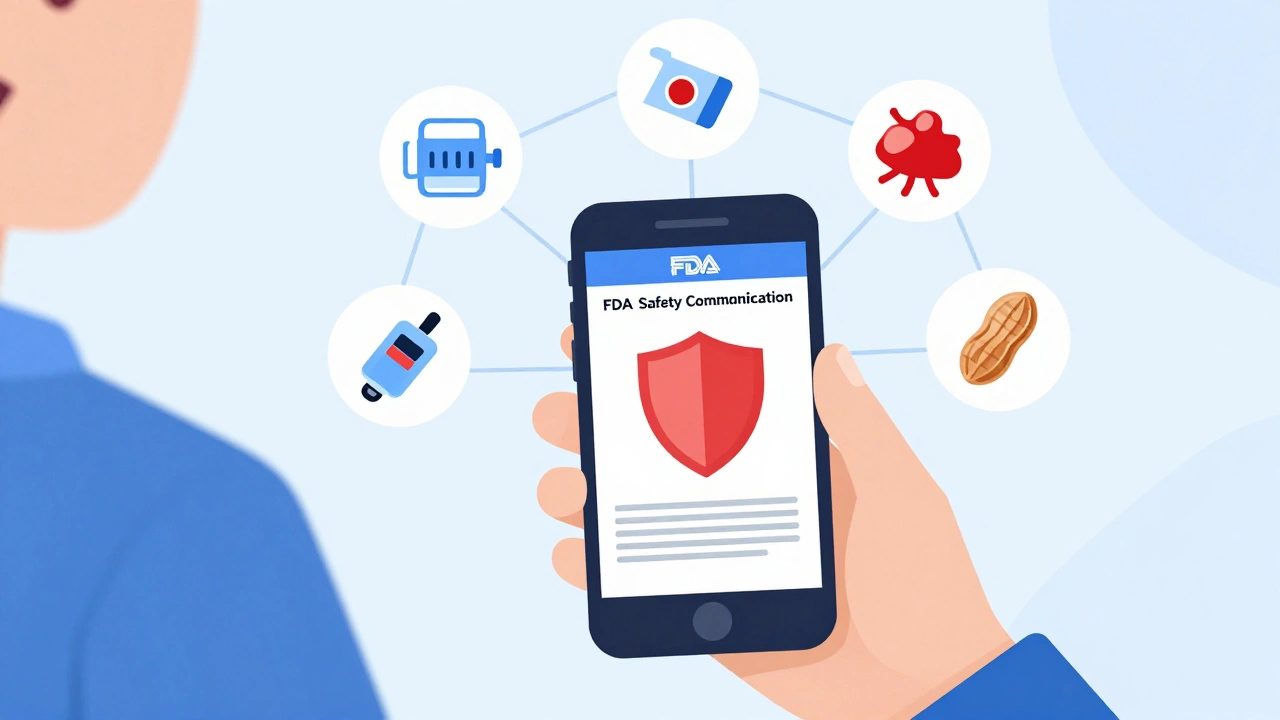
Subscribe to FDA Safety Communications to get urgent, life-saving alerts about drug, device, and food recalls. Learn how to set up keyword-based email notifications and why missing an alert could be dangerous.
Continue reading...