Gestational Diabetes Meal Plan: What to Eat, When, and Why It Matters
When you're pregnant and diagnosed with gestational diabetes, a type of diabetes that develops during pregnancy due to hormonal changes that interfere with insulin. It's not your fault, and it's not permanent — but it does need attention. Also known as pregnancy diabetes, it affects about 1 in 10 pregnant women and can be managed effectively with food, timing, and simple habits. The goal isn’t to starve yourself or cut out carbs entirely. It’s to keep your blood sugar steady so your baby grows healthy and you avoid complications like preeclampsia or a large baby at delivery.
A gestational diabetes meal plan, a structured approach to eating that balances carbohydrates, protein, and healthy fats to prevent blood sugar spikes works by spreading carbs evenly across three small meals and two to three snacks. Skipping meals or eating too many carbs at once causes your body to release too much insulin — which then crashes your blood sugar and leaves you tired, hungry, and moody. Pairing carbs with protein or fat slows digestion. So instead of a bowl of oatmeal alone, have oatmeal with a boiled egg or a tablespoon of peanut butter. Instead of fruit juice, eat whole fruit with a handful of nuts. These aren’t fancy tricks — they’re basic biology.
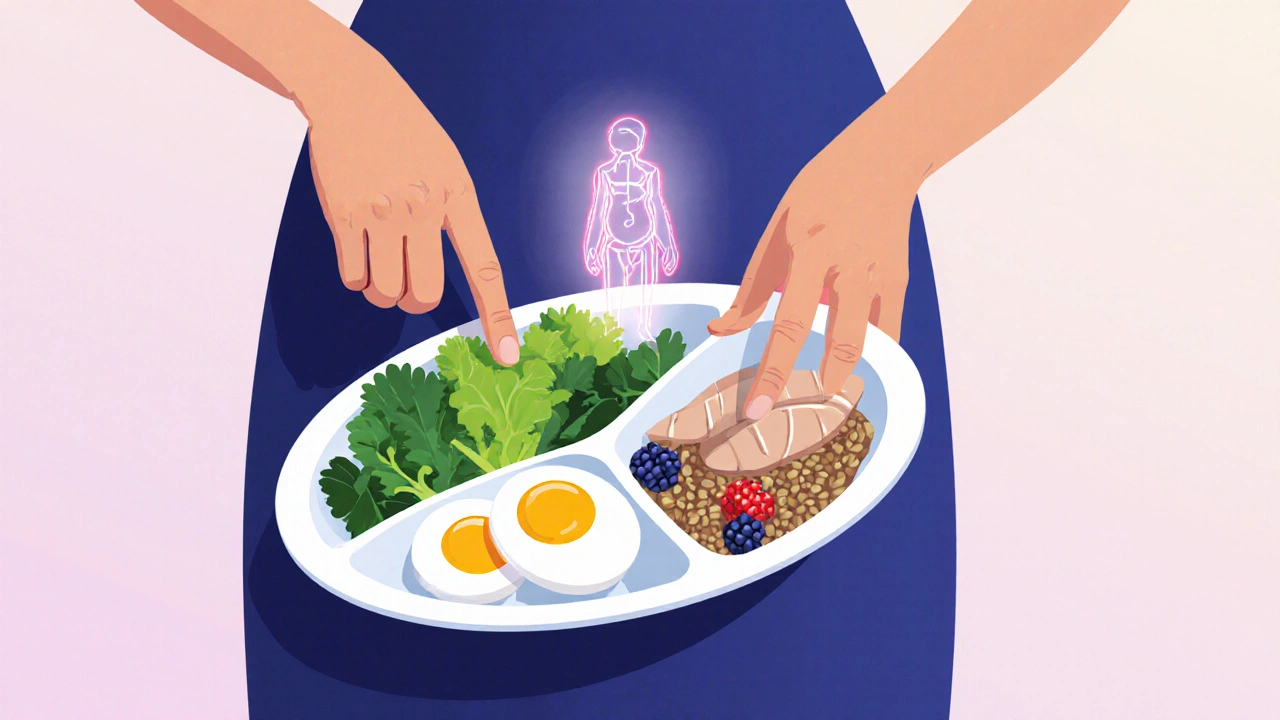
Many women worry they’ll never eat bread or rice again. But you can — just not all at once. A quarter of your plate should be whole grains, another quarter lean protein, and half non-starchy vegetables. Think grilled chicken, brown rice, and broccoli — not fried rice with sweet and sour sauce. Snacks matter too. A piece of string cheese, a few almonds, or plain Greek yogurt with berries can keep your levels stable between meals. Avoid sugary cereals, pastries, and sweetened drinks. They’re the fastest way to spike blood sugar and make your pancreas work overtime.
Timing is just as important as what you eat. Eating every 2 to 3 hours helps your body handle insulin better. Many women find their blood sugar highest in the morning due to hormones, so breakfast should be lower in carbs and higher in protein. A scrambled egg with spinach and a slice of whole grain toast beats a bagel with cream cheese. Dinner should be light and balanced — no large bowls of pasta late at night. And don’t forget to drink water. Dehydration can make blood sugar readings look higher than they are.
Some women need insulin, others don’t. But everyone benefits from a clear plan. Tracking your meals and blood sugar helps you learn what works for your body. Did your levels spike after a banana? Try half a banana with peanut butter next time. Did a walk after dinner help? Keep doing it. This isn’t about perfection — it’s about patterns. The right gestational diabetes meal plan gives you control without guilt, structure without starvation, and confidence without fear.
Below, you’ll find real, science-backed advice from women who’ve been there — from simple swaps that made a difference to how to handle cravings without crashing your numbers. No myths. No extreme diets. Just what actually works when you’re tired, hungry, and carrying a baby.
Learn practical meal plans and blood sugar targets for gestational diabetes that work without medication. Based on ADA, ACOG, and real-world data from thousands of pregnant women.
Continue reading...