Bacterial Skin Infections: Causes, Treatments, and What You Need to Know
When your skin gets broken—whether from a cut, bug bite, or scratch—it’s vulnerable to bacterial skin infections, infections caused by bacteria like Staphylococcus or Streptococcus entering through damaged skin. Also known as skin infections due to bacteria, these aren’t just minor annoyances—they can turn serious fast if ignored. You might notice redness, swelling, warmth, or pus. Sometimes it’s just a small sore. Other times, it’s a spreading rash that hurts to touch. Either way, it’s not something to wait out.
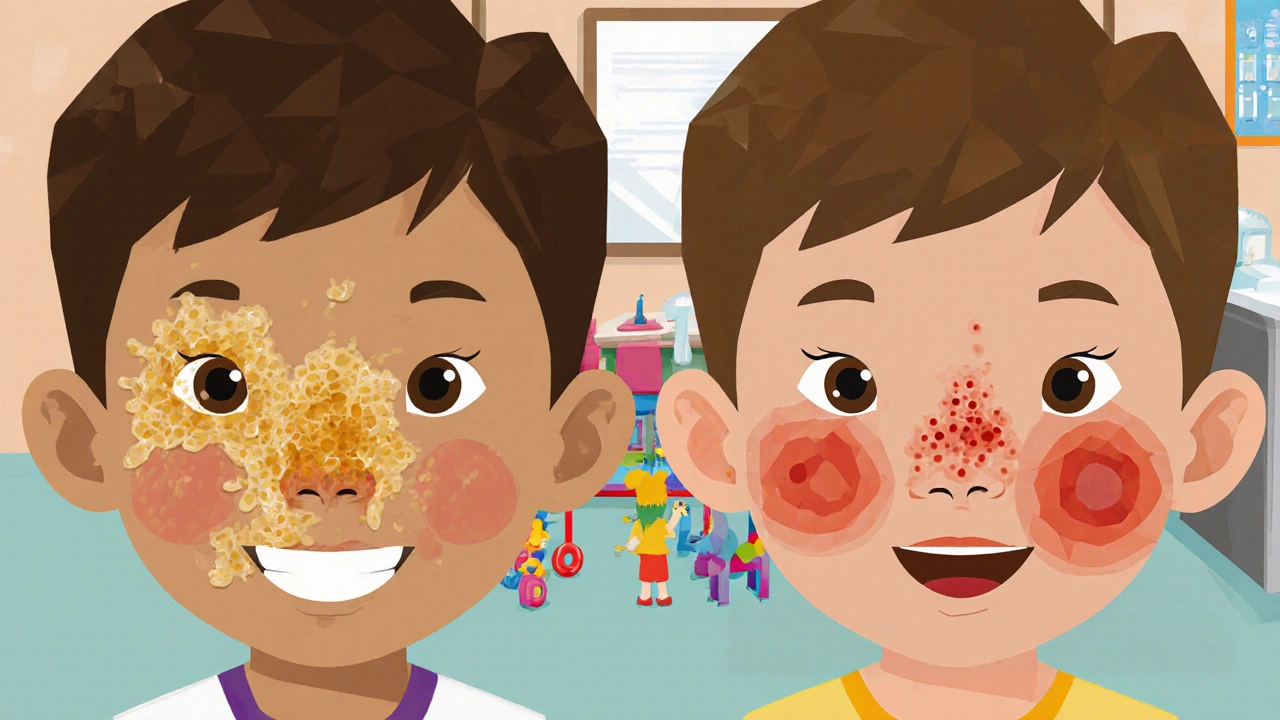
Two of the most common types are impetigo, a contagious infection often seen in kids, causing honey-colored crusts around the nose and mouth and cellulitis, a deeper infection that spreads through the skin layers and can trigger fever and chills. Then there’s the skin abscess, a pocket of pus under the skin, often needing drainage. These aren’t just different names—they’re different problems needing different approaches. Antibiotics like cephalexin, clindamycin, or trimethoprim-sulfamethoxazole are common, but not always the answer. Sometimes, all you need is proper cleaning and drainage. Overusing antibiotics? That’s how resistant strains like MRSA spread.
What you see on the surface isn’t always the full story. People with diabetes, eczema, or weakened immune systems are at higher risk. A small cut on a diabetic foot can turn into a hospital visit. That’s why knowing when to act matters. If the redness keeps growing, you feel feverish, or it doesn’t improve in a couple of days, you need help—not just a cream from the drugstore. And while some folks turn to herbal remedies or home treatments, bacterial infections don’t care about trends. They respond to science—and sometimes, that means oral or IV antibiotics.
You’ll find articles here that break down exactly how these infections develop, which antibiotics are still effective, and when to skip pills altogether. There’s guidance on recognizing warning signs, avoiding unnecessary prescriptions, and understanding why some infections come back. You’ll also see how antibiotics like sulfamethoxazole and others are used—or misused—in treating skin issues. This isn’t about fear. It’s about knowing what’s real, what’s risky, and what actually works.
Learn how to tell impetigo and cellulitis apart, what causes them, and which antibiotics actually work-based on current guidelines and real-world patterns in treatment.
Continue reading...