Symptoms of DIL: What You Need to Know About Drug-Induced Lupus
When your body reacts badly to a medication, it can sometimes mimic lupus — a condition called drug-induced lupus, an autoimmune reaction triggered by certain medications that causes lupus-like symptoms. Also known as DIL, this isn’t the same as systemic lupus erythematosus, but it shares enough signs to cause confusion. Unlike genetic lupus, DIL usually goes away after you stop the drug causing it — but only if you catch it early.
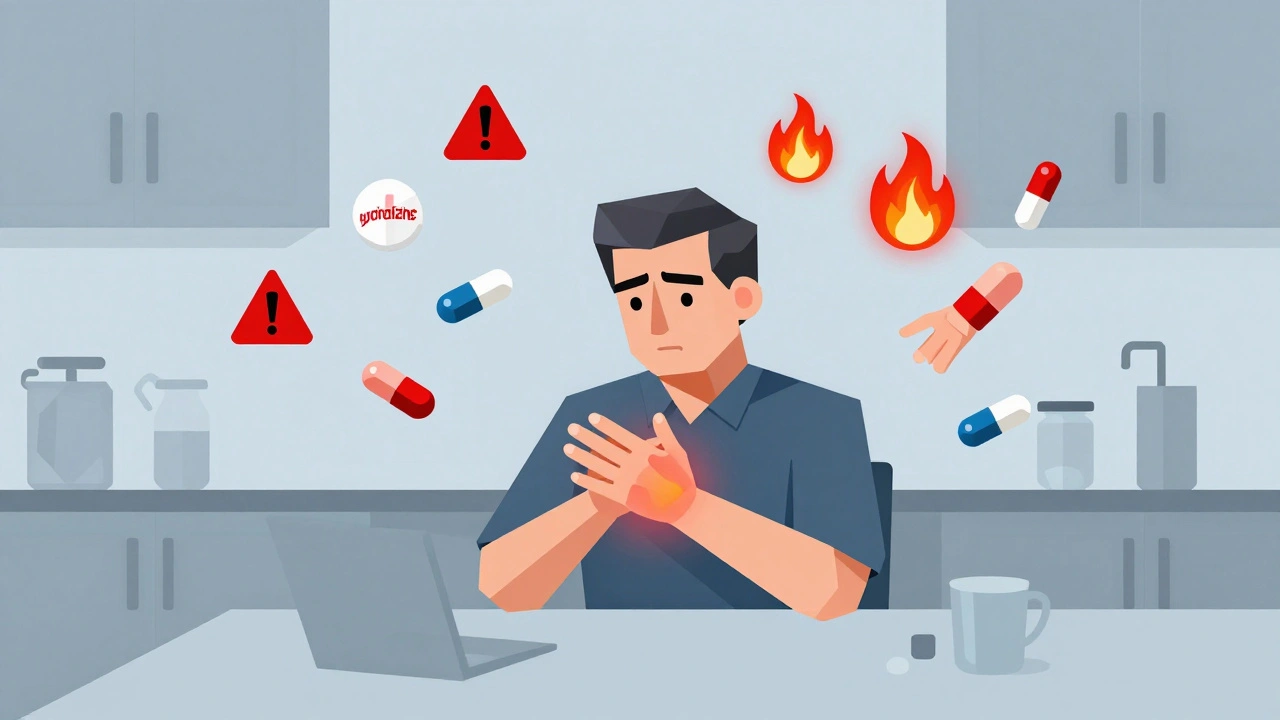
The most common symptoms of DIL include joint pain, muscle aches, fever, and fatigue. You might also notice a rash, especially on your face or chest, or feel like you’ve got the flu without actually having an infection. Some people develop chest pain from inflammation around the heart or lungs. These symptoms don’t show up right away — they often take months or even years of taking the drug. The big red flag? If you’ve been on medications like hydralazine, procainamide, or minocycline for a while and suddenly feel off, DIL could be why. It’s rare, but it’s real — and it’s often missed because doctors don’t always connect the dots between your meds and your symptoms.
What makes DIL tricky is that it doesn’t usually affect your kidneys or brain like classic lupus does. That’s a key difference. Blood tests can help — positive ANA and anti-histone antibodies are common in DIL, but anti-dsDNA, which shows up in true lupus, usually stays negative. If you’re on long-term medication for high blood pressure, heart rhythm issues, or even acne, knowing the signs of DIL could save you from unnecessary tests or wrong diagnoses. And if you’ve already been diagnosed with lupus but your symptoms started after a new drug? That’s another clue.
The posts below cover real-world cases, medication risks, and how to talk to your doctor about side effects you might be ignoring. You’ll find practical advice on spotting early warning signs, understanding which drugs carry the highest risk, and what to do if you suspect your meds are triggering an immune response. No fluff. Just clear, actionable info to help you stay safe while staying on treatment.
Drug-induced lupus mimics autoimmune lupus but is caused by certain medications. Symptoms include joint pain, fatigue, and fever. The good news? It usually reverses completely after stopping the drug. Learn how to recognize it and recover.
Continue reading...